


JUSTICE DENIED—THE PATTERN OF DEATHS IN AND AFTER CUSTODY IN TIBET
“Detention in Tibet can be a death sentence—without investigation, without accountability, there is no justice.”
JUSTICE DENIED—THE PATTERN OF DEATHS IN AND AFTER CUSTODY IN TIBET
“Detention in Tibet can be a death sentence—without investigation, without accountability, there is no justice.”
I. INTRODUCTION
– Tencho Gyatso, International Campaign for Tibet
Tsedon was a 20-year-old university student in Lhasa, studying hard, dreaming of her future, when she was taken into custody by Chinese authorities [1]. Weeks later, she was dead. Her body was not returned to her family, no autopsy was conducted, and no explanation was made public.Across Tibet, similar stories have unfolded over the past decade; this report documents at least 16 such cases between 2014 and 2026. Geshe Pende Gyaltsen, a 56-year-old monk and scholar who spent his life mediating village disputes, died in custody[2]. Gonpo Namgyal, a village leader who believed Tibetan children should learn in their own language, died days after his release[3]. Tulku Hungkar Dorje Rinpoche, a revered spiritual teacher whose work helped thousands, disappeared into custody and never came back[4]. Norsang was a father of six who refused forced political classes and had his death hidden for nearly two years[5].
These cases come from different parts of Tibet and from people living very different lives, yet their deaths unfolded in a familiar pattern. Individuals are taken into custody, frequently without access to lawyers or family members, and held in conditions where there is little to no outside oversight. Accounts of abuse, ill-treatment, or denial of medical care emerge but are rarely examined independently. In some cases, people die in detention; in others, they are released only when their condition has already deteriorated beyond recovery. ICT has documented cases of Tibetan families receiving back their loved ones, injured, unconscious, or unable to speak. They often die days later.
This pattern has been documented by the International Campaign for Tibet for almost two decades. In an earlier report covering the period from 2008 to 2014, the International Campaign for Tibet documented 14 Tibetans who have died in detention or shortly thereafter, underscoring the longstanding nature of these violations.[6] When such violations persist for years, they cease to be exceptions and become evidence of how the system is designed to function. The absence of transparency, accountability, and investigations exposes a system in which the Chinese authorities operate with total impunity. For Tibetans, this creates a pervasive climate of fear that follows individuals into every aspect of their lives. That fear intensifies at the moment of arrest, where detention is not experienced as a legal process but as a state of extreme uncertainty, carrying the risk of disappearance and death.
After death, the pattern continues. Bodies are withheld or cremated under strict state control. Families are denied access, prevented from carrying out religious rites, and blocked from verifying the cause of death. No independent investigations are conducted, and no accountability follows.
As one Tibetan relative and former political prisoner, Tsering Dorjee, explained, “We are not told where they are. We are not told what happened. And when they die, we are not allowed to know why. The Chinese government does whatever it wants to the Tibetan people – there is no law, no procedure, nothing.”
The UN Committee against Torture, which is the treaty body of independent experts monitoring the implementation of the Convention against Torture and Other Cruel, Inhuman or Degrading Treatment or Punishment (CAT), defines torture as “systematic” when it is habitual, widespread and deliberate.⁶ The recurrence of these deaths, combined with the consistent failure to investigate or provide redress, indicates that this threshold is met in Tibet.
Detention in Tibet is not only a deprivation of liberty. It is life-threatening.
II. A PATTERN OF DEATH IN CUSTODY

An undated photo of Tibetan student Tsedon. (Photo: Private/anonymous)
For some Tibetans, detention ends before release ever comes. They disappear into custody and emerge only as a body or not at all. This report documents ten such cases of Tibetans who did not survive detention.
The case of Tsedon reflects this pattern. A 20-year-old university student in Lhasa, she was detained in Nyemo County on 26 December 2023 while still pursuing her studies and planning for the future[7]. Within weeks, she was dead. Authorities did not return her body, no autopsy was conducted, and no explanation was made public. Her family, teachers, and classmates were left without answers. Her case is not an isolated one but part of a broader and deeply concerning pattern that ICT has documented across Tibet.
In one of the most recent cases documented, Samten, a 25-year-old monk from Ditsa Geden Tashi Choedingling Monastery (in Amdo, CH: Hualong County, Haidong City, Qinghai Province), died in police custody in December 2025[8]. Authorities claimed he had “suddenly fallen ill” during a transfer to the hospital, but local sources believe he was beaten to death during interrogation. His body was returned to the monastery under strict orders not to disclose any information, and the circumstances of his detention remain unclear due to severe restrictions on access to information. Samten had reportedly been under constant police surveillance since 2021 after sharing photographs related to elections organized by the Central Tibetan Administration.
Geshe Pende Gyaltsen was a respected monk who had dedicated his life to religious study and community mediation. He was detained after assisting in resolving a local dispute and was reportedly in good health at the time of his arrest. On 26 January 2023, he died in custody[9]. In the aftermath, authorities imposed restrictions on his monastery and the surrounding community, prevented individuals from viewing his body, and transferred his remains to Beijing. These measures not only obstructed religious rites but also prevented any independent scrutiny of the circumstances of his death.
– Dorjee Tsering, friend of Geshe Pende Gyaltsen
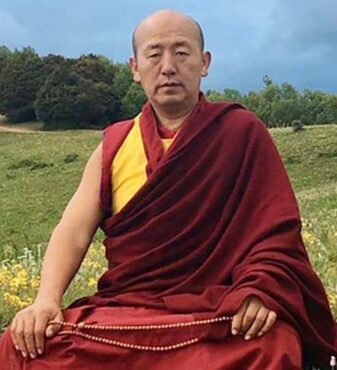
An undated photo of Tibetan monk Geshe Pende Gyaltsen.
(Photo: Private/anonymous)
Earlier cases follow the same trajectory of detention, death, and concealment. In 2019, Norsang, a 36-year-old father of six from Nagchu, located in the “Tibet Autonomous Region,” died in custody after refusing to participate in political re-education campaigns. His death was concealed for nearly two years, and when information did emerge, his family and community were warned against speaking about it. No autopsy was conducted, and no investigation has been made public[10]. In 2016, Trigyal died while serving a 13-year sentence imposed after he refused to comply with a politically driven campaign to display the Chinese flag. The circumstances of his death were never independently examined[11].
The same pattern is evident in earlier documented cases. Lobsang Yeshi, a village leader from Chamdo, was detained in 2014 after opposing a gold mining project and was reportedly subjected to torture and denial of medical care. He died in a hospital in 2015; authorities attributed his death to illness while preventing his family from viewing his body and carrying out a tightly controlled cremation[12]. That same year, Tenzin Delek Rinpoche, one of Tibet’s most revered religious leaders, died in prison following years of alleged abuse and medical neglect[13]. His death prompted international concern, including from UN human rights mechanisms, with the UN Committee against Torture raising the case in its review of China and highlighting concerns about deaths in custody linked to a lack of medical care[14]. UN Special Procedures also raised Tenzin Delek Rinpoche’s case directly with the Chinese authorities, underscoring the seriousness of the allegations and the absence of any independent investigation[15].
For his family, however, the lack of answers has never been resolved.
Despite sustained international attention, his body was not returned, and those who sought answers faced intimidation. As Nyima Lhamo continued to emphasize:
Other cases reinforce this pattern. Yudruk Nyima died while still in police custody following his arrest; although his family filed a complaint, no findings were ever released[16]. Karmey, a 22-year-old from Golog, died just one day after being taken into custody, reportedly following severe beatings[17].
More recently, the case of Tulku Hungkar Dorje demonstrates that this pattern has not only continued but, in some instances, extended beyond China’s borders. According to a communication issued by several UN Special Procedures, he was arrested in Ho Chi Minh City in March 2025 by Vietnamese authorities in the presence of Chinese officials and subsequently disappeared. For several days, Dorje’s family received no information about his whereabouts or condition. Authorities later announced that he had died in custody, attributing his death to a “heart attack” without providing evidence. His body was cremated at night without family consent and without any independent forensic examination[18].
Under Article 6 of the International Covenant on Civil and Political Rights (ICCPR), to which China is a signatory, States have a duty to protect the right to life, including for those in custody[19]. The Human Rights Committee, which is the treaty body of independent experts monitoring the implementation of the ICCPR, has emphasised that deaths in detention must be subject to prompt, impartial and effective investigation[20]. Articles 12 and 13 of the CAT, to which China is a State Party, likewise require authorities to investigate wherever there are reasonable grounds to believe that torture or ill-treatment has occurred[21]. In the cases documented by ICT, there is no evidence that these obligations have been met. Instead, they reveal a recurring pattern of custodial deaths followed by concealment and impunity.
III. RELEASED TO DIE
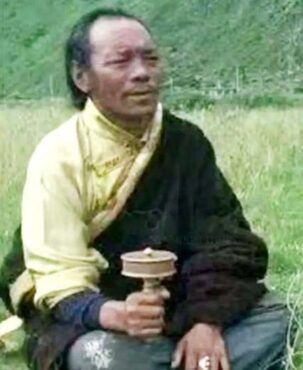
An image of Gonpo Namgyal.
(Photo: Private/anonymous)
– Relative of Gonpo Namgyal
Other cases demonstrate the same sequence of abuse, medical neglect and delayed release. Tenzin Nyima, a 19-year-old monk from Dza Wonpo Monastery in Wonpo, in Sershul (CH: Shiqu) County, Kardze (Ch: Ganzi) Tibetan Autonomous Prefecture, Sichuan Province, was detained on 9 November 2019. His arrest came two days after he and three other Wonpo monks briefly distributed leaflets and shouted slogans calling for Tibetan independence outside the local Wonpo government office. He was so severely beaten in custody that he went into a coma. He was released from prison in early October 2020, and on 9 October, he died in the hospital[23]. No investigation or explanation was ever provided regarding the injuries that led to his death.
An image of Lhamo.
(Photo: Private/anonymous)
Lhamo, a Tibetan woman from Driru County, was detained on suspicion of sending money to relatives abroad. She was later found in the hospital, unable to speak and bearing visible injuries. She died two days later, and her body was immediately cremated, preventing any independent examination[24].
Gendun Sherab, a monk arrested in 2017 for sharing a message from the Dalai Lama, was beaten in detention and released in critical condition. His health continued to deteriorate, and he was reportedly denied access to hospitals in Lhasa. He died in 2020 as a result of untreated injuries sustained during his detention[25].
Similarly, Choekyi, a monk imprisoned for producing a garment marking the Dalai Lama’s birthday, was released on 18 January 2019 in extremely poor health after years in detention. Despite international calls for medical care while in prison, he died after his release without any official explanation provided[26]. Meanwhile, Tashi Paljor, a monk at the Wenpo monastery in Chamdo (in Chinese, Changdu) prefecture in the Tibet Autonomous Region (TAR), was returned on 28 February 2014 to his family severely beaten, unable to speak, and died the following day on 1 March 2014[27].
His relative in exile, Tibetan monk Golog Jigme, stated:
– Golog Jigme, Tibetan monk and relative of Choekyi
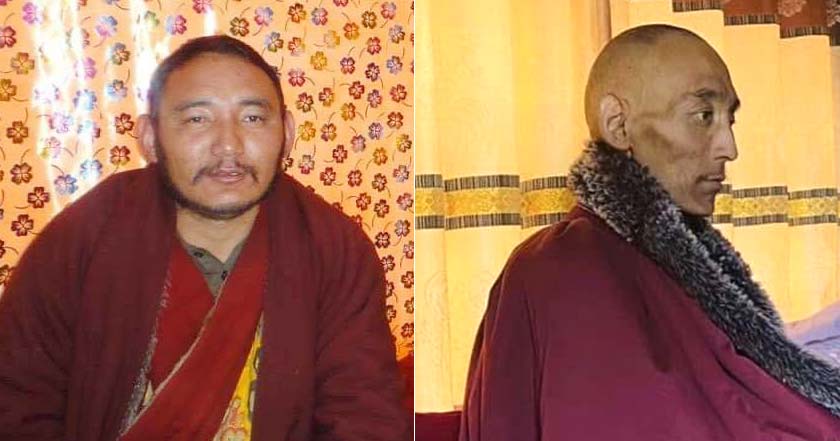
Monk Chokyi before and after, (left) an undated photo before his detention and (right) an undated photo of
him lying at home, waiting to die, as he was not allowed to receive medical treatment in a hospital.
(Photo: Anonymous source)
These cases are often treated as separate from deaths in custody. In reality, they form part of the same pattern of abuse.
Under international law, the State’s responsibility does not end upon release. Where individuals are released in a life-threatening condition as a result of torture or medical neglect in detention, the State remains responsible for the resulting harm. The CAT requires States to prevent acts of torture and ill-treatment in all circumstances, including through the provision of adequate medical care[28]. The International Covenant on Civil and Political Rights further guarantees humane treatment of persons deprived of liberty[29].
While on record, the individual does not officially die in detention, they do not survive it.
IV. NO BODY, NO TRUTH
What happens after death is as revealing as what happens before it.
Across the cases documented in this report, families are frequently denied access to the bodies of their relatives. In some cases, remains are withheld entirely. In others, cremations are carried out quickly, under strict state supervision, or at night, without family consent or respect to religious beliefs.
These practices do more than deepen the trauma of loss. They eliminate the possibility of verification.
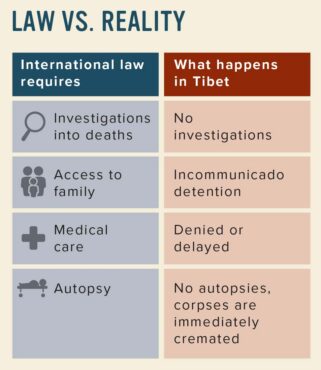 Without access to the body, there can be no independent autopsy. Without an autopsy, there can be no confirmed cause of death, and without that, there can be no accountability.
As one relative explained, “They took him away, and even in death, they would not return him to us.”
International law is clear. Under Articles 12 and 13 of the CAT, States must initiate investigations ex officio wherever there are reasonable grounds to believe that torture or ill-treatment has occurred, including all deaths in custody and any death closely linked to treatment during detention[30]. These obligations apply equally to deaths that occur during detention and to deaths that occur after release, where the cause is suspected to relate to injuries, torture, or medical neglect suffered while detained.
The right to life under Article 6 of the ICCPR imposes a heightened duty of care on States in situations of detention. As the Human Rights Committee has emphasised, this duty requires States to demonstrate that a death was not caused by an act or omission attributable to them; a requirement that can only be met through a prompt, independent, and effective investigation[31]. In none of the cases documented in this report is there any evidence that such an investigation has been carried out or made public. Instead, evidence is systematically removed, bodies are withheld, autopsies are not conducted, information is not disclosed and families are excluded.
The Minnesota Protocol on the Investigation of Potentially Unlawful Death and the 2016 United Nations Manual on the Effective Prevention and Investigation of Extra-legal, Arbitrary, and Summary Executions, reinforces these obligations[32]. It requires that investigations be independent, impartial, thorough, prompt and capable of (1) determining the cause, manner, and circumstances of death and (2) identifying any responsible officials (paras. 15–16). Investigators must recover, preserve, and analyze evidence with full access to evidence, witnesses and relevant documentation (para. 25(b)); an autopsy should “almost always” be performed; and any decision not to conduct one must be justified in writing and subject to judicial review (paras. 21–23, 25–26). Investigations must be transparent through openness to families and the public (para. 32). The protocol emphasizes that families have a right to participate meaningfully; to be kept informed of the investigation’s progress and findings (paras. 34–35); to have access to the body to the extent necessary for the effective exercise of their rights (para. 28); and to have access to information about the circumstances of death (para. 12).
This pattern and China’s intentional obfuscation and interference is evidenced by the lack of institutional independence in investigative mechanisms. Responsibility for investigating deaths in custody lies with the People’s Procuratorate, an authority that is not independent but operates within the same political and security structures responsible for detention. In cases involving Tibetans, this non-separation creates a structural conflict of interest – the same system that detains individuals is also responsible for investigating their deaths.
UN human rights mechanisms have repeatedly raised concerns about this failure to investigate. In multiple communications, they have documented cases in which Chinese authorities did not initiate even basic inquiries into allegations of torture, excessive force or unexplained deaths involving Tibetans. In one instance, authorities failed to respond to complaints from dozens of Tibetans who reported severe police violence during a peaceful protest[33]. More recently, the UN communication concerning Tulku Hungkar Dorje confirmed the continuation of this pattern. Authorities prevented access to his body, carried out a cremation at night without family consent and provided no indication that any investigation meeting international standards had been undertaken[34].
Taken together, the recurrence of custodial deaths, the suppression of evidence, and the absence of independent investigation point to China’s systematic violation of international law. The failure to investigate means not only loss but also permanent uncertainty, while for those responsible, it means impunity. The result is a system in which deaths occur, but the truth about those deaths is systematically obscured.
V. A SYSTEM WITHOUT SAFEGUARDS
China’s Criminal Law does not recognize torture as a distinct and comprehensive offense in line with the CAT – despite China being a State Party to the Convention since 1988. Instead, Article 247 criminalises the extraction of confessions by torture and the use of violence to obtain witness statements[35], while Article 248 criminalises physical abuse of persons in custody[36]. These provisions are narrower than the definition of torture set out in Article 1 of the CAT, which covers the intentional infliction of severe physical or mental pain or suffering for purposes including punishment, intimidation, coercion, or discrimination[37].
That gap is not technical. Chinese criminal law excludes important categories of abuse from the definition itself. Torture committed to punish a monk for displaying an image of the Dalai Lama, to intimidate a language advocate, or to discriminate against a Tibetan detainee because of his or her identity is not fully captured by a legal framework focused primarily on extracting confessions. In practice, this weakens both prevention and accountability.
The scope of liability is also limited. Article 247 applies only to “judicial officers,” excluding other officials who may exercise de facto control over detainees, including police, state security personnel, and prison staff. Penalties are similarly inadequate. Torture under Article 247 carries a maximum sentence of three years’ imprisonment or short-term custody, unless the conduct causes injury, disability, or death, in which case other offenses such as intentional injury or homicide are used instead[38]. This effectively reclassifies torture as an ordinary violent crime and obscures its systemic and state-sanctioned character.
These deficiencies are especially serious in the Tibetan context because detention does not occur in a neutral legal environment. Chinese authorities frequently prosecute Tibetans under broad and vaguely defined offences such as “inciting separatism” or “endangering national security” for conduct linked to religious, linguistic or cultural identity. The result is that laws which already fail to define torture properly are applied within a wider system that disproportionately targets Tibetans in the first place.
Under international law, China’s obligations extend beyond the CAT. Article 7 of the ICCPR, which China signed in 1998, prohibits torture and ill-treatment in absolute terms[39]. As a signatory to the ICCPR, China is further bound under Article 18 of the Vienna Convention on the Law of Treaties not to defeat the object and purpose of the Covenant before ratification[40]. The prohibition of torture has also attained the status of a peremptory norm of customary international law. The Committee against Torture has repeatedly called on China to bring its domestic legislation into line with Article 1 of the CAT, to which China has been a State Party for 38 years[41].
Arbitrary and incommunicado detention remain central pillars of China’s rule in Tibet and are key enabling conditions for torture and ill-treatment. These practices violate the absolute prohibitions contained in Article 2 of the CAT and Articles 9 and 10 of the ICCPR, as well as the standards established by the UN Working Group on Arbitrary Detention and the Body of Principles for the Protection of All Persons under Any Form of Detention or Imprisonment[42]. They also constitute a common factual backdrop to the deaths of Tibetans in custody and post-release deaths documented in Sections III and IV.
Under Article 9 of the ICCPR, no one shall be subjected to arbitrary arrest or detention, and all persons deprived of liberty must be informed of the reasons for their arrest, have prompt access to legal counsel and be brought before a judicial authority without delay[43]. In the Tibetan context, however, detainees are regularly held in undisclosed locations, denied prompt access to lawyers and families and effectively cut off from all external oversight.
China’s Criminal Procedure Law compounds these violations. Article 39 allows meetings with counsel only within 48 hours of request and permits investigators to delay access indefinitely in “state security” or “terrorism” cases[44]. Given that Tibetans are routinely arrested under state security crimes of “inciting separatism” or “endangering national security,” this provision systematically enables prolonged incommunicado detention in cases where the risk of torture is highest. The measure authorising “residential surveillance at a designated location” (RSDL) permits up to six months of incommunicado detention in secret facilities without judicial review[45].
The Committee against Torture has expressed grave concern that these provisions may amount to incommunicado detention in secret places and put detainees at a high risk of torture or ill-treatment[46]. UN Special Procedures have also repeatedly documented that Tibetan detainees are held for weeks or months without access to family, lawyers, or medical care, and that authorities often refused to disclose the location of detention[47][48][49].
VI. WHO IS BEING TARGETED – AND WHY
– A relative of a deceased Tibetan, 2026
The individuals documented in this report were not engaged in violent or criminal conduct. They were monks, students, teachers and community leaders. Their actions included teaching the Tibetan language, sharing religious teachings, protecting local environments and supporting their communities. UN Special Procedures have raised concerns that China’s policies in Tibet amount to a broader pattern of “acculturation and assimilation” that seeks to erase a distinct Tibetan culture, language and religion and replace it with a Han-centric model[50]. Discrimination is the engine.International law is clear: when ill-treatment is inflicted for discriminatory reasons, it meets the legal definition of torture (CAT, Article 1)[51]. In its General Comment No. 2, the Committee against Torture also makes clear that protection for groups “especially at risk of torture,” including minorities and marginalized communities, is part of the State’s preventive obligations, and States must not engage in or tolerate torture “for reasons based on discrimination of any kind”[52]. In Tibet, detention is often linked to the expression of religious, cultural, and linguistic identity. The legal framework not only fails to prevent torture; in practice, it helps create the conditions in which torture is more likely to occur. In Tibet that protection is absent. Discrimination is not a side effect; it is the driver.
– A recently arrived Tibetan refugee who requested anonymity, from Drukgo County, Kham, interviewed in April 2026
VII. NO JUSTICE FOR FAMILIES
– A relative of a deceased Tibetan detainee
Discriminatory targeting is compounded by an almost complete lack of redress for Tibetan victims of torture, medical neglect, arbitrary detention, and deaths in custody. For the families of those who die, there is little prospect of justice.
China’s State Compensation Law[53] excludes psychological suffering and limits liability to direct acts of state personnel, thereby denying compensation for torture or ill-treatment perpetrated with official acquiescence, contrary to Article 14 of the CAT and General Comment No. 3 (2012).Remedies under the SCL are limited to financial compensation and do not include rehabilitation, satisfaction or guarantees of non-repetition, contrary to General Comment No. 3 (2012), which emphasises that monetary awards alone cannot constitute full redress for torture[54].The law’s two-year limitation period for filing claims (Article 32) is inconsistent with Article 14 of the CAT[55] and General Comment No. 3[56], which affirm that statutes of limitation should not apply to torture because of its continuing effects. In the Tibetan context, this restriction effectively forecloses access to justice. Victims often remain imprisoned or under surveillance for years, while families of those who die in custody face intimidation, denial of information and threats of reprisal if they seek redress.
By maintaining a framework that excludes psychological harm, limits liability, and imposes restrictive deadlines, China denies victims of torture, particularly Tibetans, access to justice and effective remedies, in violation of Article 14 of the CAT.
Compensation claims are adjudicated by the same authorities implicated in the violations, undermining the impartiality required by international standards. To date, no Tibetan family is known to have obtained compensation or an official acknowledgement for a death in custody. Families seeking justice face intimidation, surveillance, and collective punishment, in violation of Article 13 of the CAT and Article 2 (3) of the ICCPR, which guarantee the right to an effective remedy.
This denial of redress is acutely visible in the deaths documented in Section II. None of the families of Tsedon, Geshe Pende Gyaltsen, Norsang, Trigyal, Lobsang Yeshi, Tenzin Delek Rinpoche, Yudruk Nyima, Karmey, Tulku Hungkar Dorje, Gonpo Namgyal, Tenzin Nyima, Lhamo, Gendun Sherab, Choekyi or Tashi Paljor are known to have received compensation, an apology or even an official explanation consistent with international standards. Requests for information are ignored or denied, and families are frequently warned against speaking publicly about the circumstances of the death.
This denial is compounded by intimidation and surveillance. Families who attempt to seek answers, speak publicly or pursue accountability risk reprisals including threats, restrictions on movement or detention. In this environment, even asking questions can carry consequences[57]. UN Special Procedures have documented that Chinese authorities ignored formal complaints from dozens of Tibetans about police violence[58]. Families were denied information about trials, places of detention, or the health of their detained relatives[59], demonstrating a systemic refusal to provide remedies or transparency. Such reprisals violate Article 13 of the CAT and Article 2(3) of the ICCPR, which guarantee the right to an effective remedy, and further entrench impunity for state agents[60].
In the Tibetan context, these obligations are consistently ignored. The result is a system in which families are left without truth, without accountability and without recourse.
As one family member described, “We are left with silence – and the silence is part of the system.”
VIII. Recommendations
To Governments:
- Raise individual cases of Tibetan deaths in custody and deaths following release and call for prompt, independent and impartial investigations in line with international standards, including public disclosure of the findings and adequate compensation and redress for affected families.
- Press for meaningful, unfettered access to Tibet for independent observers, including UN monitors, diplomats and journalists, with access to detention facilities and the ability to meet confidentially with the families of deceased detainees.
- Publicly condemn reprisals against Tibetans and call for the protection of family members, witnesses and communities seeking information or accountability.
- Consider the use of targeted measures, including sanctions and visa restrictions, against officials credibly implicated in serious human rights violations, including deaths in custody, torture and enforced disappearance.
- Affirm the right of families to know the truth about the circumstances of a relative’s death, including access to remains, information on cause of death, and the ability to carry out religious and cultural practices without interference.
To the Government of the People’s Republic of China:
- Ensure that all allegations of torture or other cruel, inhuman, or degrading treatment or punishment are promptly, thoroughly, effectively, and impartially investigated in accordance with articles 12 and 13 of the CAT, regardless of the rank or position of the alleged perpetrators.
- Ensure that all persons suspected of having committed acts of torture or ill-treatment are prosecuted under offences that reflect the gravity of such acts and, if convicted, receive penalties commensurate with their seriousness, as required under article 4 of the CAT. Guarantee that victims and families have access to effective remedies, including adequate compensation, rehabilitation, satisfaction, and guarantees of non-repetition.
- Guarantee that all detainees have timely and effective access to adequate medical care, including access to qualified medical professionals independent of the detention facility, and the right to consult a doctor of their choosing and emergency treatment without delay.
- Adopt safeguards to prevent inappropriate political interference in judicial proceedings, including by Chinese Communist Party Politics and Law Committees, and ensure judicial independence in law and practice.
To the United Nations:
- Explicitly address deaths in custody in Tibet as part of a broader pattern of torture, discrimination, and impunity.
- Call for investigations into allegations of torture, deaths in custody, enforced disappearances, and denial of medical care, and request public reporting on investigative outcomes.
- Request comprehensive, disaggregated data on allegations, investigations, prosecutions, and convictions for torture and ill‑treatment, including data specific to Tibetan areas, to enable effective compliance with the CAT.
- Continue to seek meaningful, unrestricted access to Tibetan areas, detention facilities, courts, and emphasize that preventive monitoring is a core component of torture prevention under international law.
- Systematically follow up on China’s implementation of prior recommendations related to torture, arbitrary detention, discrimination, and accountability.
- Monitor and publicly condemn reprisals against human rights defenders, lawyers, victims’ family members and individuals engaging with UN mechanisms.
Appendix:
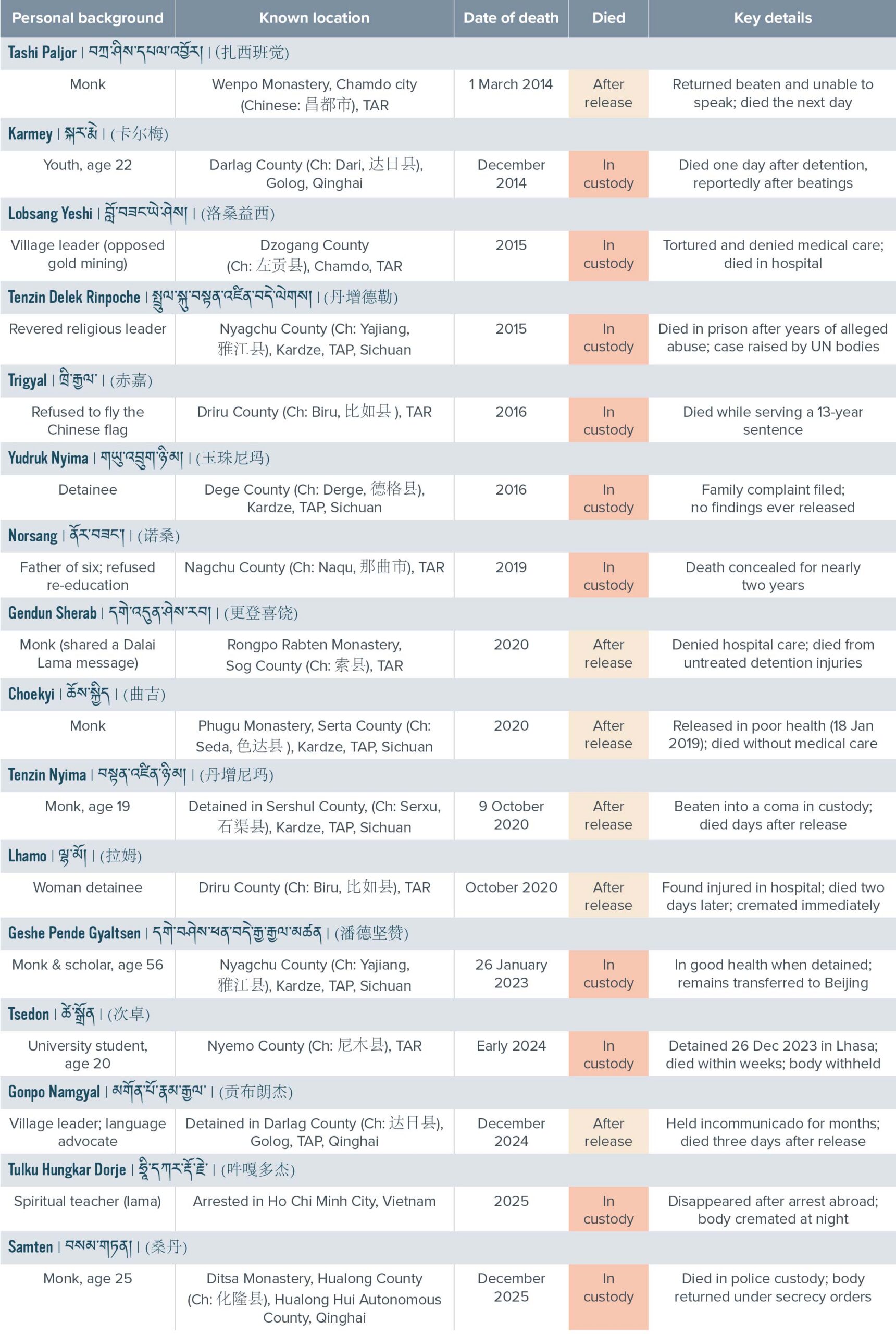
Overview of documented cases of deaths in or after custody
Endnotes:
[1] Tibet Post International, “Tibetan university student dies in Tibet after being detained by China.” Available at: https://www.thetibetpost.com/news/tibet/tibetan-university-student-dies-in-tibet-after-being-detained-by-china
[2] Radio Free Asia, “Tibetan political prisoner and monk dies in Chinese custody.” 6 February 2023. Available at: https://www.rfa.org/english/news/tibet/tibetmonkgeshe-02062023165207.html
[3] Radio Free Asia, “Tibetan champion of language preservation dies after release.” 23 December 2024. Available at: https://www.rfa.org/english/tibet/2024/12/23/champion-language-preservation-dies/
[4] Working Group on Arbitrary Detention; Working Group on Enforced or Involuntary Disappearances; Special Rapporteur on extrajudicial, summary or arbitrary executions; Special Rapporteur on minority issues, Communication AL CHN 15/2025 (8 Aug 2025) concerning the death of Mr. Tulku Hungkar Dorje Rinpoche in Viet Nam (UN Human Rights Office of the High Commissioner), https://spcommreports.ohchr.org/TMResultsBase/DownLoadPublicCommunicationFile?gId=30164
[5] Central Tibetan Administration, ‘Tibetan father of six who opposed CCP’s political “re-education” tortured to death in 2019’, 5 May 2015: https://tibet.net/tibetan-father-of-six-who-opposed-ccps-political-re-education-tortured-to-death-in-2019/
[6] International Campaign for Tibet, ‘Torture and Impunity: 29 Cases of Tibetan Political Prisoners’ 16 February, 2015: https://savetibet.org/torture-and-impunity-29-cases-of-tibetan-political-prisoners/
[7] Tibet Post International, “Tibetan university student dies in Tibet after being detained by China,” available at: https://www.thetibetpost.com/news/tibet/tibetan-university-student-dies-in-tibet-after-being-detained-by-china
[8] International Campaign for Tibet, “Young Tibetan monk dies in Chinese custody amid repression of monks who celebrated Dalai Lama’s 90th birthday”, 24 March 2026: https://savetibet.org/young-tibetan-monk-dies-in-chinese-custody/
[9] Radio Free Asia, “Tibetan political prisoner and monk dies in Chinese custody,” 6 February 2023, available at: https://www.rfa.org/english/news/tibet/tibetmonkgeshe-02062023165207.html
[10] Central Tibetan Administration, “Tibetan father of six who opposed CCP’s political ‘re-education’ tortured to death in 2019,” available at: https://tibet.net/tibetan-father-of-six-who-opposed-ccps-political-re-education-tortured-to-death-in-2019/
[11] Radio Free Asia, “Tibetan man who refused to fly Chinese flag dies in custody,” 8 February 2016, available at: https://www.rfa.org/english/news/tibet/tibetan-man-who-refused-to-fly-chinese-flag-dies-02082016154201.html
[12] Radio Free Asia, “China: Tibet – crackdown on Larung Gar monastery continues,” 23 July 2015, available at: https://www.rfa.org/english/news/tibet/china-tibet-07223015164859.html
[13] International Campaign for Tibet, “Death in prison of revered Tibetan religious leader: armed forces deployed as Tibetans express their grief,” 13 July 2015, available at: https://savetibet.org/death-in-prison-of-revered-tibetan-religious-leader-armed-forces-deployed-as-tibetans-express-their-grief/
[14] UN Committee Against Torture (CAT), Concluding observations on the fifth periodic report of China, CAT/C/CHN/CO/5, 3 February 2016, para. 24, available at: https://digitallibrary.un.org/record/862039
[15] Mandates of the Special Rapporteur on the promotion and protection of the right to freedom of opinion and expression; the Special Rapporteur on the situation of human rights defenders; the Special Rapporteur on minority issues; and the Special Rapporteur on freedom of religion or belief, “Joint allegation letter to China concerning the prolonged detention of Tibetans,” AL CHN 5/2019, 10 May 2019, available at: https://spcommreports.ohchr.org/TMResultsBase/DownLoadPublicCommunicationFile?gId=24546
[16] Radio Free Asia, “One Tibetan killed, another presumed dead in Sichuan’s Kardze,” 1 July 2016, available at: https://www.rfa.org/english/news/tibet/killed-07012016144036.html
[17] Phayul, “Tibetan youth beaten to death in Golog,” 15 December 2014, available at: https://www.phayul.com/2014/12/15/35562/
[18] Working Group on Arbitrary Detention; Working Group on Enforced or Involuntary Disappearances; Special Rapporteur on extrajudicial, summary or arbitrary executions; Special Rapporteur on minority issues, Communication AL CHN 15/2025 (8 August 2025) concerning the death of Mr. Tulku Hungkar Dorje Rinpoche in Viet Nam (UN Human Rights Office of the High Commissioner), available at: https://spcommreports.ohchr.org/TMResultsBase/DownLoadPublicCommunicationFile?gId=30164
[19] UN General Assembly, International Covenant on Civil and Political Rights, United Nations, Treaty Series, vol. 999, p. 171, 16 December 1966, Article 6, available at: https://www.refworld.org/legal/agreements/unga/1966/en/17703
[20] UN Human Rights Committee, General Comment No. 36 on Article 6 (Right to Life), CCPR/C/GC/36, available at: https://docs.un.org/en/CCPR/C/GC/36
[21] UN General Assembly, Convention Against Torture and Other Cruel, Inhuman or Degrading Treatment or Punishment, United Nations, Treaty Series, vol. 1465, p. 85, 10 December 1984, Articles 12–13, available at: https://www.refworld.org/legal/agreements/unga/1984/en/13941
[22] Radio Free Asia, “Tibetan champion of language preservation dies after release,” 23 December 2024, https://www.rfa.org/english/tibet/2024/12/23/champion-language-preservation-dies/
[23] Human Rights Watch, “China: Tibetan Monk Dies from Beating in Custody” 21 January 2021, https://www.hrw.org/news/2021/01/21/china-tibetan-monk-dies-beating-custody; International Campaign for Tibet, “Tibetan monk dies after beating in custody,” 22 January 2021, https://savetibet.org/tibetan-monk-dies-after-beating-in-custody-pattern-of-torture-and-mistreatment-in-tibet-must-end/
[24] Human Rights Watch, “China: Tibetan Woman Dies in Custody,” 29 October 2020, https://www.hrw.org/news/2020/10/29/china-tibetan-woman-dies-custody
[25] Tibet Post International, “Ex-political prisoner Gendun Sherab dies,” 30 April 2020, https://www.thetibetpost.com/news/tibet/ex-political-prisoner-of-tibet-gendun-sherab-dies-after-years-of-chinese-prison-torture
[26] International Campaign for Tibet, “Tibetan monk Choekyi dies after years of prison,” 8 May 2020, https://savetibet.org/tibetan-monk-choekyi-dies-after-years-of-prison-torture/
[27] Radio Free Asia, “Tibetan monk dies after being severely beaten in detention,” 5 March 2014, https://www.rfa.org/english/news/tibet/beaten-03052014152512.html
[28] UN General Assembly, Convention Against Torture, Articles 2 and 16, https://www.refworld.org/legal/agreements/unga/1984/en/13941
[29] UN General Assembly, International Covenant on Civil and Political Rights, Article 10, https://www.refworld.org/legal/agreements/unga/1966/en/17703
[30] UN General Assembly, Convention Against Torture and Other Cruel, Inhuman or Degrading Treatment or Punishment, United Nations, Treaty Series, vol. 1465, p. 85, 10 December 1984, Articles 12–13: https://www.refworld.org/legal/agreements/unga/1984/en/13941
[31] UN Human Rights Committee (HRC), General comment no. 36, Article 6 (Right to Life), CCPR/C/GC/35, 3 September 2019, https://www.refworld.org/legal/general/hrc/2019/en/123145
[32] Office of the United Nations High Commissioner for Human Rights (OHCHR), Minnesota Protocol on the Investigation of Potentially Unlawful Death (2016), https://www.ohchr.org/sites/default/files/Documents/Publications/MinnesotaProtocol.pdf
[33] Mandates of the Working Group on the issue of human rights and transnational corporations and other business enterprises; Special Rapporteur on the issue of human rights obligations relating to the enjoyment of a safe, clean, healthy and sustainable environment; Special Rapporteur on the promotion and protection of the right to freedom of opinion and expression; Special Rapporteur on the rights to freedom of peaceful assembly and of association; Special Rapporteur on the situation of human rights defenders; and Special Rapporteur on minority issues, AL CHN 17/2018, 28 August 2018, available at: https://spcommreports.ohchr.org/TMResultsBase/DownLoadPublicCommunicationFile?gId=24010
[34] Working Group on Arbitrary Detention; Working Group on Enforced or Involuntary Disappearances; Special Rapporteur on extrajudicial, summary or arbitrary executions; Special Rapporteur on minority issues, Communication AL CHN 15/2025 (8 Aug 2025) concerning the death of Mr. Tulku Hungkar Dorje Rinpoche in Viet Nam (UN Human Rights Office of the High Commissioner), https://spcommreports.ohchr.org/TMResultsBase/DownLoadPublicCommunicationFile?gId=30164
[35] Criminal Law of the People’s Republic of China (1997, as amended by Amendment [XII] adopted 29 December 2023, effective 1 March 2024), https://en.spp.gov.cn/2020-12/26/c_948417_12.htm Article 247: “A judicial officer who extorts a confession from a criminal suspect or defendant by torture or extorts testimony from a witness by violence shall be sentenced to fixed-term imprisonment of not more than 3 years or short-term custody. If such an act causes injury to, disability of or the death of the criminal suspect, defendant or witness, the offender shall be convicted and be given a heavier punishment in accordance with the provisions in Article 234 or Article 232 of this Law.”
[36] ibid, Article 248: “A custodial officer of a prison, detention house, custody house or any other custodial institution who assaults or physically abuses a person in custody, if the circumstances are serious, shall be sentenced to fixed-term imprisonment of not more than 3 years or short-term custody. If the circumstances are especially serious, the offender shall be sentenced to fixed-term imprisonment of not less than 3 years but not more than 10 years. If such an act causes injury to, disability of or the death of the person in custody, the offender shall be convicted and be given a heavier punishment in accordance with the provisions in Article 234 or Article 232 of this Law.”
[37] UN Committee Against Torture (CAT), Concluding observations on the fifth periodic report of China, CAT/C/CHN/CO/5, 3 February 2016: https://www.refworld.org/policy/polrec/cat/2016/en/116000
[38] Criminal Law of the People’s Republic of China (1997, as amended by Amendment [XII] adopted 29 December 2023, effective 1 March 2024), https://en.spp.gov.cn/2020-12/26/c_948417_12.htm Article 247: “A judicial officer who extorts a confession from a criminal suspect or defendant by torture or extorts testimony from a witness by violence shall be sentenced to fixed-term imprisonment of not more than 3 years or short-term custody. If such an act causes injury to, disability of or the death of the criminal suspect, defendant or witness, the offender shall be convicted and be given a heavier punishment in accordance with the provisions in Article 234 or Article 232 of this Law.”
[39] UN General Assembly, International Covenant on Civil and Political Rights, United Nations, Treaty Series, vol. 999, p. 171, 16 December 1966, https://www.refworld.org/legal/agreements/unga/1966/en/17703
[40] United Nations, Vienna Convention on the Law of Treaties, United Nations, Treaty Series, vol. 1155, p. 331, 23 May 1969, Article 18 (“Obligation not to defeat the object and purpose of a treaty prior to its entry into force”), https://www.refworld.org/legal/agreements/un/1969/en/73676
[41] UN Committee Against Torture (CAT), Concluding observations on the fifth periodic report of China, CAT/C/CHN/CO/5, 3 February 2016, para 9: https://www.refworld.org/policy/polrec/cat/2016/en/116000
[42] UN General Assembly, Body of Principles for the Protection of All Persons under any Form of Detention or Imprisonment, UN General Assembly, 9 December 1988, https://www.refworld.org/policy/legalguidance/unga/1988/en/18881
[43] UN General Assembly, International Covenant on Civil and Political Rights, United Nations, Treaty Series, vol. 999, p. 171, 16 December 1966, https://www.refworld.org/legal/agreements/unga/1966/en/17703
[44] Criminal Procedure Law of the People’s Republic of China, 2018 amendment, effective from 26 October, 2018, https://www.chinalawtranslate.com/en/criminal-procedure-law-2018/: “Article 39: Defense lawyers may meet and communicate with detained suspects or defendants. Other defenders may also meet and communicate with detained suspects or defendants after having gotten the permission of the people’s court and people’s procuratorate.”
[45] Criminal Procedure Law of the People’s Republic of China (2018 Amendment), English translation by China Law Translate, Article 75 and 79. Available at: https://www.chinalawtranslate.com/en/criminal-procedure-law-2018/
[46] UN Committee Against Torture (CAT), Concluding observations on the fifth periodic report of China, CAT/C/CHN/CO/5, 3 February 2016, para 14: https://www.refworld.org/policy/polrec/cat/2016/en/116000
“14. The Committee expresses grave concern over the amended articles of the Criminal Procedure Law permitting a person under residential surveillance to be placed “at a designated location” for up to six months, in cases involving crimes of “endangering State security”, “terrorism” or serious “bribery”, and when confinement in their home may impede the investigation. The Committee notes with concern that, although families must be notified within 24 hours of the decision, the Law does not indicate that they must be told the reason or the place of detention, which could be any unregulated and unmonitored facility. The Committee is of the view that these provisions, together with the possibility of refusing access to a lawyer for these types of crimes, may amount to incommunicado detention in secret places, putting detainees at a high risk of torture or ill-treatment (art. 2).”
[47] Mandates of the Special Rapporteur on minority issues; the Working Group on Arbitrary Detention; the Special Rapporteur on the promotion and protection of the right to freedom of opinion and expression; the Special Rapporteur on the situation of human rights defenders; and the Special Rapporteur on torture and other cruel, inhuman or degrading treatment or punishment, UA CHN 11/2020, 12 May 2020. Available at: https://spcommreports.ohchr.org/TMResultsBase/DownLoadPublicCommunicationFile?gId=25253
[48] UN Special Procedures, 17 February 2022, AL CHN 14/2021, available at: https://spcommreports.ohchr.org/TMResultsBase/DownLoadPublicCommunicationFile?gId=26936
[49] Mandates of the Working Group on Arbitrary Detention; the Special Rapporteur in the field of cultural rights; the Special Rapporteur on the promotion and protection of the right to freedom of opinion and expression; the Special Rapporteur on the situation of human rights defenders; the Special Rapporteur on minority issues; and the Special Rapporteur on contemporary forms of racism, racial discrimination, xenophobia and related intolerance, UA CHN 4/2018 (16 February 2018), available at: https://spcommreports.ohchr.org/TMResultsBase/DownLoadPublicCommunicationFile?gId=23653
[50] Mandates of the Special Rapporteur on minority issues; the Special Rapporteur in the field of cultural rights; the Special Rapporteur on the right to education; and the Special Rapporteur on freedom of religion or belief, AL CHN 6/2022, 11 November 2022, available at: https://spcommreports.ohchr.org/TMResultsBase/DownLoadPublicCommunicationFile?gId=27444
[51] UN General Assembly, Convention against Torture and Other Cruel, Inhuman or Degrading Treatment or Punishment, United Nations, Treaty Series, vol. 1465, p. 85, 10 December 1984: https://www.refworld.org/legal/agreements/unga/1984/en/13941
[52] UN Committee Against Torture (CAT), General Comment No. 2: Implementation of Article 2 by States Parties, CAT/C/GC/2, 24 January 2008, para. 21: “The protection of certain minority or marginalized individuals or populations especially at risk of torture is a part of the obligation to prevent torture or ill-treatment.” https://www.refworld.org/legal/general/cat/2008/en/53514
[53] Law of the People’s Republic of China on State Compensation, adopted at the Seventh Meeting of the Standing Committee of the Eighth National People’s Congress on 12 May 1994, entered into force 1 January 1995. Available at: https://www.asianlii.org/cn/legis/cen/laws/scl225/
[54] UN Committee Against Torture, General Comment No. 3 (2012) on the implementation of article 14 by States parties, CAT/C/GC/3, 13 December 2012: https://www.refworld.org/legal/general/cat/2012/en/101850
[55] UN General Assembly, Convention Against Torture and Other Cruel, Inhuman or Degrading Treatment or Punishment, United Nations, Treaty Series, vol. 1465, p. 85, 10 December 1984, Article 1: https://www.refworld.org/legal/agreements/unga/1984/en/13941
[56] UN Committee Against Torture, General Comment No. 3 (2012) on the implementation of article 14 by States parties, CAT/C/GC/3, 13 December 2012: https://www.refworld.org/legal/general/cat/2012/en/101850
[57] International Campaign for Tibet, “Fears for the safety of Tenzin Delek Rinpoche’s sister and niece detained after his cremation: home area ‘like a military zone’.” 23 July 2015. Available at: https://savetibet.org/fears-for-the-safety-of-tenzin-delek-rinpoches-sister-and-niece-detained-after-his-cremation-home-area-like-a-military-zone/
[58] Mandates of the Working Group on the issue of human rights and transnational corporations and other business enterprises; the Special Rapporteur on the issue of human rights obligations relating to the enjoyment of a safe, clean, healthy and sustainable environment; the Special Rapporteur on the promotion and protection of the right to freedom of opinion and expression; the Special Rapporteur on the rights to freedom of peaceful assembly and of association; the Special Rapporteur on the situation of human rights defenders; and the Special Rapporteur on minority issues, AL CHN 17/2018, 28 August 2018, available at: https://spcommreports.ohchr.org/TMResultsBase/DownLoadPublicCommunicationFile?gId=24010
[59] Mandates of the Special Rapporteur in the field of cultural rights; the Special Rapporteur on the promotion and protection of the right to freedom of opinion and expression; the Special Rapporteur on the situation of human rights defenders; the Special Rapporteur on minority issues; and the Special Rapporteur on freedom of religion or belief, AL CHN 5/2019, 10 May 2019, available at: https://spcommreports.ohchr.org/TMResultsBase/DownLoadPublicCommunicationFile?gId=24546
[60] UN General Assembly, International Covenant on Civil and Political Rights, United Nations, Treaty Series, vol. 999, p. 171, 16 December 1966, https://www.refworld.org/legal/agreements/unga/1966/en/17703
– Tencho Gyatso, International Campaign for Tibet
Tsedon was a 20-year-old university student in Lhasa, studying hard, dreaming of her future, when she was taken into custody by Chinese authorities [1]. Weeks later, she was dead. Her body was not returned to her family, no autopsy was conducted, and no explanation was made public.Across Tibet, similar stories have unfolded over the past decade; this report documents at least 16 such cases between 2014 and 2026. Geshe Pende Gyaltsen, a 56-year-old monk and scholar who spent his life mediating village disputes, died in custody[2]. Gonpo Namgyal, a village leader who believed Tibetan children should learn in their own language, died days after his release[3]. Tulku Hungkar Dorje Rinpoche, a revered spiritual teacher whose work helped thousands, disappeared into custody and never came back[4]. Norsang was a father of six who refused forced political classes and had his death hidden for nearly two years[5].
These cases come from different parts of Tibet and from people living very different lives, yet their deaths unfolded in a familiar pattern. Individuals are taken into custody, frequently without access to lawyers or family members, and held in conditions where there is little to no outside oversight. Accounts of abuse, ill-treatment, or denial of medical care emerge but are rarely examined independently. In some cases, people die in detention; in others, they are released only when their condition has already deteriorated beyond recovery. ICT has documented cases of Tibetan families receiving back their loved ones, injured, unconscious, or unable to speak. They often die days later.
This pattern has been documented by the International Campaign for Tibet for almost two decades. In an earlier report covering the period from 2008 to 2014, the International Campaign for Tibet documented 14 Tibetans who have died in detention or shortly thereafter, underscoring the longstanding nature of these violations.[6] When such violations persist for years, they cease to be exceptions and become evidence of how the system is designed to function. The absence of transparency, accountability, and investigations exposes a system in which the Chinese authorities operate with total impunity. For Tibetans, this creates a pervasive climate of fear that follows individuals into every aspect of their lives. That fear intensifies at the moment of arrest, where detention is not experienced as a legal process but as a state of extreme uncertainty, carrying the risk of disappearance and death.
After death, the pattern continues. Bodies are withheld or cremated under strict state control. Families are denied access, prevented from carrying out religious rites, and blocked from verifying the cause of death. No independent investigations are conducted, and no accountability follows.
As one Tibetan relative and former political prisoner, Tsering Dorjee, explained, “We are not told where they are. We are not told what happened. And when they die, we are not allowed to know why. The Chinese government does whatever it wants to the Tibetan people – there is no law, no procedure, nothing.”
The UN Committee against Torture, which is the treaty body of independent experts monitoring the implementation of the Convention against Torture and Other Cruel, Inhuman or Degrading Treatment or Punishment (CAT), defines torture as “systematic” when it is habitual, widespread and deliberate.⁶ The recurrence of these deaths, combined with the consistent failure to investigate or provide redress, indicates that this threshold is met in Tibet.
Detention in Tibet is not only a deprivation of liberty. It is life-threatening.
II. A PATTERN OF DEATH IN CUSTODY
An undated photo of Tibetan student Tsedon. (Photo: Private/anonymous)
For some Tibetans, detention ends before release ever comes. They disappear into custody and emerge only as a body or not at all. This report documents ten such cases of Tibetans who did not survive detention.
The case of Tsedon reflects this pattern. A 20-year-old university student in Lhasa, she was detained in Nyemo County on 26 December 2023 while still pursuing her studies and planning for the future[7]. Within weeks, she was dead. Authorities did not return her body, no autopsy was conducted, and no explanation was made public. Her family, teachers, and classmates were left without answers. Her case is not an isolated one but part of a broader and deeply concerning pattern that ICT has documented across Tibet.
In one of the most recent cases documented, Samten, a 25-year-old monk from Ditsa Geden Tashi Choedingling Monastery (in Amdo, CH: Hualong County, Haidong City, Qinghai Province), died in police custody in December 2025[8]. Authorities claimed he had “suddenly fallen ill” during a transfer to the hospital, but local sources believe he was beaten to death during interrogation. His body was returned to the monastery under strict orders not to disclose any information, and the circumstances of his detention remain unclear due to severe restrictions on access to information. Samten had reportedly been under constant police surveillance since 2021 after sharing photographs related to elections organized by the Central Tibetan Administration.
Geshe Pende Gyaltsen was a respected monk who had dedicated his life to religious study and community mediation. He was detained after assisting in resolving a local dispute and was reportedly in good health at the time of his arrest. On 26 January 2023, he died in custody[9]. In the aftermath, authorities imposed restrictions on his monastery and the surrounding community, prevented individuals from viewing his body, and transferred his remains to Beijing. These measures not only obstructed religious rites but also prevented any independent scrutiny of the circumstances of his death.
– Dorjee Tsering, friend of Geshe Pende Gyaltsen
An undated photo of Tibetan monk Geshe Pende Gyaltsen.
(Photo: Private/anonymous)
Earlier cases follow the same trajectory of detention, death, and concealment. In 2019, Norsang, a 36-year-old father of six from Nagchu, located in the “Tibet Autonomous Region,” died in custody after refusing to participate in political re-education campaigns. His death was concealed for nearly two years, and when information did emerge, his family and community were warned against speaking about it. No autopsy was conducted, and no investigation has been made public[10]. In 2016, Trigyal died while serving a 13-year sentence imposed after he refused to comply with a politically driven campaign to display the Chinese flag. The circumstances of his death were never independently examined[11].
The same pattern is evident in earlier documented cases. Lobsang Yeshi, a village leader from Chamdo, was detained in 2014 after opposing a gold mining project and was reportedly subjected to torture and denial of medical care. He died in a hospital in 2015; authorities attributed his death to illness while preventing his family from viewing his body and carrying out a tightly controlled cremation[12]. That same year, Tenzin Delek Rinpoche, one of Tibet’s most revered religious leaders, died in prison following years of alleged abuse and medical neglect[13]. His death prompted international concern, including from UN human rights mechanisms, with the UN Committee against Torture raising the case in its review of China and highlighting concerns about deaths in custody linked to a lack of medical care[14]. UN Special Procedures also raised Tenzin Delek Rinpoche’s case directly with the Chinese authorities, underscoring the seriousness of the allegations and the absence of any independent investigation[15].
For his family, however, the lack of answers has never been resolved.
Despite sustained international attention, his body was not returned, and those who sought answers faced intimidation. As Nyima Lhamo continued to emphasize:
Other cases reinforce this pattern. Yudruk Nyima died while still in police custody following his arrest; although his family filed a complaint, no findings were ever released[16]. Karmey, a 22-year-old from Golog, died just one day after being taken into custody, reportedly following severe beatings[17].
More recently, the case of Tulku Hungkar Dorje demonstrates that this pattern has not only continued but, in some instances, extended beyond China’s borders. According to a communication issued by several UN Special Procedures, he was arrested in Ho Chi Minh City in March 2025 by Vietnamese authorities in the presence of Chinese officials and subsequently disappeared. For several days, Dorje’s family received no information about his whereabouts or condition. Authorities later announced that he had died in custody, attributing his death to a “heart attack” without providing evidence. His body was cremated at night without family consent and without any independent forensic examination[18].
Under Article 6 of the International Covenant on Civil and Political Rights (ICCPR), to which China is a signatory, States have a duty to protect the right to life, including for those in custody[19]. The Human Rights Committee, which is the treaty body of independent experts monitoring the implementation of the ICCPR, has emphasised that deaths in detention must be subject to prompt, impartial and effective investigation[20]. Articles 12 and 13 of the CAT, to which China is a State Party, likewise require authorities to investigate wherever there are reasonable grounds to believe that torture or ill-treatment has occurred[21]. In the cases documented by ICT, there is no evidence that these obligations have been met. Instead, they reveal a recurring pattern of custodial deaths followed by concealment and impunity.
III. RELEASED TO DIE
Many Tibetans do not die from their injuries while detained but are released when it is already too late. In these cases, death occurs outside formal custody, but under circumstances that are directly linked to the treatment they endured while detained. This report documents six such cases below.
An image of Gonpo Namgyal.
(Photo: Private/anonymous)
The case of Gonpo Namgyal illustrates this pattern. A village leader from Darlag County (CH: 达日县), Ponkor Township (CH: 红科乡), Golog, TAP, Qinghai Province, who believed Tibetan children to be able to learn in their own language. For that, he was held incommunicado for months following his detention in 2024. When he was released, he was gravely weakened and unable to recover, and witnesses said his body showed signs of abuse, including electrical burn marks. He died three days after being released, without any explanation from authorities regarding his condition or the treatment he had received in custody[22].
– Relative of Gonpo Namgyal
Other cases demonstrate the same sequence of abuse, medical neglect and delayed release. Tenzin Nyima, a 19-year-old monk from Dza Wonpo Monastery in Wonpo, in Sershul (CH: Shiqu) County, Kardze (Ch: Ganzi) Tibetan Autonomous Prefecture, Sichuan Province, was detained on 9 November 2019. His arrest came two days after he and three other Wonpo monks briefly distributed leaflets and shouted slogans calling for Tibetan independence outside the local Wonpo government office. He was so severely beaten in custody that he went into a coma. He was released from prison in early October 2020, and on 9 October, he died in the hospital[23]. No investigation or explanation was ever provided regarding the injuries that led to his death.
An image of Lhamo.
(Photo: Private/anonymous)
Lhamo, a Tibetan woman from Driru County, was detained on suspicion of sending money to relatives abroad. She was later found in the hospital, unable to speak and bearing visible injuries. She died two days later, and her body was immediately cremated, preventing any independent examination[24].
Gendun Sherab, a monk arrested in 2017 for sharing a message from the Dalai Lama, was beaten in detention and released in critical condition. His health continued to deteriorate, and he was reportedly denied access to hospitals in Lhasa. He died in 2020 as a result of untreated injuries sustained during his detention[25].
Similarly, Choekyi, a monk imprisoned for producing a garment marking the Dalai Lama’s birthday, was released on 18 January 2019 in extremely poor health after years in detention. Despite international calls for medical care while in prison, he died after his release without any official explanation provided[26]. Meanwhile, Tashi Paljor, a monk at the Wenpo monastery in Chamdo (in Chinese, Changdu) prefecture in the Tibet Autonomous Region (TAR), was returned on 28 February 2014 to his family severely beaten, unable to speak, and died the following day on 1 March 2014[27].
His relative in exile, Tibetan monk Golog Jigme, stated:
– Golog Jigme, Tibetan monk and relative of Choekyi
Monk Chokyi before and after, (left) an undated photo before his detention and (right) an undated photo of
him lying at home, waiting to die, as he was not allowed to receive medical treatment in a hospital.
(Photo: Anonymous source)
These cases are often treated as separate from deaths in custody. In reality, they form part of the same pattern of abuse.
Under international law, the State’s responsibility does not end upon release. Where individuals are released in a life-threatening condition as a result of torture or medical neglect in detention, the State remains responsible for the resulting harm. The CAT requires States to prevent acts of torture and ill-treatment in all circumstances, including through the provision of adequate medical care[28]. The International Covenant on Civil and Political Rights further guarantees humane treatment of persons deprived of liberty[29].
While on record, the individual does not officially die in detention, they do not survive it.
IV. NO BODY, NO TRUTH
What happens after death is as revealing as what happens before it.
Across the cases documented in this report, families are frequently denied access to the bodies of their relatives. In some cases, remains are withheld entirely. In others, cremations are carried out quickly, under strict state supervision, or at night, without family consent or respect to religious beliefs.
These practices do more than deepen the trauma of loss. They eliminate the possibility of verification.
Without access to the body, there can be no independent autopsy. Without an autopsy, there can be no confirmed cause of death, and without that, there can be no accountability.
As one relative explained, “They took him away, and even in death, they would not return him to us.”
International law is clear. Under Articles 12 and 13 of the CAT, States must initiate investigations ex officio wherever there are reasonable grounds to believe that torture or ill-treatment has occurred, including all deaths in custody and any death closely linked to treatment during detention[30]. These obligations apply equally to deaths that occur during detention and to deaths that occur after release, where the cause is suspected to relate to injuries, torture, or medical neglect suffered while detained.
The right to life under Article 6 of the ICCPR imposes a heightened duty of care on States in situations of detention. As the Human Rights Committee has emphasised, this duty requires States to demonstrate that a death was not caused by an act or omission attributable to them; a requirement that can only be met through a prompt, independent, and effective investigation[31]. In none of the cases documented in this report is there any evidence that such an investigation has been carried out or made public. Instead, evidence is systematically removed, bodies are withheld, autopsies are not conducted, information is not disclosed and families are excluded.
The Minnesota Protocol on the Investigation of Potentially Unlawful Death and the 2016 United Nations Manual on the Effective Prevention and Investigation of Extra-legal, Arbitrary, and Summary Executions, reinforces these obligations[32]. It requires that investigations be independent, impartial, thorough, prompt and capable of (1) determining the cause, manner, and circumstances of death and (2) identifying any responsible officials (paras. 15–16). Investigators must recover, preserve, and analyze evidence with full access to evidence, witnesses and relevant documentation (para. 25(b)); an autopsy should “almost always” be performed; and any decision not to conduct one must be justified in writing and subject to judicial review (paras. 21–23, 25–26). Investigations must be transparent through openness to families and the public (para. 32). The protocol emphasizes that families have a right to participate meaningfully; to be kept informed of the investigation’s progress and findings (paras. 34–35); to have access to the body to the extent necessary for the effective exercise of their rights (para. 28); and to have access to information about the circumstances of death (para. 12).
This pattern and China’s intentional obfuscation and interference is evidenced by the lack of institutional independence in investigative mechanisms. Responsibility for investigating deaths in custody lies with the People’s Procuratorate, an authority that is not independent but operates within the same political and security structures responsible for detention. In cases involving Tibetans, this non-separation creates a structural conflict of interest – the same system that detains individuals is also responsible for investigating their deaths.
UN human rights mechanisms have repeatedly raised concerns about this failure to investigate. In multiple communications, they have documented cases in which Chinese authorities did not initiate even basic inquiries into allegations of torture, excessive force or unexplained deaths involving Tibetans. In one instance, authorities failed to respond to complaints from dozens of Tibetans who reported severe police violence during a peaceful protest[33]. More recently, the UN communication concerning Tulku Hungkar Dorje confirmed the continuation of this pattern. Authorities prevented access to his body, carried out a cremation at night without family consent and provided no indication that any investigation meeting international standards had been undertaken[34].
Taken together, the recurrence of custodial deaths, the suppression of evidence, and the absence of independent investigation point to China’s systematic violation of international law. The failure to investigate means not only loss but also permanent uncertainty, while for those responsible, it means impunity. The result is a system in which deaths occur, but the truth about those deaths is systematically obscured.
V. A SYSTEM WITHOUT SAFEGUARDS
These cases reflect a legal and institutional framework that fails to prevent abuse and, in practice, enables it. The legal framework governing detention in China remains fundamentally inconsistent with international standards on torture, and those inconsistencies matter because they help explain why abuse in Tibet is able to continue without accountability.
China’s Criminal Law does not recognize torture as a distinct and comprehensive offense in line with the CAT – despite China being a State Party to the Convention since 1988. Instead, Article 247 criminalises the extraction of confessions by torture and the use of violence to obtain witness statements[35], while Article 248 criminalises physical abuse of persons in custody[36]. These provisions are narrower than the definition of torture set out in Article 1 of the CAT, which covers the intentional infliction of severe physical or mental pain or suffering for purposes including punishment, intimidation, coercion, or discrimination[37].
That gap is not technical. Chinese criminal law excludes important categories of abuse from the definition itself. Torture committed to punish a monk for displaying an image of the Dalai Lama, to intimidate a language advocate, or to discriminate against a Tibetan detainee because of his or her identity is not fully captured by a legal framework focused primarily on extracting confessions. In practice, this weakens both prevention and accountability.
The scope of liability is also limited. Article 247 applies only to “judicial officers,” excluding other officials who may exercise de facto control over detainees, including police, state security personnel, and prison staff. Penalties are similarly inadequate. Torture under Article 247 carries a maximum sentence of three years’ imprisonment or short-term custody, unless the conduct causes injury, disability, or death, in which case other offenses such as intentional injury or homicide are used instead[38]. This effectively reclassifies torture as an ordinary violent crime and obscures its systemic and state-sanctioned character.
These deficiencies are especially serious in the Tibetan context because detention does not occur in a neutral legal environment. Chinese authorities frequently prosecute Tibetans under broad and vaguely defined offences such as “inciting separatism” or “endangering national security” for conduct linked to religious, linguistic or cultural identity. The result is that laws which already fail to define torture properly are applied within a wider system that disproportionately targets Tibetans in the first place.
Under international law, China’s obligations extend beyond the CAT. Article 7 of the ICCPR, which China signed in 1998, prohibits torture and ill-treatment in absolute terms[39]. As a signatory to the ICCPR, China is further bound under Article 18 of the Vienna Convention on the Law of Treaties not to defeat the object and purpose of the Covenant before ratification[40]. The prohibition of torture has also attained the status of a peremptory norm of customary international law. The Committee against Torture has repeatedly called on China to bring its domestic legislation into line with Article 1 of the CAT, to which China has been a State Party for 38 years[41].
Arbitrary and incommunicado detention remain central pillars of China’s rule in Tibet and are key enabling conditions for torture and ill-treatment. These practices violate the absolute prohibitions contained in Article 2 of the CAT and Articles 9 and 10 of the ICCPR, as well as the standards established by the UN Working Group on Arbitrary Detention and the Body of Principles for the Protection of All Persons under Any Form of Detention or Imprisonment[42]. They also constitute a common factual backdrop to the deaths of Tibetans in custody and post-release deaths documented in Sections III and IV.
Under Article 9 of the ICCPR, no one shall be subjected to arbitrary arrest or detention, and all persons deprived of liberty must be informed of the reasons for their arrest, have prompt access to legal counsel and be brought before a judicial authority without delay[43]. In the Tibetan context, however, detainees are regularly held in undisclosed locations, denied prompt access to lawyers and families and effectively cut off from all external oversight.
China’s Criminal Procedure Law compounds these violations. Article 39 allows meetings with counsel only within 48 hours of request and permits investigators to delay access indefinitely in “state security” or “terrorism” cases[44]. Given that Tibetans are routinely arrested under state security crimes of “inciting separatism” or “endangering national security,” this provision systematically enables prolonged incommunicado detention in cases where the risk of torture is highest. The measure authorising “residential surveillance at a designated location” (RSDL) permits up to six months of incommunicado detention in secret facilities without judicial review[45].
The Committee against Torture has expressed grave concern that these provisions may amount to incommunicado detention in secret places and put detainees at a high risk of torture or ill-treatment[46]. UN Special Procedures have also repeatedly documented that Tibetan detainees are held for weeks or months without access to family, lawyers, or medical care, and that authorities often refused to disclose the location of detention[47][48][49].
VI. WHO IS BEING TARGETED – AND WHY
– A relative of a deceased Tibetan, 2026
The individuals documented in this report were not engaged in violent or criminal conduct. They were monks, students, teachers and community leaders. Their actions included teaching the Tibetan language, sharing religious teachings, protecting local environments and supporting their communities. UN Special Procedures have raised concerns that China’s policies in Tibet amount to a broader pattern of “acculturation and assimilation” that seeks to erase a distinct Tibetan culture, language and religion and replace it with a Han-centric model[50]. Discrimination is the engine.International law is clear: when ill-treatment is inflicted for discriminatory reasons, it meets the legal definition of torture (CAT, Article 1)[51]. In its General Comment No. 2, the Committee against Torture also makes clear that protection for groups “especially at risk of torture,” including minorities and marginalized communities, is part of the State’s preventive obligations, and States must not engage in or tolerate torture “for reasons based on discrimination of any kind”[52]. In Tibet, detention is often linked to the expression of religious, cultural, and linguistic identity. The legal framework not only fails to prevent torture; in practice, it helps create the conditions in which torture is more likely to occur. In Tibet that protection is absent. Discrimination is not a side effect; it is the driver.
– A recently arrived Tibetan refugee who requested anonymity, from Drukgo County, Kham, interviewed in April 2026
VII. NO JUSTICE FOR FAMILIES
– A relative of a deceased Tibetan detainee
Discriminatory targeting is compounded by an almost complete lack of redress for Tibetan victims of torture, medical neglect, arbitrary detention, and deaths in custody. For the families of those who die, there is little prospect of justice.
China’s State Compensation Law[53] excludes psychological suffering and limits liability to direct acts of state personnel, thereby denying compensation for torture or ill-treatment perpetrated with official acquiescence, contrary to Article 14 of the CAT and General Comment No. 3 (2012).Remedies under the SCL are limited to financial compensation and do not include rehabilitation, satisfaction or guarantees of non-repetition, contrary to General Comment No. 3 (2012), which emphasises that monetary awards alone cannot constitute full redress for torture[54].The law’s two-year limitation period for filing claims (Article 32) is inconsistent with Article 14 of the CAT[55] and General Comment No. 3[56], which affirm that statutes of limitation should not apply to torture because of its continuing effects. In the Tibetan context, this restriction effectively forecloses access to justice. Victims often remain imprisoned or under surveillance for years, while families of those who die in custody face intimidation, denial of information and threats of reprisal if they seek redress.
By maintaining a framework that excludes psychological harm, limits liability, and imposes restrictive deadlines, China denies victims of torture, particularly Tibetans, access to justice and effective remedies, in violation of Article 14 of the CAT.
Compensation claims are adjudicated by the same authorities implicated in the violations, undermining the impartiality required by international standards. To date, no Tibetan family is known to have obtained compensation or an official acknowledgement for a death in custody. Families seeking justice face intimidation, surveillance, and collective punishment, in violation of Article 13 of the CAT and Article 2 (3) of the ICCPR, which guarantee the right to an effective remedy.
This denial of redress is acutely visible in the deaths documented in Section II. None of the families of Tsedon, Geshe Pende Gyaltsen, Norsang, Trigyal, Lobsang Yeshi, Tenzin Delek Rinpoche, Yudruk Nyima, Karmey, Tulku Hungkar Dorje, Gonpo Namgyal, Tenzin Nyima, Lhamo, Gendun Sherab, Choekyi or Tashi Paljor are known to have received compensation, an apology or even an official explanation consistent with international standards. Requests for information are ignored or denied, and families are frequently warned against speaking publicly about the circumstances of the death.
This denial is compounded by intimidation and surveillance. Families who attempt to seek answers, speak publicly or pursue accountability risk reprisals including threats, restrictions on movement or detention. In this environment, even asking questions can carry consequences[57]. UN Special Procedures have documented that Chinese authorities ignored formal complaints from dozens of Tibetans about police violence[58]. Families were denied information about trials, places of detention, or the health of their detained relatives[59], demonstrating a systemic refusal to provide remedies or transparency. Such reprisals violate Article 13 of the CAT and Article 2(3) of the ICCPR, which guarantee the right to an effective remedy, and further entrench impunity for state agents[60].
In the Tibetan context, these obligations are consistently ignored. The result is a system in which families are left without truth, without accountability and without recourse.
As one family member described, “We are left with silence – and the silence is part of the system.”
VIII. Recommendations
To Governments:
- Raise individual cases of Tibetan deaths in custody and deaths following release and call for prompt, independent and impartial investigations in line with international standards, including public disclosure of the findings and adequate compensation and redress for affected families.
- Press for meaningful, unfettered access to Tibet for independent observers, including UN monitors, diplomats and journalists, with access to detention facilities and the ability to meet confidentially with the families of deceased detainees.
- Publicly condemn reprisals against Tibetans and call for the protection of family members, witnesses and communities seeking information or accountability.
- Consider the use of targeted measures, including sanctions and visa restrictions, against officials credibly implicated in serious human rights violations, including deaths in custody, torture and enforced disappearance.
- Affirm the right of families to know the truth about the circumstances of a relative’s death, including access to remains, information on cause of death, and the ability to carry out religious and cultural practices without interference.
To the Government of the People’s Republic of China:
- Ensure that all allegations of torture or other cruel, inhuman, or degrading treatment or punishment are promptly, thoroughly, effectively, and impartially investigated in accordance with articles 12 and 13 of the CAT, regardless of the rank or position of the alleged perpetrators.
- Ensure that all persons suspected of having committed acts of torture or ill-treatment are prosecuted under offences that reflect the gravity of such acts and, if convicted, receive penalties commensurate with their seriousness, as required under article 4 of the CAT. Guarantee that victims and families have access to effective remedies, including adequate compensation, rehabilitation, satisfaction, and guarantees of non-repetition.
- Guarantee that all detainees have timely and effective access to adequate medical care, including access to qualified medical professionals independent of the detention facility, and the right to consult a doctor of their choosing and emergency treatment without delay.
- Adopt safeguards to prevent inappropriate political interference in judicial proceedings, including by Chinese Communist Party Politics and Law Committees, and ensure judicial independence in law and practice.
To the United Nations:
- Explicitly address deaths in custody in Tibet as part of a broader pattern of torture, discrimination, and impunity.
- Call for investigations into allegations of torture, deaths in custody, enforced disappearances, and denial of medical care, and request public reporting on investigative outcomes.
- Request comprehensive, disaggregated data on allegations, investigations, prosecutions, and convictions for torture and ill‑treatment, including data specific to Tibetan areas, to enable effective compliance with the CAT.
- Continue to seek meaningful, unrestricted access to Tibetan areas, detention facilities, courts, and emphasize that preventive monitoring is a core component of torture prevention under international law.
- Systematically follow up on China’s implementation of prior recommendations related to torture, arbitrary detention, discrimination, and accountability.
- Monitor and publicly condemn reprisals against human rights defenders, lawyers, victims’ family members and individuals engaging with UN mechanisms.
Appendix:
Overview of documented cases of deaths in or after custody
Footnotes:
[1] Tibet Post International, “Tibetan university student dies in Tibet after being detained by China.” Available at: https://www.thetibetpost.com/news/tibet/tibetan-university-student-dies-in-tibet-after-being-detained-by-china
[2] Radio Free Asia, “Tibetan political prisoner and monk dies in Chinese custody.” 6 February 2023. Available at: https://www.rfa.org/english/news/tibet/tibetmonkgeshe-02062023165207.html
[3] Radio Free Asia, “Tibetan champion of language preservation dies after release.” 23 December 2024. Available at: https://www.rfa.org/english/tibet/2024/12/23/champion-language-preservation-dies/
[4] Working Group on Arbitrary Detention; Working Group on Enforced or Involuntary Disappearances; Special Rapporteur on extrajudicial, summary or arbitrary executions; Special Rapporteur on minority issues, Communication AL CHN 15/2025 (8 Aug 2025) concerning the death of Mr. Tulku Hungkar Dorje Rinpoche in Viet Nam (UN Human Rights Office of the High Commissioner), https://spcommreports.ohchr.org/TMResultsBase/DownLoadPublicCommunicationFile?gId=30164
[5] Central Tibetan Administration, ‘Tibetan father of six who opposed CCP’s political “re-education” tortured to death in 2019’, 5 May 2015: https://tibet.net/tibetan-father-of-six-who-opposed-ccps-political-re-education-tortured-to-death-in-2019/
[6] International Campaign for Tibet, ‘Torture and Impunity: 29 Cases of Tibetan Political Prisoners’ 16 February, 2015: https://savetibet.org/torture-and-impunity-29-cases-of-tibetan-political-prisoners/
[7] Tibet Post International, “Tibetan university student dies in Tibet after being detained by China,” available at: https://www.thetibetpost.com/news/tibet/tibetan-university-student-dies-in-tibet-after-being-detained-by-china
[8] International Campaign for Tibet, “Young Tibetan monk dies in Chinese custody amid repression of monks who celebrated Dalai Lama’s 90th birthday”, 24 March 2026: https://savetibet.org/young-tibetan-monk-dies-in-chinese-custody/
[9] Radio Free Asia, “Tibetan political prisoner and monk dies in Chinese custody,” 6 February 2023, available at: https://www.rfa.org/english/news/tibet/tibetmonkgeshe-02062023165207.html
[10] Central Tibetan Administration, “Tibetan father of six who opposed CCP’s political ‘re-education’ tortured to death in 2019,” available at: https://tibet.net/tibetan-father-of-six-who-opposed-ccps-political-re-education-tortured-to-death-in-2019/
[11] Radio Free Asia, “Tibetan man who refused to fly Chinese flag dies in custody,” 8 February 2016, available at: https://www.rfa.org/english/news/tibet/tibetan-man-who-refused-to-fly-chinese-flag-dies-02082016154201.html
[12] Radio Free Asia, “China: Tibet – crackdown on Larung Gar monastery continues,” 23 July 2015, available at: https://www.rfa.org/english/news/tibet/china-tibet-07223015164859.html
[13] International Campaign for Tibet, “Death in prison of revered Tibetan religious leader: armed forces deployed as Tibetans express their grief,” 13 July 2015, available at: https://savetibet.org/death-in-prison-of-revered-tibetan-religious-leader-armed-forces-deployed-as-tibetans-express-their-grief/
[14] UN Committee Against Torture (CAT), Concluding observations on the fifth periodic report of China, CAT/C/CHN/CO/5, 3 February 2016, para. 24, available at: https://digitallibrary.un.org/record/862039
[15] Mandates of the Special Rapporteur on the promotion and protection of the right to freedom of opinion and expression; the Special Rapporteur on the situation of human rights defenders; the Special Rapporteur on minority issues; and the Special Rapporteur on freedom of religion or belief, “Joint allegation letter to China concerning the prolonged detention of Tibetans,” AL CHN 5/2019, 10 May 2019, available at: https://spcommreports.ohchr.org/TMResultsBase/DownLoadPublicCommunicationFile?gId=24546
[16] Radio Free Asia, “One Tibetan killed, another presumed dead in Sichuan’s Kardze,” 1 July 2016, available at: https://www.rfa.org/english/news/tibet/killed-07012016144036.html
[17] Phayul, “Tibetan youth beaten to death in Golog,” 15 December 2014, available at: https://www.phayul.com/2014/12/15/35562/
[18] Working Group on Arbitrary Detention; Working Group on Enforced or Involuntary Disappearances; Special Rapporteur on extrajudicial, summary or arbitrary executions; Special Rapporteur on minority issues, Communication AL CHN 15/2025 (8 August 2025) concerning the death of Mr. Tulku Hungkar Dorje Rinpoche in Viet Nam (UN Human Rights Office of the High Commissioner), available at: https://spcommreports.ohchr.org/TMResultsBase/DownLoadPublicCommunicationFile?gId=30164
[19] UN General Assembly, International Covenant on Civil and Political Rights, United Nations, Treaty Series, vol. 999, p. 171, 16 December 1966, Article 6, available at: https://www.refworld.org/legal/agreements/unga/1966/en/17703
[20] UN Human Rights Committee, General Comment No. 36 on Article 6 (Right to Life), CCPR/C/GC/36, available at: https://docs.un.org/en/CCPR/C/GC/36
[21] UN General Assembly, Convention Against Torture and Other Cruel, Inhuman or Degrading Treatment or Punishment, United Nations, Treaty Series, vol. 1465, p. 85, 10 December 1984, Articles 12–13, available at: https://www.refworld.org/legal/agreements/unga/1984/en/13941
[22] Radio Free Asia, “Tibetan champion of language preservation dies after release,” 23 December 2024, https://www.rfa.org/english/tibet/2024/12/23/champion-language-preservation-dies/
[23] Human Rights Watch, “China: Tibetan Monk Dies from Beating in Custody” 21 January 2021, https://www.hrw.org/news/2021/01/21/china-tibetan-monk-dies-beating-custody; International Campaign for Tibet, “Tibetan monk dies after beating in custody,” 22 January 2021, https://savetibet.org/tibetan-monk-dies-after-beating-in-custody-pattern-of-torture-and-mistreatment-in-tibet-must-end/
[24] Human Rights Watch, “China: Tibetan Woman Dies in Custody,” 29 October 2020, https://www.hrw.org/news/2020/10/29/china-tibetan-woman-dies-custody
[25] Tibet Post International, “Ex-political prisoner Gendun Sherab dies,” 30 April 2020, https://www.thetibetpost.com/news/tibet/ex-political-prisoner-of-tibet-gendun-sherab-dies-after-years-of-chinese-prison-torture
[26] International Campaign for Tibet, “Tibetan monk Choekyi dies after years of prison,” 8 May 2020, https://savetibet.org/tibetan-monk-choekyi-dies-after-years-of-prison-torture/
[27] Radio Free Asia, “Tibetan monk dies after being severely beaten in detention,” 5 March 2014, https://www.rfa.org/english/news/tibet/beaten-03052014152512.html
[28] UN General Assembly, Convention Against Torture, Articles 2 and 16, https://www.refworld.org/legal/agreements/unga/1984/en/13941
[29] UN General Assembly, International Covenant on Civil and Political Rights, Article 10, https://www.refworld.org/legal/agreements/unga/1966/en/17703
[30] UN General Assembly, Convention Against Torture and Other Cruel, Inhuman or Degrading Treatment or Punishment, United Nations, Treaty Series, vol. 1465, p. 85, 10 December 1984, Articles 12–13: https://www.refworld.org/legal/agreements/unga/1984/en/13941
[31] UN Human Rights Committee (HRC), General comment no. 36, Article 6 (Right to Life), CCPR/C/GC/35, 3 September 2019, https://www.refworld.org/legal/general/hrc/2019/en/123145
[32] Office of the United Nations High Commissioner for Human Rights (OHCHR), Minnesota Protocol on the Investigation of Potentially Unlawful Death (2016), https://www.ohchr.org/sites/default/files/Documents/Publications/MinnesotaProtocol.pdf
[33] Mandates of the Working Group on the issue of human rights and transnational corporations and other business enterprises; Special Rapporteur on the issue of human rights obligations relating to the enjoyment of a safe, clean, healthy and sustainable environment; Special Rapporteur on the promotion and protection of the right to freedom of opinion and expression; Special Rapporteur on the rights to freedom of peaceful assembly and of association; Special Rapporteur on the situation of human rights defenders; and Special Rapporteur on minority issues, AL CHN 17/2018, 28 August 2018, available at: https://spcommreports.ohchr.org/TMResultsBase/DownLoadPublicCommunicationFile?gId=24010
[34] Working Group on Arbitrary Detention; Working Group on Enforced or Involuntary Disappearances; Special Rapporteur on extrajudicial, summary or arbitrary executions; Special Rapporteur on minority issues, Communication AL CHN 15/2025 (8 Aug 2025) concerning the death of Mr. Tulku Hungkar Dorje Rinpoche in Viet Nam (UN Human Rights Office of the High Commissioner), https://spcommreports.ohchr.org/TMResultsBase/DownLoadPublicCommunicationFile?gId=30164
[35] Criminal Law of the People’s Republic of China (1997, as amended by Amendment [XII] adopted 29 December 2023, effective 1 March 2024), https://en.spp.gov.cn/2020-12/26/c_948417_12.htm Article 247: “A judicial officer who extorts a confession from a criminal suspect or defendant by torture or extorts testimony from a witness by violence shall be sentenced to fixed-term imprisonment of not more than 3 years or short-term custody. If such an act causes injury to, disability of or the death of the criminal suspect, defendant or witness, the offender shall be convicted and be given a heavier punishment in accordance with the provisions in Article 234 or Article 232 of this Law.”
[36] ibid, Article 248: “A custodial officer of a prison, detention house, custody house or any other custodial institution who assaults or physically abuses a person in custody, if the circumstances are serious, shall be sentenced to fixed-term imprisonment of not more than 3 years or short-term custody. If the circumstances are especially serious, the offender shall be sentenced to fixed-term imprisonment of not less than 3 years but not more than 10 years. If such an act causes injury to, disability of or the death of the person in custody, the offender shall be convicted and be given a heavier punishment in accordance with the provisions in Article 234 or Article 232 of this Law.”
[37] UN Committee Against Torture (CAT), Concluding observations on the fifth periodic report of China, CAT/C/CHN/CO/5, 3 February 2016: https://www.refworld.org/policy/polrec/cat/2016/en/116000
[38] Criminal Law of the People’s Republic of China (1997, as amended by Amendment [XII] adopted 29 December 2023, effective 1 March 2024), https://en.spp.gov.cn/2020-12/26/c_948417_12.htm Article 247: “A judicial officer who extorts a confession from a criminal suspect or defendant by torture or extorts testimony from a witness by violence shall be sentenced to fixed-term imprisonment of not more than 3 years or short-term custody. If such an act causes injury to, disability of or the death of the criminal suspect, defendant or witness, the offender shall be convicted and be given a heavier punishment in accordance with the provisions in Article 234 or Article 232 of this Law.”
[39] UN General Assembly, International Covenant on Civil and Political Rights, United Nations, Treaty Series, vol. 999, p. 171, 16 December 1966, https://www.refworld.org/legal/agreements/unga/1966/en/17703
[40] United Nations, Vienna Convention on the Law of Treaties, United Nations, Treaty Series, vol. 1155, p. 331, 23 May 1969, Article 18 (“Obligation not to defeat the object and purpose of a treaty prior to its entry into force”), https://www.refworld.org/legal/agreements/un/1969/en/73676
[41] UN Committee Against Torture (CAT), Concluding observations on the fifth periodic report of China, CAT/C/CHN/CO/5, 3 February 2016, para 9: https://www.refworld.org/policy/polrec/cat/2016/en/116000
[42] UN General Assembly, Body of Principles for the Protection of All Persons under any Form of Detention or Imprisonment, UN General Assembly, 9 December 1988, https://www.refworld.org/policy/legalguidance/unga/1988/en/18881
[43] UN General Assembly, International Covenant on Civil and Political Rights, United Nations, Treaty Series, vol. 999, p. 171, 16 December 1966, https://www.refworld.org/legal/agreements/unga/1966/en/17703
[44] Criminal Procedure Law of the People’s Republic of China, 2018 amendment, effective from 26 October, 2018, https://www.chinalawtranslate.com/en/criminal-procedure-law-2018/: “Article 39: Defense lawyers may meet and communicate with detained suspects or defendants. Other defenders may also meet and communicate with detained suspects or defendants after having gotten the permission of the people’s court and people’s procuratorate.”
[45] Criminal Procedure Law of the People’s Republic of China (2018 Amendment), English translation by China Law Translate, Article 75 and 79. Available at: https://www.chinalawtranslate.com/en/criminal-procedure-law-2018/
[46] UN Committee Against Torture (CAT), Concluding observations on the fifth periodic report of China, CAT/C/CHN/CO/5, 3 February 2016, para 14: https://www.refworld.org/policy/polrec/cat/2016/en/116000
“14. The Committee expresses grave concern over the amended articles of the Criminal Procedure Law permitting a person under residential surveillance to be placed “at a designated location” for up to six months, in cases involving crimes of “endangering State security”, “terrorism” or serious “bribery”, and when confinement in their home may impede the investigation. The Committee notes with concern that, although families must be notified within 24 hours of the decision, the Law does not indicate that they must be told the reason or the place of detention, which could be any unregulated and unmonitored facility. The Committee is of the view that these provisions, together with the possibility of refusing access to a lawyer for these types of crimes, may amount to incommunicado detention in secret places, putting detainees at a high risk of torture or ill-treatment (art. 2).”
[47] Mandates of the Special Rapporteur on minority issues; the Working Group on Arbitrary Detention; the Special Rapporteur on the promotion and protection of the right to freedom of opinion and expression; the Special Rapporteur on the situation of human rights defenders; and the Special Rapporteur on torture and other cruel, inhuman or degrading treatment or punishment, UA CHN 11/2020, 12 May 2020. Available at: https://spcommreports.ohchr.org/TMResultsBase/DownLoadPublicCommunicationFile?gId=25253
[48] UN Special Procedures, 17 February 2022, AL CHN 14/2021, available at: https://spcommreports.ohchr.org/TMResultsBase/DownLoadPublicCommunicationFile?gId=26936
[49] Mandates of the Working Group on Arbitrary Detention; the Special Rapporteur in the field of cultural rights; the Special Rapporteur on the promotion and protection of the right to freedom of opinion and expression; the Special Rapporteur on the situation of human rights defenders; the Special Rapporteur on minority issues; and the Special Rapporteur on contemporary forms of racism, racial discrimination, xenophobia and related intolerance, UA CHN 4/2018 (16 February 2018), available at: https://spcommreports.ohchr.org/TMResultsBase/DownLoadPublicCommunicationFile?gId=23653
[50] Mandates of the Special Rapporteur on minority issues; the Special Rapporteur in the field of cultural rights; the Special Rapporteur on the right to education; and the Special Rapporteur on freedom of religion or belief, AL CHN 6/2022, 11 November 2022, available at: https://spcommreports.ohchr.org/TMResultsBase/DownLoadPublicCommunicationFile?gId=27444
[51] UN General Assembly, Convention against Torture and Other Cruel, Inhuman or Degrading Treatment or Punishment, United Nations, Treaty Series, vol. 1465, p. 85, 10 December 1984: https://www.refworld.org/legal/agreements/unga/1984/en/13941
[52] UN Committee Against Torture (CAT), General Comment No. 2: Implementation of Article 2 by States Parties, CAT/C/GC/2, 24 January 2008, para. 21: “The protection of certain minority or marginalized individuals or populations especially at risk of torture is a part of the obligation to prevent torture or ill-treatment.” https://www.refworld.org/legal/general/cat/2008/en/53514
[53] Law of the People’s Republic of China on State Compensation, adopted at the Seventh Meeting of the Standing Committee of the Eighth National People’s Congress on 12 May 1994, entered into force 1 January 1995. Available at: https://www.asianlii.org/cn/legis/cen/laws/scl225/
[54] UN Committee Against Torture, General Comment No. 3 (2012) on the implementation of article 14 by States parties, CAT/C/GC/3, 13 December 2012: https://www.refworld.org/legal/general/cat/2012/en/101850
[55] UN General Assembly, Convention Against Torture and Other Cruel, Inhuman or Degrading Treatment or Punishment, United Nations, Treaty Series, vol. 1465, p. 85, 10 December 1984, Article 1: https://www.refworld.org/legal/agreements/unga/1984/en/13941
[56] UN Committee Against Torture, General Comment No. 3 (2012) on the implementation of article 14 by States parties, CAT/C/GC/3, 13 December 2012: https://www.refworld.org/legal/general/cat/2012/en/101850
[57] International Campaign for Tibet, “Fears for the safety of Tenzin Delek Rinpoche’s sister and niece detained after his cremation: home area ‘like a military zone’.” 23 July 2015. Available at: https://savetibet.org/fears-for-the-safety-of-tenzin-delek-rinpoches-sister-and-niece-detained-after-his-cremation-home-area-like-a-military-zone/
[58] Mandates of the Working Group on the issue of human rights and transnational corporations and other business enterprises; the Special Rapporteur on the issue of human rights obligations relating to the enjoyment of a safe, clean, healthy and sustainable environment; the Special Rapporteur on the promotion and protection of the right to freedom of opinion and expression; the Special Rapporteur on the rights to freedom of peaceful assembly and of association; the Special Rapporteur on the situation of human rights defenders; and the Special Rapporteur on minority issues, AL CHN 17/2018, 28 August 2018, available at: https://spcommreports.ohchr.org/TMResultsBase/DownLoadPublicCommunicationFile?gId=24010
[59] Mandates of the Special Rapporteur in the field of cultural rights; the Special Rapporteur on the promotion and protection of the right to freedom of opinion and expression; the Special Rapporteur on the situation of human rights defenders; the Special Rapporteur on minority issues; and the Special Rapporteur on freedom of religion or belief, AL CHN 5/2019, 10 May 2019, available at: https://spcommreports.ohchr.org/TMResultsBase/DownLoadPublicCommunicationFile?gId=24546
[60] UN General Assembly, International Covenant on Civil and Political Rights, United Nations, Treaty Series, vol. 999, p. 171, 16 December 1966, https://www.refworld.org/legal/agreements/unga/1966/en/17703