


HYDROPOWER DEVELOPMENT ON THE TIBETAN PLATEAU
An Integrated Assessment of Tibet as Asia’s Pivotal Water Source
HYDROPOWER DEVELOPMENT ON THE TIBETAN PLATEAU
An Integrated Assessment of Tibet as Asia’s Pivotal Water Source
The Profile of Hydropower Expansion in Tibet
Scale and Ambition
Research presented in the International Campaign for Tibet (ICT’s) report Chinese hydropower: Damning Tibet’s culture, community, and environment documents an expansion of hydropower that is unprecedented in its scope and scale. The findings reveal a systematic campaign to harness the kinetic energy of Tibet’s rivers. A database compiled by ICT assessed a sample of 193 dams built or planned since 2000, the total number estimated to be 300 or more. Of the dams analyzed, 80% are classified as large or mega dams, indicating a focus on massive, centralized energy production. The total potential energy capacity of the 193 dams in the database is 270 GWatt, a figure equivalent to the entire energy generation capacity of Germany in 2022. A prime example of China’s ambitions is the construction of the Medog (Motuo) Dam, a project with a planned capacity of 60 GWatt—three times that of the Three Gorges Dam, currently the world’s largest. This concentration of large dams in a single region not only creates the social and cultural pressures detailed below but also multiplies the potential points of catastrophic failure within one of the world’s most geologically active mountain systems.
Strategic Purpose
The enormous surplus of power potentially generated by China’s overall agenda is not intended for local Tibetan consumption. The primary objective is to transform Tibet into a major energy exporter under China’s West-East Power Transmission Project. This initiative is designed to transmit electricity to the industrial and urban centers of central and eastern China, with long-term plans for export to Southeast Asia. This creates a stark imbalance in the distribution of costs and benefits.
Social and Cultural Impacts
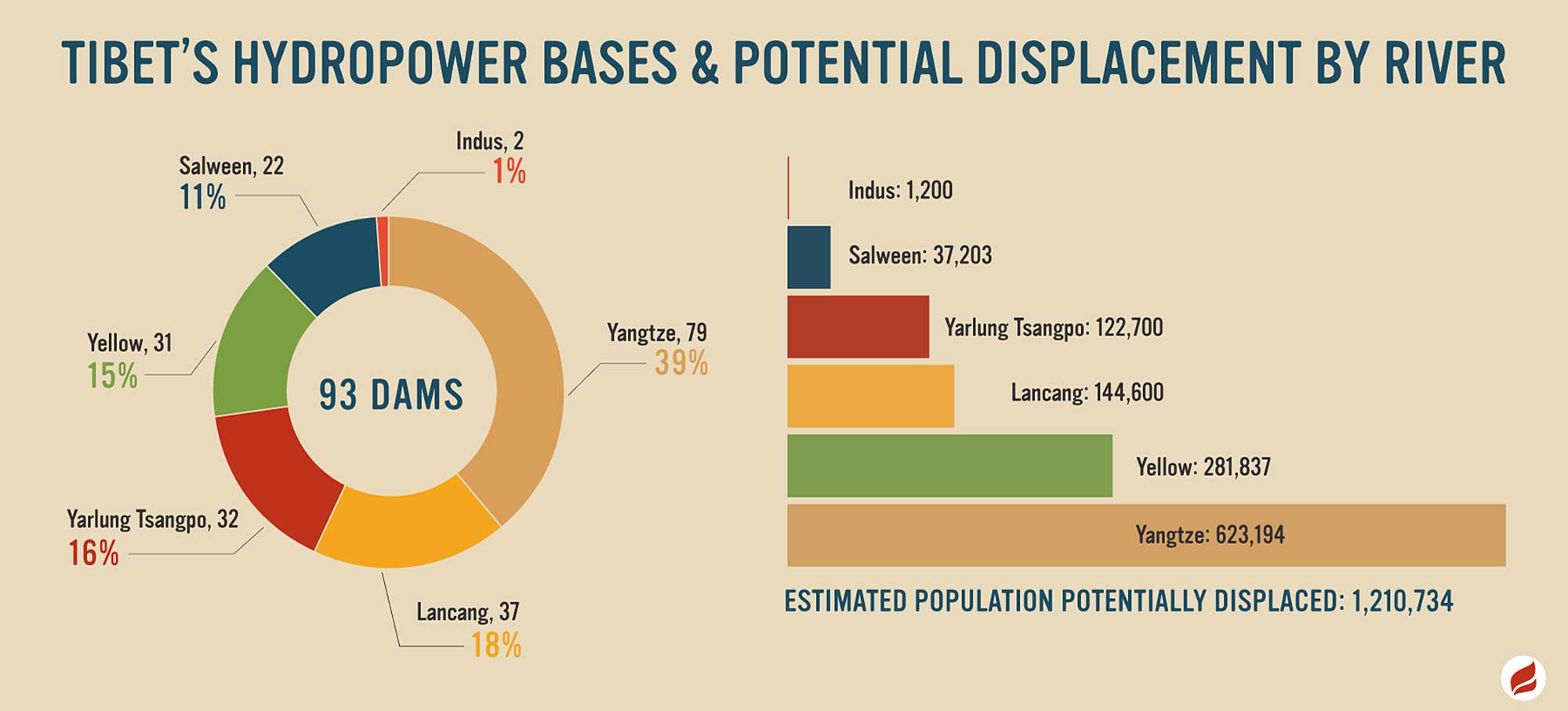
The potential human cost of this development is immense. Analysis of census and satellite data suggests that up to 1.2 million Tibetans living in the impact area of planned dam sites would be dislocated from their homes, communities and separated from their traditional livelihoods. This widespread displacement is accompanied by the irreversible destruction of cultural and religious heritage.
Political Context
The specific political context of Tibet also defines the policy environment and choices being made. Conversations regarding Asia’s major rivers primarily exclude Tibet due to the Chinese government’s unwillingness to openly address the situation via dialogue with the Tibetan people to identify a mutually beneficial solution to the ongoing territorial conflict. Without transparency and meaningful consultation leading to the empowerment of local Tibetan communities regarding decisions that alter their lives and lands, it is operationally impossible to develop sustainable, equitable solutions. In short, Tibet is the source of Asia’s rivers and the free, prior, and informed consent of Tibetans must be recognized. If not, effective riparian management will be blocked to the detriment not only of the upper riparian region but also for downstream countries.
Reassessing Hydropower in a Changing Climate
Climate Change and Operational Reliability
Evaluating the costs and benefits of large infrastructure projects in the 21st century requires using multidimensional assessment across social, economic, energy, and environmental dimensions to support climate resilient, equitable, and efficient decarbonization planning. For new hydropower, estimating future energy output, reliability, and economic performance requires forward-looking assessments that take into account hydrological changes, as well as evolving and competing water demands across the complex systems that are watersheds. As a result of climate change, conventional assessments of hydropower’s potential, which often rely on historical data, may not accurately predict future energy production. This is especially true when climate change threatens historical hydrological patterns, such as in the case of accelerating glacier melting and increasingly variable precipitation patterns on the Himalayan Plateau. These challenge hydropower’s reliability, making its energy output more variable and unpredictable than historical data implies. This can have important consequences for the cost-effectiveness of new hydropower developments, potentially resulting in higher per-kilowatt-hour costs than anticipated in initial project planning, which may erode the economic rationale for the investment.
Green House Gas Emissions
In addition to the operational uncertainties influencing hydropower’s climate mitigation potential, GHG emissions may arise from the hydropower reservoir itself, particularly soon after impoundment when flooded vegetation and organic soils decompose anaerobically, releasing carbon dioxide and methane. Although cooler, oligotrophic conditions tend to suppress methane formation relative to warm lowland reservoirs, meaningful emissions can still occur, especially in the early years. This matters because methane’s near-term warming impact is high (roughly 27–30× that of CO₂ on a 100-year GWP basis and about 80× on a 20-year basis).
With the window for decisions that deliver decarbonization and limit warming rapidly narrowing, the importance of carefully considering near-term methane emissions has drawn growing attention from scientists and policymakers alike.
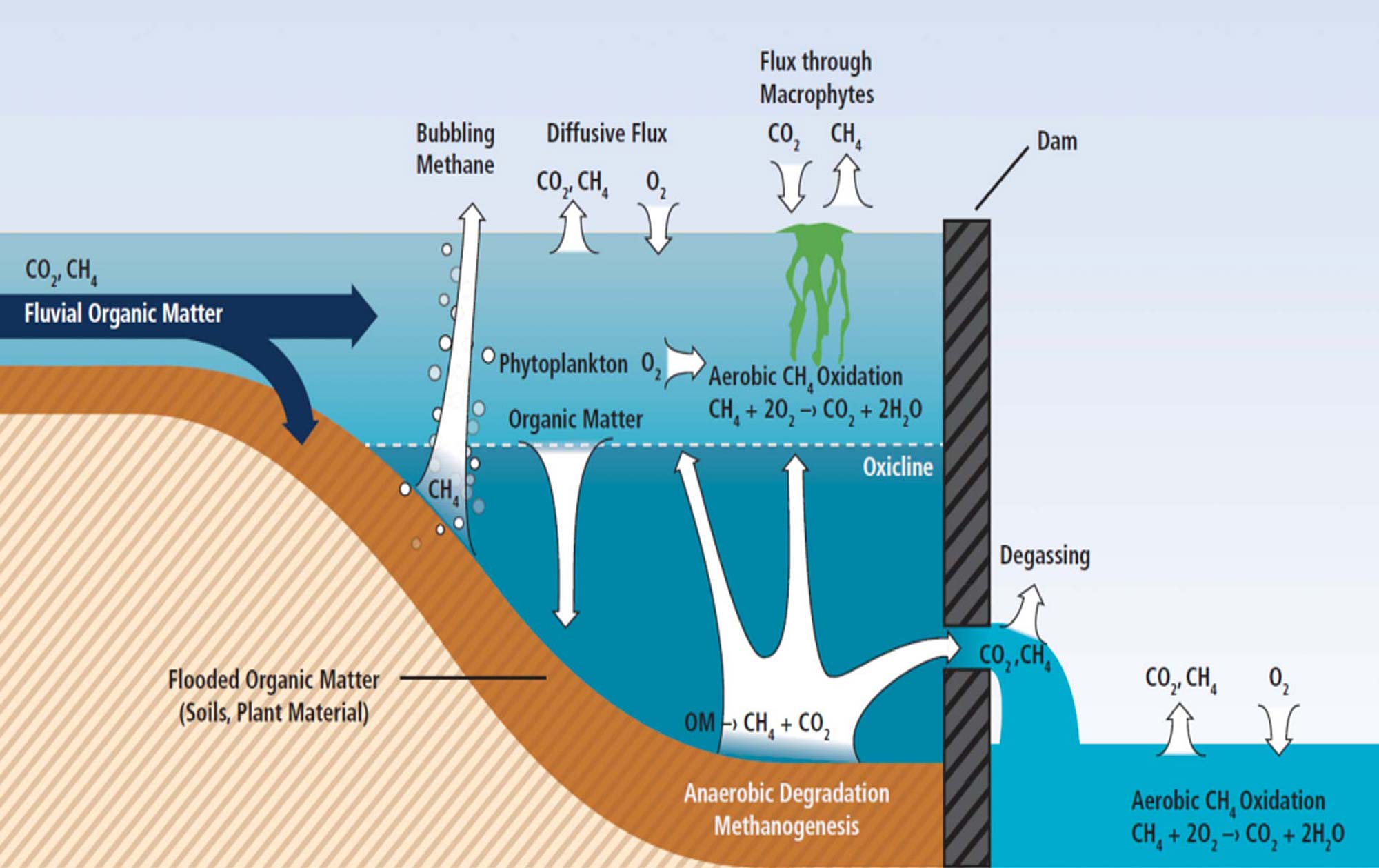
Methane Emissions cycle related to Hydropower Dams (Source: Intergovernmental Panel on Climate Change)
Geomorphology, Disaster Risk, and Environmental Hazards
Risks to Hydropower Infrastructure
The immense forces of nature in the Himalaya pose a direct and constant threat to the structural integrity and operational viability of dam projects. Glacial change and outburst floods are a significant risk factor. As glaciers retreat, they often leave behind large, unstable lakes dammed by loose moraine deposits. These are known as glacial lakes, and their catastrophic failure can trigger Glacial Lake Outburst Floods (GLOFs). The South Lhonak Lake event in 2023 serves as an example. The failure of the lake’s moraine dam unleashed a devastating flood that traveled 70 kilometers downstream and completely demolished the Chungthang Dam, a major piece of hydropower infrastructure.
Further, the region is defined by high seismicity. It sits at the collision point of the Indian and Eurasian tectonic plates, making it one of the most seismically active zones in the world. Historical events like the 1950 Assam earthquake (magnitude 8.5) underscore this immense potential. More recently, the 2015 Nepal earthquake (magnitude 7.8) damaged 30 separate hydropower projects and caused a temporary loss of 34% of the country’s hydropower capacity. In Tibet, the January 2025 Dingri earthquake caused visible cracks in dams and led to the emergency evacuation of over 1,500 residents due to fears of imminent dam failure.
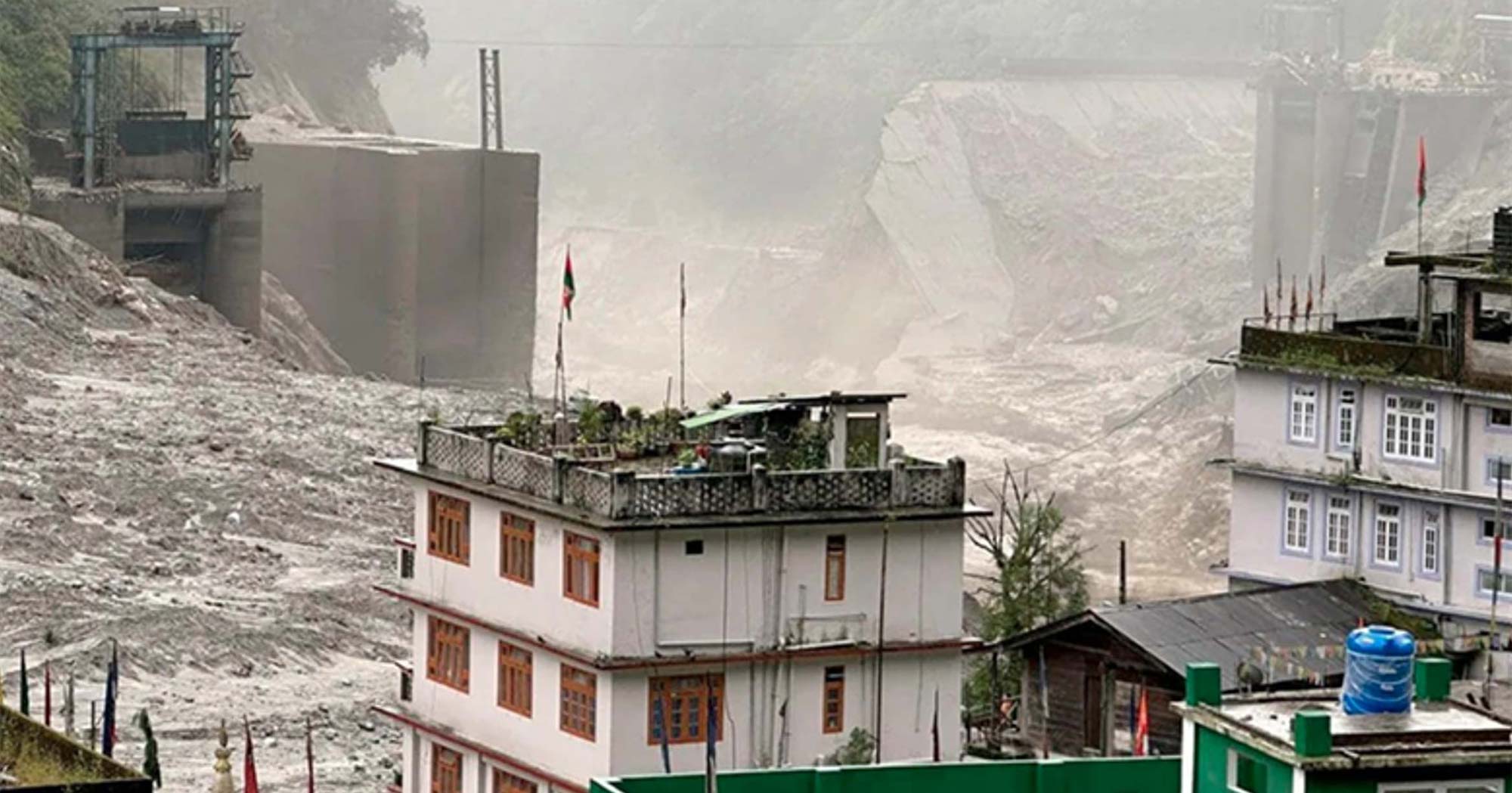
Chungthang Dam (Teesta IIII) (Photo: Courtesy of Wolfgang Schwanghart)
Risks from Hydropower Operations
Beyond being vulnerable to natural disasters, the construction and operation of dams can create new hazards and degrade river ecosystems. The practice of sub-daily release of large volumes of water, called hydropeaking, is designed to meet fluctuating, peak electricity demand. However, these sudden artificial floods drastically alter river ecology. In India, unregulated water releases and flushing from dams have been linked to hundreds of fatalities and were identified as a significant contributing factor in the 2013 Uttarakhand disaster.
Triggered landslides are another probable result of construction. Building dams, roads, and other associated infrastructure, along with the impoundment of massive reservoirs, can destabilize steep valley slopes and cause landslides. Evidence also demonstrates induced seismicity from damming. While the triggering of major earthquakes is rare, the sheer weight and pressure of large reservoirs can induce smaller seismic events. Studies of projects like the Tehri Dam in India show that seasonal variations in the lake’s water level cause substantial crustal deformations of up to 30 millimeters, demonstrating the immense geological stress these structures exert.
Data Restriction and Trust Deficit
A common feature across these large-scale projects is the implementation of restrictive data policies concerning environmental, geological, and operational conditions. This lack of transparency severely complicates independent scientific assessments and risk analysis. For massive undertakings like the Medog (Motuo) Dam, about which very little public information is available, this secrecy undermines trust among downstream countries and communities who are directly exposed to the consequences of a potential failure or operational mismanagement.
The convergence of these climatic, geological, and operational risks presents a formidable challenge to the long-term safety and sustainability of hydropower on the Tibetan Plateau.
Transparent, Inclusive, and Comprehensive Planning
A second key, and often ignored, aspect of proper project evaluation is analysis that better optimizes achievement of multiple goals. Clean energy policy choices should balance decarbonization with environmental sustainability and maintenance of traditional ways of life. For example, agrivoltaics, where solar panels are sited, constructed, and managed to facilitate pastoral animal husbandry and other agriculture, can deliver multiple objectives. In the specific context of Tibet, combining solar installations with grazing has the potential to simultaneously support utility scale renewables, which can contribute to global climate targets, while also supporting traditional Tibetan pastoral rhythms. Another example is integrating demand reduction into planning, which by definition will help avoid potential harm. Identifying these types of “stacked” solutions relies on setting clear objectives.
In sum, conventional assessments often underestimate hydropower’s costs and risks while overstating the benefits of new construction and overlooking alternative solutions that maximize benefits and reduce risks.
A Synthesis of Compounded Risks
The principal conclusions of this report can be summarized as a series of cautions:
- The unprecedented scale of construction in Tibet is primarily geared toward power export, imposing severe and largely uncompensated social, cultural, and economic costs on local communities who are displaced from their ancestral lands. Further, it is essential to end the territorial conflict between China and Tibet through peaceful dialogue in order to engender a truly sustainable solution that benefits upper riparian and downstream countries.
- New high-altitude hydropower cannot be assumed a priori to be uniformly reliable or GHG emission free. Climate-driven variability in water supply and potential reservoir emissions of GHG with high near-term warming potential mean benefits are uncertain. Robust appraisal should pair uncertainty-aware hydrological modeling with assessment of near-term methane impacts and local equity considerations, and weigh projects against other pathways to decarbonization to prevent compounding negative impacts on local communities, and marginalized groups including children, women and indigenous peoples.
- The extreme geological and environmental hazards endemic to the Himalayan region—from high seismicity and landslides to the growth and increasing instability of glacial lakes—pose a significant and potentially underestimated threat both to and from dam infrastructure.
- The principle of Free, Prior and Informed Consent is foundational to achieving equitable decarbonization. Proper FPIC must include transparent comprehensive environmental impact assessments based on verifiable data and genuine community input at all stages of project development. Appropriately executed studies should present alternative solutions that achieve multiple objectives, including clean energy production and maintenance of traditional ways of life.
Conclusion
*This policy brief is based on the panel “Tibet: Epicenter of Climate Risk, Regional Conflict, and Clean Energy” presented at the 2025 World Water Week conference held in Stockholm, Sweden and benefited from input provided by Charlotte Wagner, Senior Scientist at the Stockholm Environment Institute.
The Profile of Hydropower Expansion in Tibet
Scale and Ambition
Research presented in the International Campaign for Tibet (ICT’s) report Chinese hydropower: Damning Tibet’s culture, community, and environment documents an expansion of hydropower that is unprecedented in its scope and scale. The findings reveal a systematic campaign to harness the kinetic energy of Tibet’s rivers. A database compiled by ICT assessed a sample of 193 dams built or planned since 2000, the total number estimated to be 300 or more. Of the dams analyzed, 80% are classified as large or mega dams, indicating a focus on massive, centralized energy production. The total potential energy capacity of the 193 dams in the database is 270 GWatt, a figure equivalent to the entire energy generation capacity of Germany in 2022. A prime example of China’s ambitions is the construction of the Medog (Motuo) Dam, a project with a planned capacity of 60 GWatt—three times that of the Three Gorges Dam, currently the world’s largest. This concentration of large dams in a single region not only creates the social and cultural pressures detailed below but also multiplies the potential points of catastrophic failure within one of the world’s most geologically active mountain systems.
Strategic Purpose
The enormous surplus of power potentially generated by China’s overall agenda is not intended for local Tibetan consumption. The primary objective is to transform Tibet into a major energy exporter under China’s West-East Power Transmission Project. This initiative is designed to transmit electricity to the industrial and urban centers of central and eastern China, with long-term plans for export to Southeast Asia. This creates a stark imbalance in the distribution of costs and benefits.
Social and Cultural Impacts
The potential human cost of this development is immense. Analysis of census and satellite data suggests that up to 1.2 million Tibetans living in the impact area of planned dam sites would be dislocated from their homes, communities and separated from their traditional livelihoods. This widespread displacement is accompanied by the irreversible destruction of cultural and religious heritage.
The specific political context of Tibet also defines the policy environment and choices being made. Conversations regarding Asia’s major rivers primarily exclude Tibet due to the Chinese government’s unwillingness to openly address the situation via dialogue with the Tibetan people to identify a mutually beneficial solution to the ongoing territorial conflict. Without transparency and meaningful consultation leading to the empowerment of local Tibetan communities regarding decisions that alter their lives and lands, it is operationally impossible to develop sustainable, equitable solutions. In short, Tibet is the source of Asia’s rivers and the free, prior, and informed consent of Tibetans must be recognized. If not, effective riparian management will be blocked to the detriment not only of the upper riparian region but also for downstream countries.
Reassessing Hydropower in a Changing Climate
Climate Change and Operational Reliability
Evaluating the costs and benefits of large infrastructure projects in the 21st century requires using multidimensional assessment across social, economic, energy, and environmental dimensions to support climate resilient, equitable, and efficient decarbonization planning. For new hydropower, estimating future energy output, reliability, and economic performance requires forward-looking assessments that take into account hydrological changes, as well as evolving and competing water demands across the complex systems that are watersheds. As a result of climate change, conventional assessments of hydropower’s potential, which often rely on historical data, may not accurately predict future energy production. This is especially true when climate change threatens historical hydrological patterns, such as in the case of accelerating glacier melting and increasingly variable precipitation patterns on the Himalayan Plateau. These challenge hydropower’s reliability, making its energy output more variable and unpredictable than historical data implies. This can have important consequences for the cost-effectiveness of new hydropower developments, potentially resulting in higher per-kilowatt-hour costs than anticipated in initial project planning, which may erode the economic rationale for the investment.
Green House Gas Emissions
In addition to the operational uncertainties influencing hydropower’s climate mitigation potential, GHG emissions may arise from the hydropower reservoir itself, particularly soon after impoundment when flooded vegetation and organic soils decompose anaerobically, releasing carbon dioxide and methane. Although cooler, oligotrophic conditions tend to suppress methane formation relative to warm lowland reservoirs, meaningful emissions can still occur, especially in the early years. This matters because methane’s near-term warming impact is high (roughly 27–30× that of CO₂ on a 100-year GWP basis and about 80× on a 20-year basis).
With the window for decisions that deliver decarbonization and limit warming rapidly narrowing, the importance of carefully considering near-term methane emissions has drawn growing attention from scientists and policymakers alike.
Methane Emissions cycle related to Hydropower Dams (Source: Intergovernmental Panel on Climate Change)
Risks to Hydropower Infrastructure
The immense forces of nature in the Himalaya pose a direct and constant threat to the structural integrity and operational viability of dam projects. Glacial change and outburst floods are a significant risk factor. As glaciers retreat, they often leave behind large, unstable lakes dammed by loose moraine deposits. These are known as glacial lakes, and their catastrophic failure can trigger Glacial Lake Outburst Floods (GLOFs). The South Lhonak Lake event in 2023 serves as an example. The failure of the lake’s moraine dam unleashed a devastating flood that traveled 70 kilometers downstream and completely demolished the Chungthang Dam, a major piece of hydropower infrastructure.
Further, the region is defined by high seismicity. It sits at the collision point of the Indian and Eurasian tectonic plates, making it one of the most seismically active zones in the world. Historical events like the 1950 Assam earthquake (magnitude 8.5) underscore this immense potential. More recently, the 2015 Nepal earthquake (magnitude 7.8) damaged 30 separate hydropower projects and caused a temporary loss of 34% of the country’s hydropower capacity. In Tibet, the January 2025 Dingri earthquake caused visible cracks in dams and led to the emergency evacuation of over 1,500 residents due to fears of imminent dam failure.
Chungthang Dam (Teesta IIII) (Photo: Courtesy of Wolfgang Schwanghart)
Beyond being vulnerable to natural disasters, the construction and operation of dams can create new hazards and degrade river ecosystems. The practice of sub-daily release of large volumes of water, called hydropeaking, is designed to meet fluctuating, peak electricity demand. However, these sudden artificial floods drastically alter river ecology. In India, unregulated water releases and flushing from dams have been linked to hundreds of fatalities and were identified as a significant contributing factor in the 2013 Uttarakhand disaster.
Triggered landslides are another probable result of construction. Building dams, roads, and other associated infrastructure, along with the impoundment of massive reservoirs, can destabilize steep valley slopes and cause landslides. Evidence also demonstrates induced seismicity from damming. While the triggering of major earthquakes is rare, the sheer weight and pressure of large reservoirs can induce smaller seismic events. Studies of projects like the Tehri Dam in India show that seasonal variations in the lake’s water level cause substantial crustal deformations of up to 30 millimeters, demonstrating the immense geological stress these structures exert.
Data Restriction and Trust Deficit
A common feature across these large-scale projects is the implementation of restrictive data policies concerning environmental, geological, and operational conditions. This lack of transparency severely complicates independent scientific assessments and risk analysis. For massive undertakings like the Medog (Motuo) Dam, about which very little public information is available, this secrecy undermines trust among downstream countries and communities who are directly exposed to the consequences of a potential failure or operational mismanagement.
The convergence of these climatic, geological, and operational risks presents a formidable challenge to the long-term safety and sustainability of hydropower on the Tibetan Plateau.
Transparent, Inclusive, and Comprehensive Planning
A second key, and often ignored, aspect of proper project evaluation is analysis that better optimizes achievement of multiple goals. Clean energy policy choices should balance decarbonization with environmental sustainability and maintenance of traditional ways of life. For example, agrivoltaics, where solar panels are sited, constructed, and managed to facilitate pastoral animal husbandry and other agriculture, can deliver multiple objectives. In the specific context of Tibet, combining solar installations with grazing has the potential to simultaneously support utility scale renewables, which can contribute to global climate targets, while also supporting traditional Tibetan pastoral rhythms. Another example is integrating demand reduction into planning, which by definition will help avoid potential harm. Identifying these types of “stacked” solutions relies on setting clear objectives.
In sum, conventional assessments often underestimate hydropower’s costs and risks while overstating the benefits of new construction and overlooking alternative solutions that maximize benefits and reduce risks.
A Synthesis of Compounded Risks
The principal conclusions of this report can be summarized as a series of cautions:
- The unprecedented scale of construction in Tibet is primarily geared toward power export, imposing severe and largely uncompensated social, cultural, and economic costs on local communities who are displaced from their ancestral lands. Further, it is essential to end the territorial conflict between China and Tibet through peaceful dialogue in order to engender a truly sustainable solution that benefits upper riparian and downstream countries.
- New high-altitude hydropower cannot be assumed a priori to be uniformly reliable or GHG emission free. Climate-driven variability in water supply and potential reservoir emissions of GHG with high near-term warming potential mean benefits are uncertain. Robust appraisal should pair uncertainty-aware hydrological modeling with assessment of near-term methane impacts and local equity considerations, and weigh projects against other pathways to decarbonization to prevent compounding negative impacts on local communities, and marginalized groups including children, women and indigenous peoples.
- The extreme geological and environmental hazards endemic to the Himalayan region—from high seismicity and landslides to the growth and increasing instability of glacial lakes—pose a significant and potentially underestimated threat both to and from dam infrastructure.
- The principle of Free, Prior and Informed Consent is foundational to achieving equitable decarbonization. Proper FPIC must include transparent comprehensive environmental impact assessments based on verifiable data and genuine community input at all stages of project development. Appropriately executed studies should present alternative solutions that achieve multiple objectives, including clean energy production and maintenance of traditional ways of life.
Conclusion
*This policy brief is based on the panel “Tibet: Epicenter of Climate Risk, Regional Conflict, and Clean Energy” presented at the 2025 World Water Week conference held in Stockholm, Sweden and benefited from input provided by Charlotte Wagner, Senior Scientist at the Stockholm Environment Institute.