
China’s new party secretary of the so-called Tibet Autonomous Region (TAR), Hu Changsheng, has vowed to “deepen the anti-separatist struggle” and “resolutely ensure long-term stability and security,” signaling a continuation of Beijing’s repressive policies in the region. A Chinese official, Hu replaced Wang Junzheng as TAR Party Secretary, according to an announcement by the Chinese Communist Party (CCP) on Sep. 22, 2026.
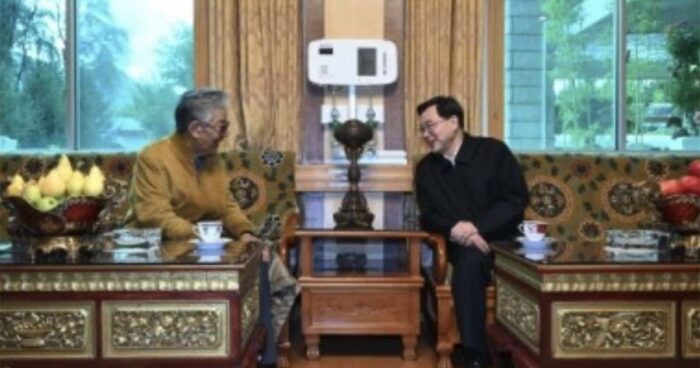
New TAR Party Secretary Hu Changsheng meets with TAR leader Phakpalha Gelek Namgyal on Sep. 23, 2026.
Hu’s appointment as TAR Party Secretary reflects the CCP’s longstanding practice of excluding Tibetans from the most powerful administrative positions. To date, no Tibetan has ever been appointed as party secretary of the TAR.
A native of Jiangxi Province, Hu is Chinese and has previous experience governing Tibetan areas in the traditional Kham and Amdo regions. He earlier served as Party Secretary of Kardze (Ganzi) Tibetan Autonomous Prefecture in Sichuan from 2012 to 2015 and as a member of the Standing Committee of the Qinghai CCP from 2015 to 2017. More recently, Hu also served as Party Secretary of Gansu province from 2022 to 2026, during which time he oversaw the Kanlho (Gannan) Tibetan Autonomous Prefecture.
His remarks upon taking office underscored his intent to continue the CCP’s and Xi Jinping’s hardline policies in Tibet. Chinese state media quoted Hu as stating at an official announcement ceremony for the TAR’s leading cadres on September 22, 2026: “I will, adhere to the principle of coordinating development and security, fully implement the overall national security concept, deepen the anti-separatist struggle, strengthen the management of religious affairs according to law, take the strengthening of the sense of community of the Chinese nation as the main line, deepen the creation of a model area for ethnic unity and progress, strengthen and innovate social governance, and serve the national security with the stability of Tibet.”
Additionally, ICT’s analysis of Hu’s career, particularly his record in Tibetan areas, together with his stated priorities upon taking office, indicates that he will likely continue to carry out restrictive and repressive measures against the Tibetan people.
During his tenure in Kardze, Tibetans there faced severe restrictions in their activities, including security forces firing on Tibetans who were calling for the release of arbitrarily detained Tibetans. Similarly, in July 2013, Kardze security forces were ordered to use tear gas and live ammunition to disperse a crowd of monks, nuns, and laypersons who had gathered in Daofu (Tawu) County to celebrate the 78th birthday of the Dalai Lama.
Tsering Gyaltsen, a monk from Draggo Monastery in Draggo (Luhuo) County, died following a police beating for his participation in a protest in January 2012. Hu Changsheng, then Party Secretary of Kardze Tibetan Autonomous Prefecture, visited the monastery to prohibit senior monks from discussing the cases of four monks sentenced to five to seven years in prison for their participation in the January protest, according to the U.S. State Department’s 2013 International Religious Freedom Report, which cited the exile media outlet Phayul.com.
The repression continued after Hu’s departure as the prefecture’s party secretary, as evidenced by the CCP ordering a series of demolitions of structures of religious significance, including a 99-foot Buddha statue, a 45-foot Guru Padmasambhava statue at Channang Monastery, a 40-foot Maitreya statue housed inside Draggo Monastery, a row of 45 prayer wheels, and the Gaden Rabten Namgyal Ling monastic school. At least 11 known Tibetans who resisted the demolitions were detained between October 31 and December 31, 2021.
During his most recent tenure as the party secretary of Gansu between December 2022 and September 2026, controls over Tibetan Buddhist monasteries in Kanlho (Gannan) prefecture and their religious activities intensified after Hu’s appointment, according to a Tibetan who escaped Tibet in 2024. In 2024, Gansu authorities issued a stringent training manual to Buddhist clergy preventing monks from engaging in activities which the authorities labeled as threatening national unity or disrupting social stability. The restrictions included bans on any cooperation with Tibetan religious leaders and the exiled Tibetan community.
A year earlier in 2023, Gansu officials initially cancelled a major Tibetan Buddhist festival from taking place in Kanlho. When the festival was later allowed to proceed and rescheduled to later in the year, authorities imposed restrictions, including preventing devotees from gaining access to the lama, Gungthang Rinpoche.
Under Hu’s provincial leadership, Kanlho Prefecture Party Secretary He Moubao made a major push to tighten ideological control in Tibetan areas. In November 2025, He summoned the heads of monasteries and nunneries in and around Sangchu (Xiahe) County and demanded absolute loyalty to the Chinese state and gratitude toward the CCP.
In 2015, during his visit to the renowned Labrang Monastery in Kanlho, Hu emphasized the systematic “Sinicization” of Tibetan Buddhism and its complete integration into socialist society.
The Party Secretary of Kardze Tibetan Autonomous Prefecture, Hu Changsheng, is pictured in the official media visiting Larung Gar monastery on February 5, 2015. Management of monasteries by Party officials has been stepped up in line with the new ‘stability drive’ in Kham and Amdo.
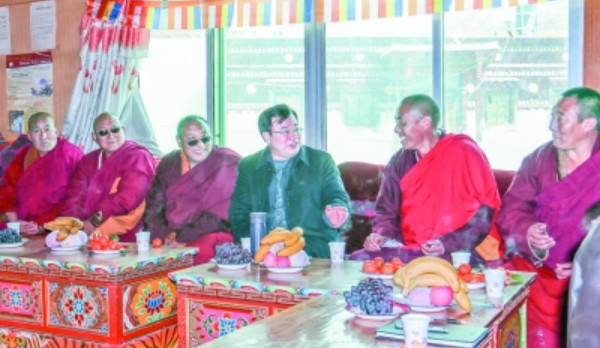
File photo of then Party Secretary of Kardze Tibetan Autonomous Prefecture Hu Changsheng visiting Larung Gar Monastery on February 5, 2015 to step up management of monasteries as part of the Party’s “stability drive.” (State media propaganda handout)
Hu Changsheng’s most recent high-profile meeting with a senior American official took place in October 2024, when he met then-U.S. Ambassador to China Nicholas Burns. Their discussions centered almost exclusively on Gansu–U.S. relations, economic cooperation, and people-to-people exchanges. During the meeting, Hu projected a pragmatic and relatively measured image, emphasizing soft power, culture, tourism, and subnational exchanges while remaining aligned with central government policy. This engagement indicates Hu’s capability to conduct constructive external outreach—an approach he may also apply to Tibet, notwithstanding his concerning human rights record in Tibet.
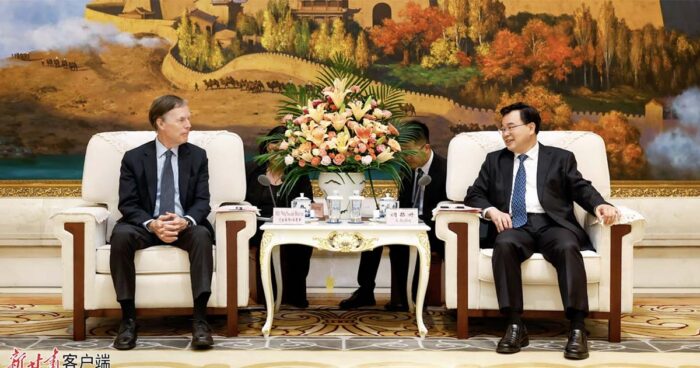
U.S. ambassador Nicholas Burns meeting with Hu Changsheng, then the Gansu provincial party secretary, in October 2024 (State media handout)
Reshuffle in other Tibetan Areas
Hu’s appointment is part of the expected regional leadership changes ahead of China’s 21st Party Congress in 2027, when Beijing will see broader leadership reshuffles under what is very likely to be Xi Jinping’s continued leadership of the CCP.
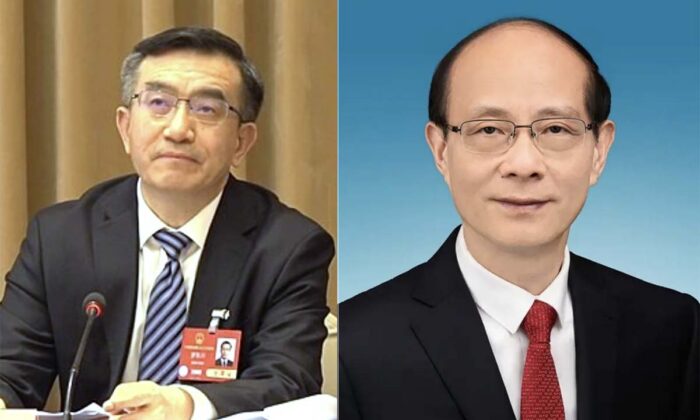
Luo Dongchuan and Wu Xiaojun, party secretaries of Qinghai and Gansu.
Along with Hu’s appointment, China also announced Luo Dongchuan and Wu Xiaojun as party secretaries of Qinghai and Gansu, respectively; both these provinces have significant Tibetan areas.
Previously, while serving as Governor of Qinghai, Luo led a delegation to meet the officials in Lhasa in October 2025 during which they discussed “safeguarding national security and social stability,” and “signed a strategic cooperation framework.”
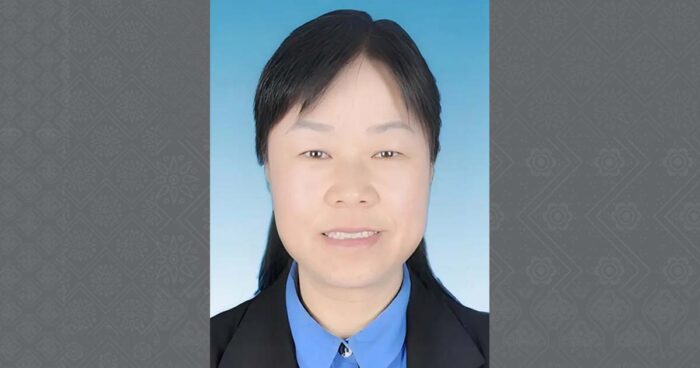
Dechen Tibetan Autonomous Prefecture Acting Governor Li Yanlan.
At the prefectural level, China announced in August that Li Yanlan, who is identified as being a Tibetan, had been appointed acting governor of the Dechen (Diqing) Tibetan Autonomous Prefecture in Yunnan. Born in 1972, she has spent her entire career in Dechen, where she became the prefecture’s vice governor in 2016 and deputy party secretary in 2022.
Hu Changsheng Tibet-related career history
Born December 1963, Hu Changsheng is from Gao’an, Jiangxi Province. He joined the Communist Party of China in 1986 and graduated from an in-service postgraduate program of Ancient Chinese History at Shandong University. He holds a doctorate in history and is an associate professor.
He is currently a member of the 20th Central Committee of the Communist Party of China.
February 2012 – April 2012: Served as Deputy Secretary of the CPC Kardze Prefecture Committee, Sichuan Province (at the ministerial level)
April 2012 – June 2015: Served as Secretary of the CPC Kardze Prefecture Committee
June 2015 – July 2017: Served as member of the Standing Committee of the Qinghai Provincial Party Committee and Minister of the Organization Department
December 2022–September 2026: Served as Party Secretary of Gansu.
September 2026: Appointed Party Secretary of the Tibet Autonomous Region
Luo Dongchuan Tibet-related career history
Born October 1965, Luo Dongchuan is from Chongqing. He joined the Chinese Communist Party in June 1986. He is currently an alternate member of the 20th CCP Central Committee and governor of Qinghai Province.
Late 2024: Appointed Deputy Secretary of the Qinghai CCP
January 2025: Appointed Governor of Qinghai Province
September 2026: Appointed Party Secretary of Qinghai Province
Wu Xiaojun Tibet-related career history
Born January 1966, Wu Xiaojun is from Taihe, Jiangxi Province and joined the Communist Party of China in May 1986.
April 2021 – March 2022: Deputy Secretary of the Qinghai CCP
March 2022 – May 2022: Deputy Secretary of the Qinghai CCP, Vice Governor, and Acting Governor
May 2022-December 2024: Deputy Secretary of the Qinghai CCP and Governor
December 2024 – January 2025: Secretary of the Qinghai CCP and Governor
January 2025 – September 2026: Secretary of the Qinghai CCP, Chairman of the Standing Committee of the Qinghai Provincial People’s Congress, and First Secretary of the Party Committee of the Qinghai Provincial Military Region
September 2026: Appointed Party Secretary of Gansu Province