


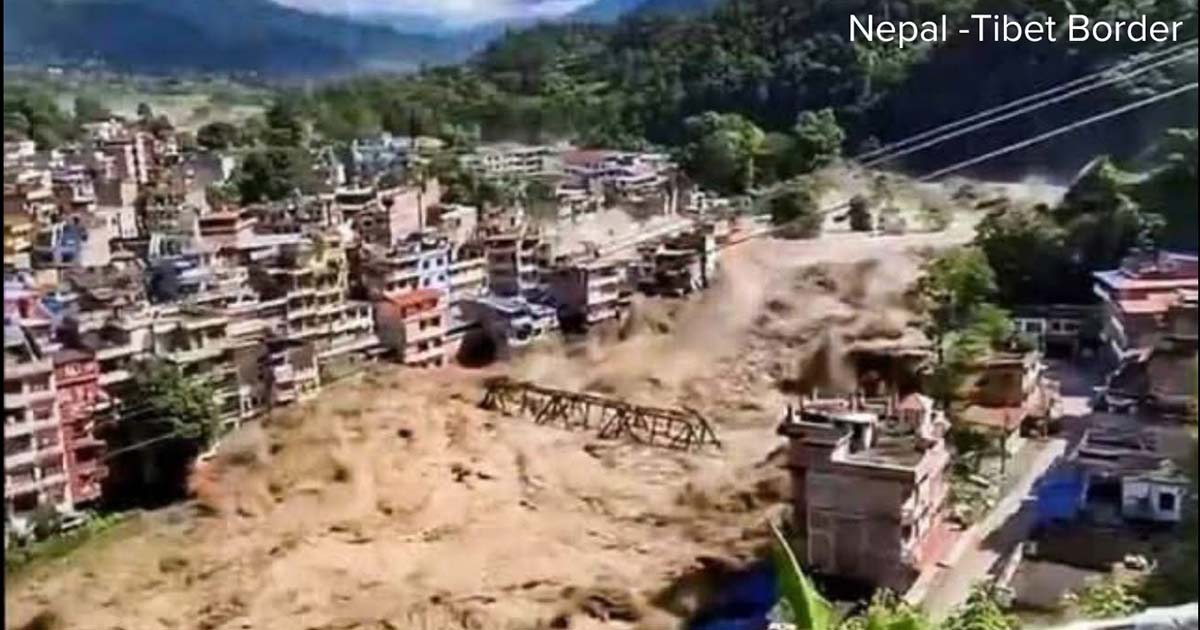
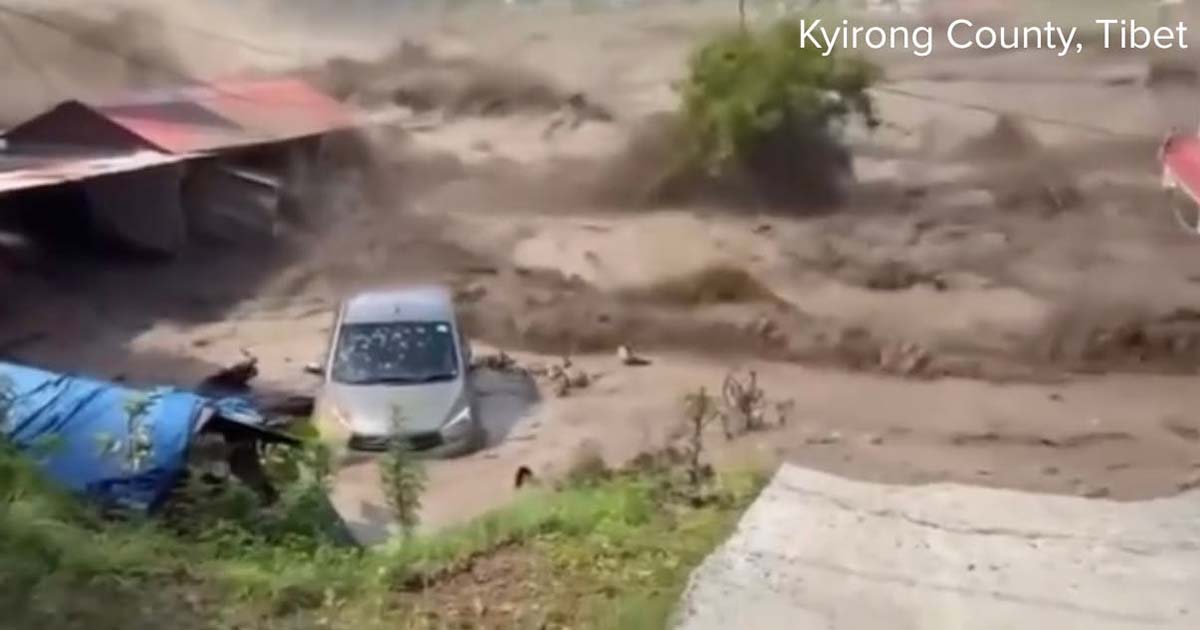
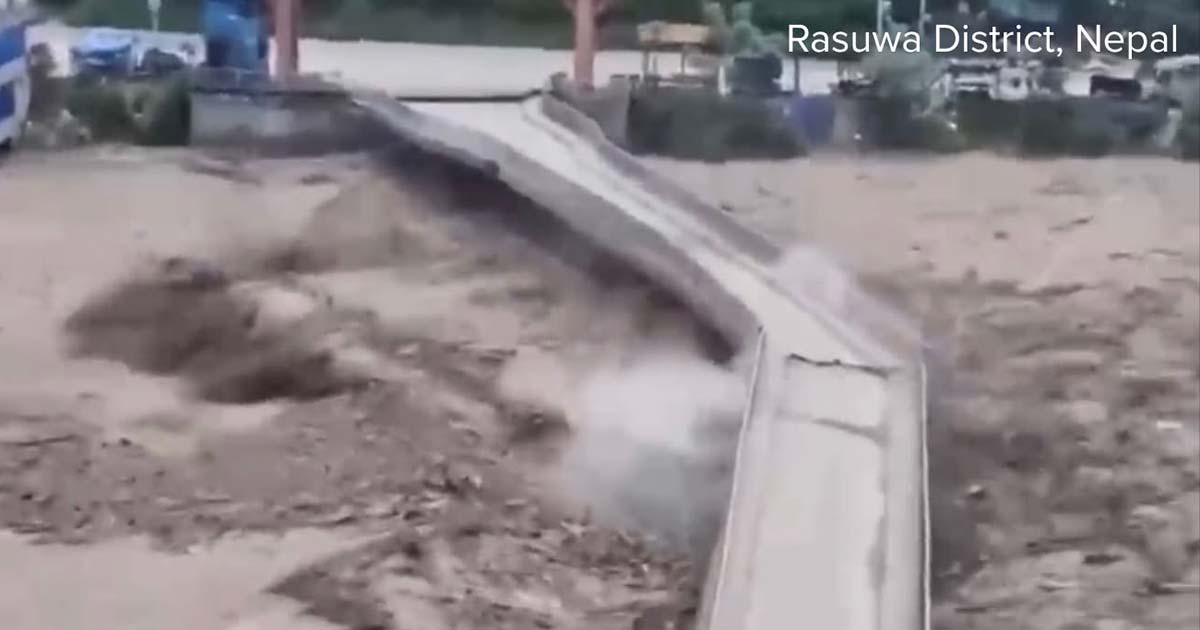
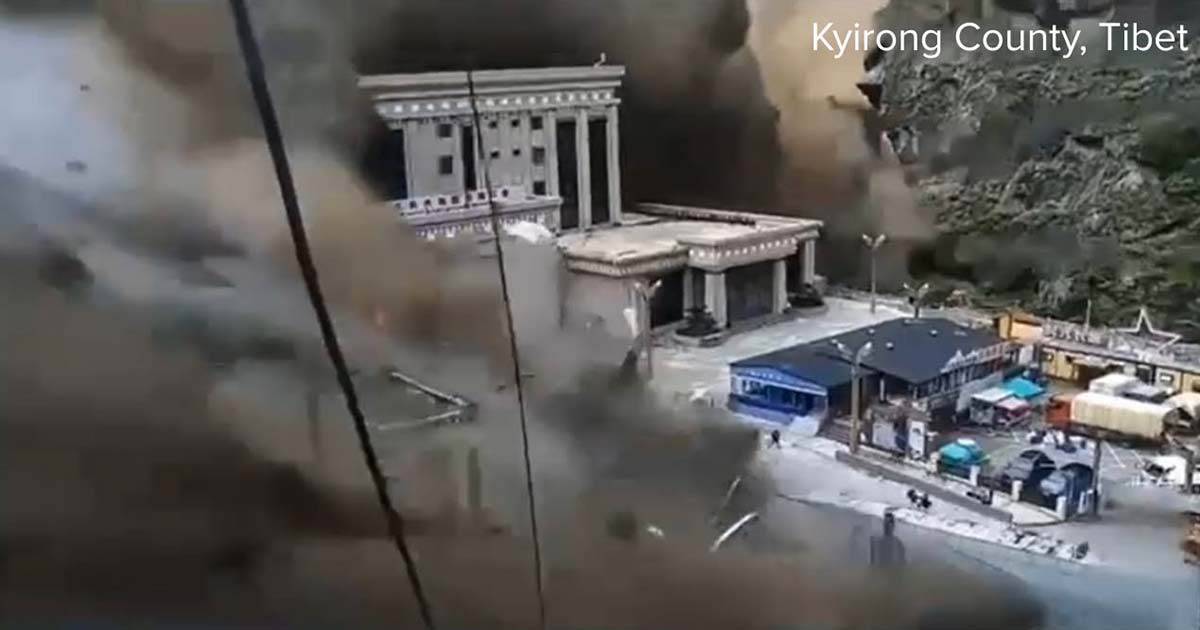
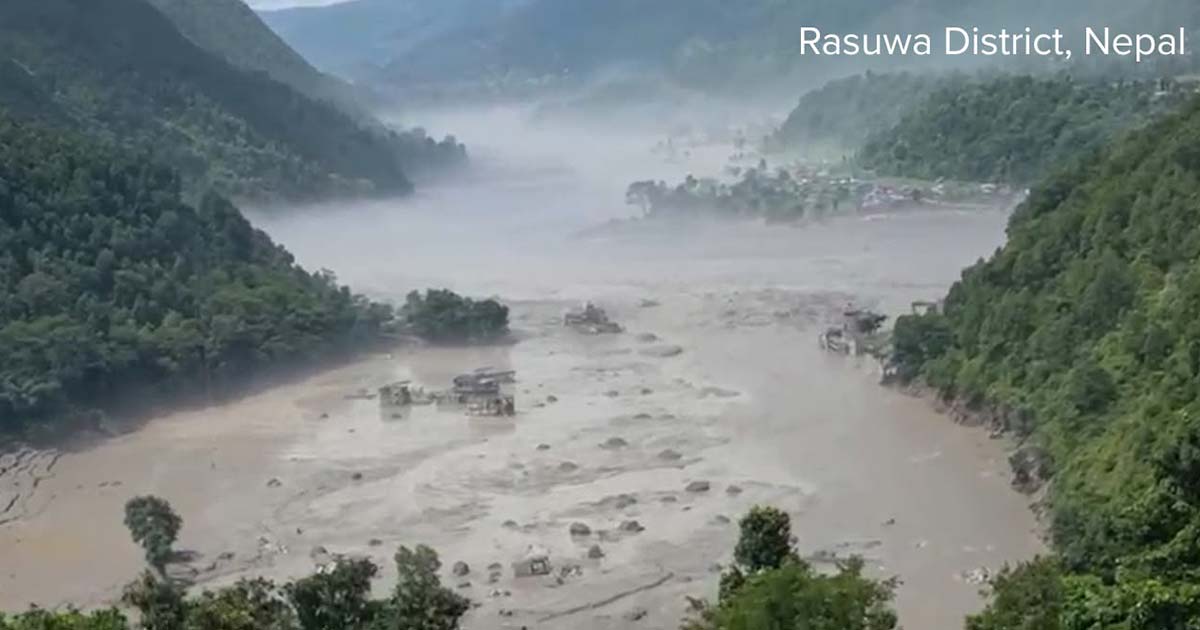
The International Campaign for Tibet (ICT) has been closely monitoring the humanitarian disaster following the devastating mudslides and flooding on Aug. 26, 2026 in Kyirong (Chinese: Jilong or Gyirong) County in Shigatse Prefecture, Tibet, and in several districts of Nepal, including Rasuwa and Nuwakot. ICT mourns the loss of life among local communities on both sides of the Nepal-Tibet border, and we are deeply concerned about the fate of the many international tourists and pilgrims who remain missing.
We hope for the swift and safe rescue of all those still trapped or unaccounted for, and we commend the brave first responders and local communities undertaking search and rescue efforts under extremely difficult circumstances. Our thoughts and prayers are with everyone affected on both sides of the Nepal-Tibet border — families who have lost loved ones, the many who remain injured or missing, and the communities confronting this unfolding disaster.
On Thursday, His Holiness the Dalai Lama expressed his sadness over the loss of life and extensive structural damage caused by the floods in Nepal and Tibet. He offered prayers for those who have lost their lives and heartfelt condolences to the bereaved and everyone affected by this tragedy. “Since this region has seen calamities in the past as well, these are certainly symptoms of a deeper underlying cause — whether climate change or other factors. I hope that appropriate follow-up measures will be taken, wherever possible, to help ensure that such disasters do not recur,” His Holiness said in a statement.
Sikyong Penpa Tsering, the democratically elected head of the Central Tibetan Administration, also expressed his condolences and solidarity with all those affected. The CTA, said in a statement on Thursday, that it directed relevant officials and offices to begin emergency relief work without delay to help those affected in the five Tibetan settlements or communities within the jurisdiction of the Nepal-based Sha-Wa-Ra Sum Tibetan Settlement Office, of which Shabru settlement and Timure on the Kyirong border were the hardest hit. CTA appealed to Tibetans in exile to contribute voluntarily through their respective Offices of Tibet and Tibetan settlement offices to support relief efforts for Tibetan communities affected on the Nepal side.
While Nepal is providing timely information and avenues for international humanitarian assistance, disaster relief efforts in Tibet must also be accompanied by timely and transparent information sharing and unhindered access for humanitarian support. Without independent access to the Tibetan side of the Nepal-Tibet border, it is impossible to determine the full scale of the losses or obtain a complete picture of the situation in Kyirong County.
The international community, therefore, remains largely dependent on Chinese state media, whose coverage so far has focused primarily on Xi Jinping’s directives and official accounts of rescue and relief efforts, rather than on firsthand accounts of actual conditions on the ground, survivors’ experiences, or the full extent of the casualties and destruction.
“ICT calls on the Chinese government to disclose complete and verifiable information about the damage and casualties, permit independent reporting, and allow unhindered access for humanitarian assistance,” said Tencho Gyatso, President of the International Campaign for Tibet. “Authorities in Tibet must permit the free flow of information, unhindered humanitarian access, and the meaningful involvement of local communities in disaster relief efforts to help save lives and ensure that assistance reaches everyone in need,” she added.
According to ICT sources on the ground, the Chinese government is already severely restricting detailed information about the situation inside Tibet. ICT sources inside Tibet have confirmed that videos and other firsthand documentation uploaded to Chinese social media platforms are being removed, raising serious concerns about deliberate information control. Another source from Kyirong told ICT that major flooding in the Kyirong border region completely destroyed Tibetan-owned shops, restaurants, and teahouses near the border crossing and reportedly caused numerous casualties on the Tibetan side of the border.
During past disasters, including as recently as the 2025 Dingri earthquake, restrictions on access and information have raised serious concerns about transparency, the accuracy of official reporting, and whether the needs and voices of affected Tibetan communities were being fully addressed. ICT calls on Chinese authorities to urgently implement an effective emergency response that includes timely and transparent information, independent scrutiny, unrestricted access for humanitarian aid, and the free flow of information from all affected areas.