


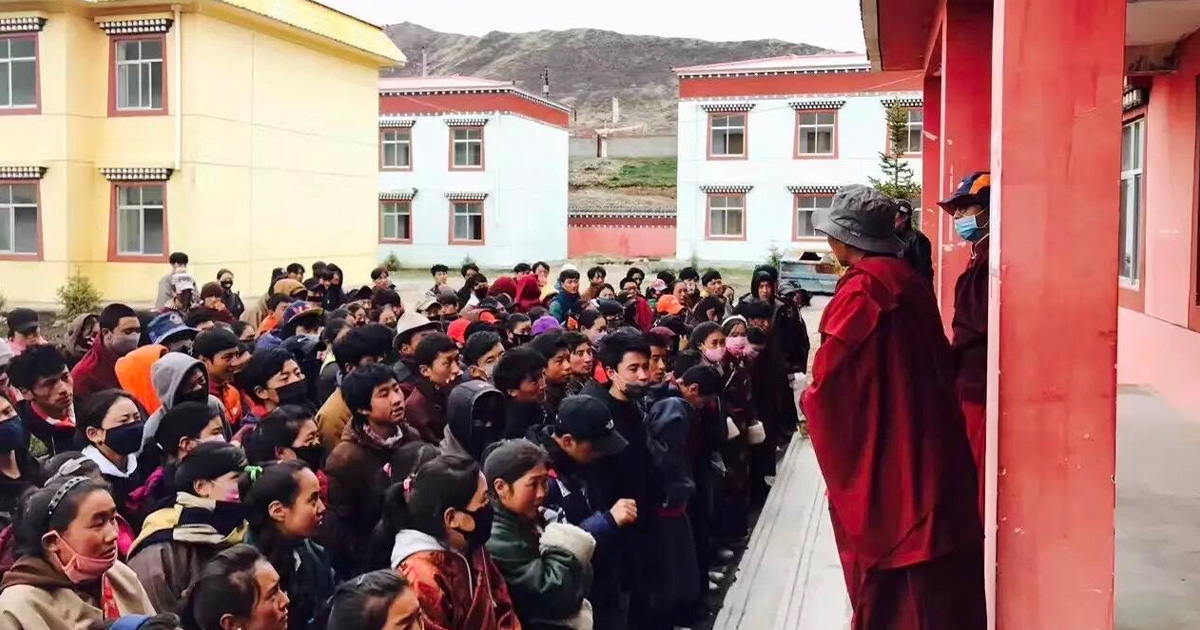
Tibetan students at Hungkar Dorjee Vocational High School, which Chinese authorities forcibly shut down on June 24, 2026. Credit: Sources
On June 24, 2026, the Chinese government forced the permanent shutdown of Hungkar Dorje Vocational High School, a prominent school founded by renowned Tibetan Buddhist leader Tulku Hungkar Dorje, who died in March 2025 under suspicious circumstances while in Chinese custody in Vietnam.
Located in Golog (Gulou) Tibetan Autonomous Prefecture under present-day Qinghai Province, the school, which was also known as Snowland Ancient and Modern Education Center, provided specialized education in traditional Tibetan culture and language since its establishment in 2008.
According to two sources who spoke to the International Campaign for Tibet (ICT), the main reason for the shutdown was the school’s use of the Tibetan language as the primary medium of instruction, viewed as failure to comply with the Chinese government’s revised education policy that mandates Mandarin as the only language of instruction even in Tibetan areas.
The school’s founder Tulku Hungkar Dorje, the head of Lungngon Monastery, had faced repercussions from Chinese authorities for his efforts to preserve Tibetan culture. For over a year prior to his death, he had been subjected to intense harassment after he declined to organize an elaborate reception for the Chinese-appointed Panchen Lama, Gyaltsen Norbu, during his visit to Golog.
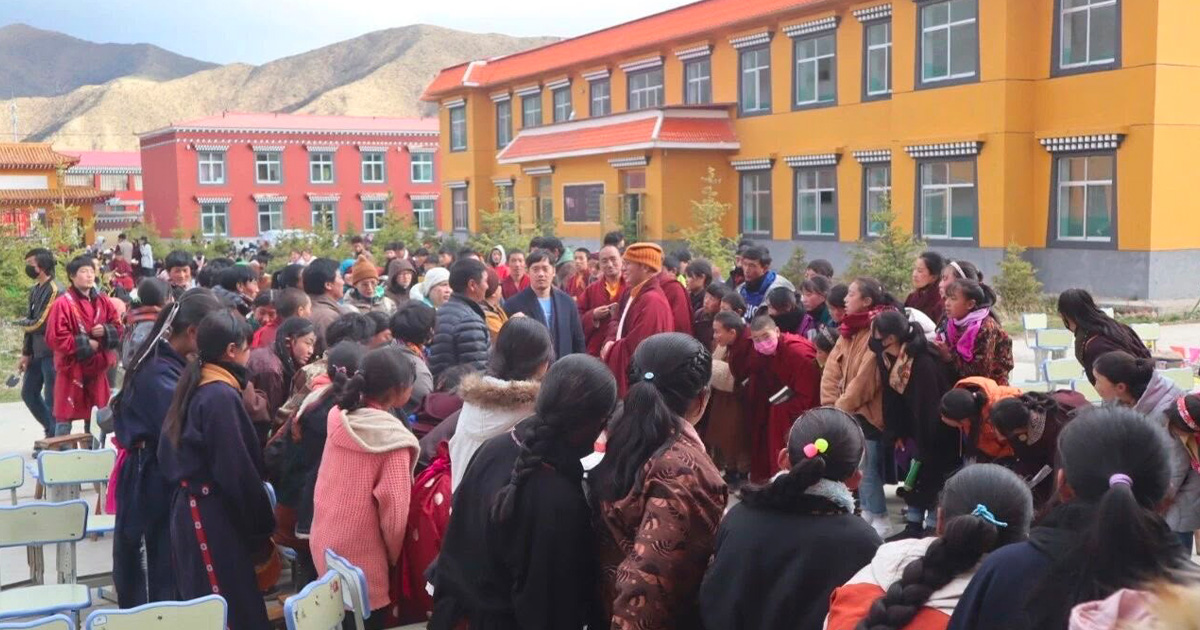
Tibetan students with Hungkar Dorje Vocational High School founder Tulku Hungkar Dorje, who died in March 2025, in an undated photo. Credit: Sources
History and Impact of the School
Construction for the school, which was approved by the Golog Prefecture Education Bureau, began in 2007, and the school officially opened on July 6, 2008.
The school focused mainly on the Tibetan language but also taught English and Chinese. It offered specialized programs, including in Traditional Weaving and Tailoring, Tibetan Medical Theory and Practice, Thangka Painting and Arts, and Information Technology (IT).
With the school being ordered to close, all activities in it have been completely banned.
One of the sources, a former student, shared their deep sadness upon hearing the news: “I am a graduate of this school, and I feel deeply saddened by its closure. Over the years, it provided education to over a thousand students. At its peak, the school had between 800 and 1,000 students, including monks, nuns, laymen and laywomen.”
According to the same source, the Chinese government had first issued the official closure order in 2024 and banned the school from enrolling new students. However, Tulku Hungkar Dorje had, at the time, repeatedly petitioned officials in Qinghai Province and Golog Prefecture and successfully secured an agreement to keep the school open just long enough for the existing students to finish their studies and graduate.
Censorship and Uncertain Future
Another source told ICT that following the closure, many Tibetans have gone online to express their grief over the loss of the school, sharing photos of the school on social media. However, the Chinese government is heavily censoring, deleting, and blocking these posts.
Many graduates of the school have gone on to serve in various capacities relating to Tibetan language and culture, while others continued their education through advanced studies and research at higher universities.
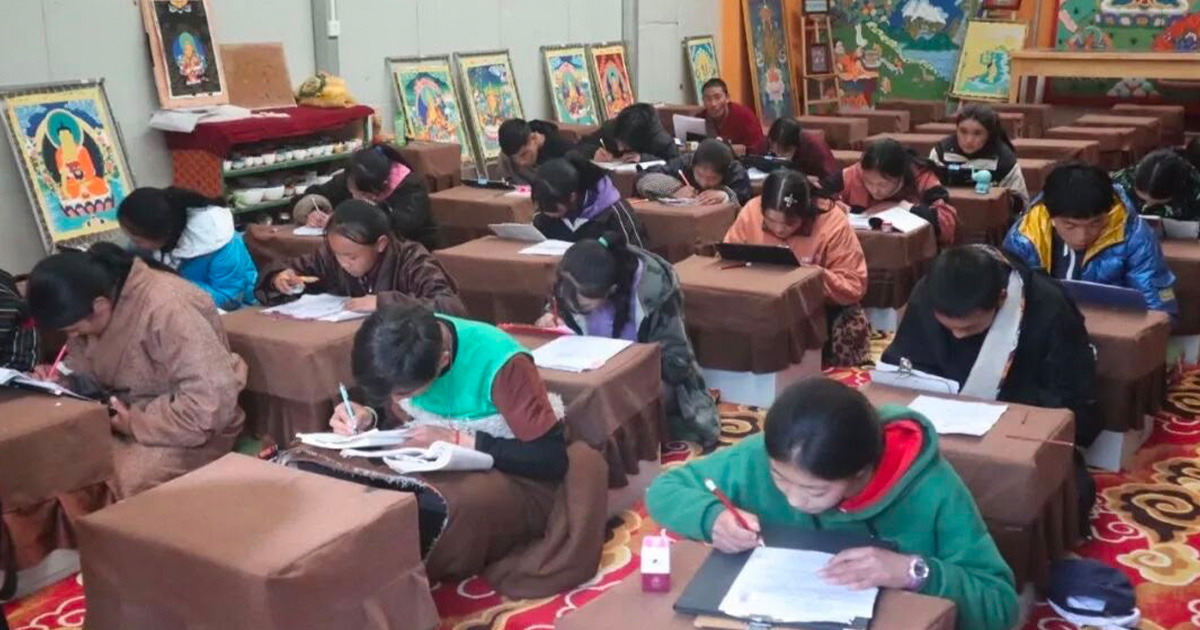
Students at Tibetan Thangka painting and art class at Hungkar Dorje Vocational High School, in an undated photo. Credit: Sources
The closure of Snowland Ancient and Modern Education Center fits a broader pattern of Chinese authorities systematically targeting privately run Tibetan educational institutions that prioritize cultural preservation over state-mandated assimilation.
In July 2024, authorities in Machen County, Golog Prefecture, shut down the renowned Jigme Gyaltsen Nationalities Vocational School after three decades of operation. The school had maintained strong academic standards while emphasizing Tibetan language and culture. In Ngaba Prefecture, Sichuan, officials forcibly removed young monks from Taktsang Lhamo Monastic School in November 2024 and transferred them to state-run institutions.
Similarly, around 140 students from Muge Monastic School were enrolled in government boarding schools in October 2024. These incidents, among others, suggest a deliberate campaign against independent Tibetan educational initiatives and cultural leaders in favor of CCP-controlled boarding schools that promote ideological conformity and assimilation into the Chinese nation.