


Two years after his detention for opposing China’s controversial hydropower dam project in eastern Tibet, a Tibetan monk from Yena Monastery remains in critical condition at a hospital in Chengdu after being tortured by Chinese authorities while in custody, sources told the International Campaign for Tibet (ICT).
Gonpo Tsering’s case reflects a broader pattern of torture and abuse of Tibetans in Chinese custody. As documented in a recent ICT report titled ‘Justice Denied: The Patterns of Deaths In and After Custody in Tibet,’ torture, denial of medical care and the absence of accountability are systemic features of China’s detention system in Tibet, with detainees released only after their health had deteriorated beyond recovery.
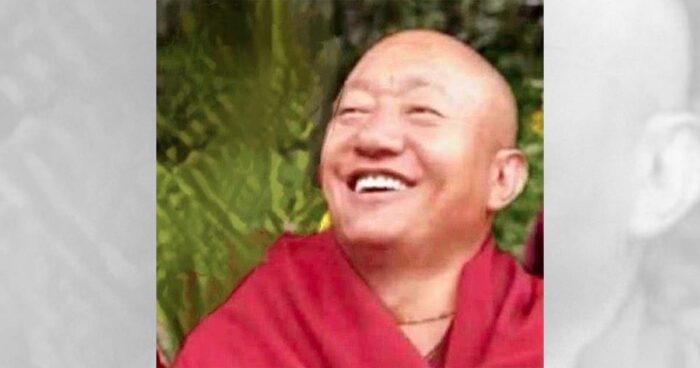
Tibetan monk Gonpo Tsering of Yena Monastery, Derge county remains in critical condition two years after suffering abuse by Chinese authorities over Derge dam protest.
Gonpo Tsering, 46, among the administrators of Yena Monastery in Derge (Chinese: Dege) county in Sichuan province, was detained after Chinese authorities accused him of helping lead the February 2024 protests against China’s planned construction of the Kamtok (Gangtuo) hydropower dam. Local Tibetans and monks opposed the project, which threatened to destroy centuries-old monasteries, including the Yena and Wonto Monasteries, and inundate several villages and sacred religious sites.
Following his arrest, Chinese authorities subjected Gonpo Tsering to severe physical abuse and torture while in custody. Because of this, he was rushed to West China (Huaxi) Hospital in Chengdu, where he has remained in critical condition for two years, sources said.
Sources also told ICT that Gonpo Tsering is currently bedridden, unable to stand or speak, and is fed through tubes. He is unresponsive to family members and unable to recognize people around him. Devastated by his son’s detention and condition, his father, Lobsang Dorjee, passed away on Sep. 21, 2025.
Despite the severity of his injuries, the Chinese government has provided no financial assistance for his medical care, said sources. Instead, authorities maintain strict and constant surveillance at the hospital, restricting visitors, monitoring those caring for him, and prohibiting photos or videos from being taken or shared, sources told ICT.
Gonpo Tsering’s condition reflects key findings in ICT’s “Justice Denied” report: that detention in Tibet can itself become life-threatening and that the Chinese authorities’ abuse of Tibetans in custody does not end with their torture but extends well beyond their detention. Families are frequently denied information about the injuries sustained by detained relatives, independent investigations are absent, and those seeking answers face intimidation and surveillance. His case also illustrates the continuing impunity enjoyed by those responsible for torture and other forms of abuse in custody.
“Gonpo Tsering’s case is not an isolated incident. It is proof of a systemic pattern of arbitrary detention, torture, enforced disappearance, and impunity in Tibet that demands a coordinated international response,” said Tencho Gyatso, President of the International Campaign for Tibet. “ICT urges governments to move beyond expressions of concern and press China to release all Tibetans arbitrarily detained for exercising their fundamental rights, account for those who have been disappeared, investigate allegations of torture, and grant independent UN experts meaningful access to Tibet,” she added.
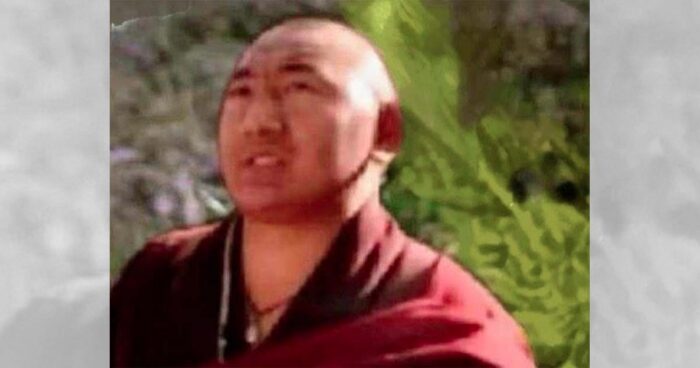
In mid-2024, Chinese courts sentenced Jamyang Lekshe, the head of Yena Monastery, to four years’ imprisonment at Ya’an Prison on charges of “gathering a crowd to disrupt public order.” (ICT sources)
Ongoing crackdown and forced re-education
Chinese authorities had responded with a sweeping crackdown to the widespread protests against the dam construction in February 2024, arresting over 100 Tibetans at the time, including Gonpo Tsering.
In mid-2024, Chinese courts sentenced Jamyang Lekshe, the head of Yena Monastery, to four years’ imprisonment at Ya’an Prison on charges of “gathering a crowd to disrupt public order.” Gonpo Tsering was sentenced to three years on similar charges, although his severe injuries from police abuse required him to seek emergency medical hospitalization.
While reports indicate that construction on the Kamtok Dam and forced relocations have been paused, Chinese authorities are actively intimidating and imposing political demands on local monastic communities, sources told ICT.
Monks at both Yena and Wonto monasteries are routinely forced to sign written pledges agreeing not to disrupt government construction projects and to strictly obey official directives. These campaigns reflect a broader effort by Chinese authorities to tighten political control over Tibetan Buddhist institutions and suppress peaceful expressions of environmental, religious, and cultural concern.
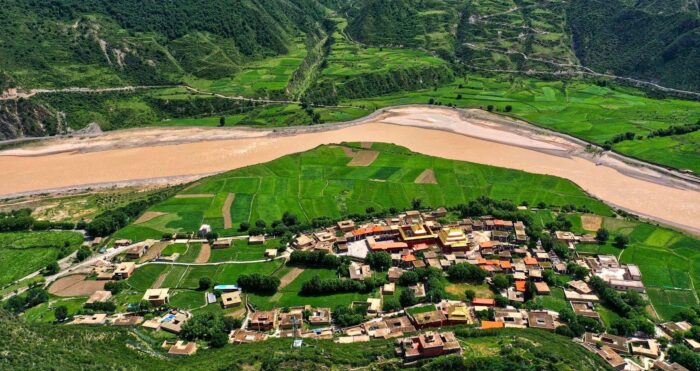
Landscape view of Yena monastery, Derge (Chinese: Dege) county, Kardze (Ganzi) Tibet Autonomous Prefecture, Sichuan. (ICT sources)
The proposed Kamtok Dam is part of a larger plan by the Chinese government to build 13 hydroelectric dams along the upper reaches of the Drichu (Yangtze) River. Nine of these border the Tibet Autonomous Region and Sichuan Province. The project bordering Derge and Jomda counties is primarily led by China Huadian Corp through a consortium of several state-backed entities, including China Huadian Group Co. Ltd. (48%), Tibet Development and Investment Group Co. Ltd. (20%), Sichuan Tietou Kangba Investment Co. Ltd. (20%), and Huadian International Power Co. Ltd. (12%).
For Tibetans, opposition to these projects has extended beyond concerns about displacement and the threat to sacred sites that hold profound religious, cultural, and historical significance. The detention and torture of peaceful protesters such as Gonpo Tsering highlight the severe measures Chinese authorities employ to suppress opposition to development projects in Tibet and reinforce concerns about the broader pattern of human rights violations documented in ICT’s Justice Denied report.