Tibetan Culture
Tibetan Buddhism
A living tradition of wisdom and compassion, and an irreplaceable part of Tibet’s cultural heritage.
What you need to know
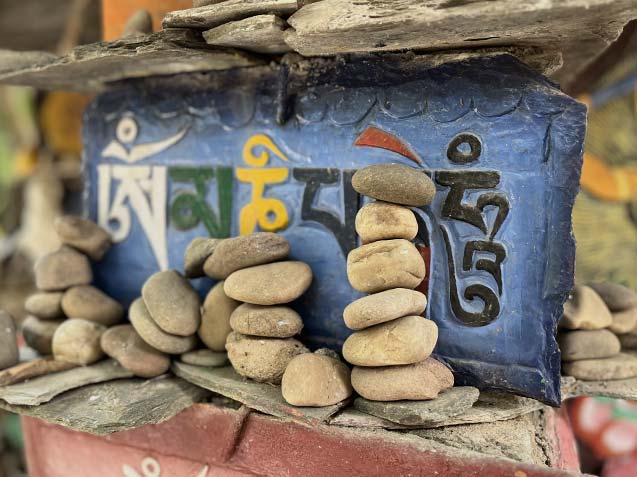
Tibetan Buddhism is a centuries-old tradition centered on compassion, wisdom, meditation, and the interconnectedness of all life. Flourishing in Tibet since the 7th century, it has profoundly shaped Tibetan culture, identity, and daily life through its four major schools – Nyingma, Kagyu, Sakya, and Gelug – along with other traditions and Tibet’s indigenous Bön religion. His Holiness the Dalai Lama, Tibetan Buddhism’s most internationally recognized and revered leader, has brought its message of compassion, nonviolence and interdependence to millions worldwide.

COMPASSION & THE BODHISATTVA PATH
Tibetan Buddhism follows the Mahayana tradition, which emphasizes bodhichitta: the aspiration to attain enlightenment in order to help all sentient beings become free from suffering.
VAJRAYANA
Vajrayana, or tantric, tradition builds on Mahayana teachings. Practitioners use advanced methods including mantra, visualization, meditation and deity yoga to transform the mind on the path toward enlightenment.
EMPTINESS & INTERDEPENDENCE
A central teaching is that nothing exists entirely independently: everything arises through causes, conditions and relationships. Tibetan Buddhist study and meditation explore this through teachings.
A living spiritual tradition
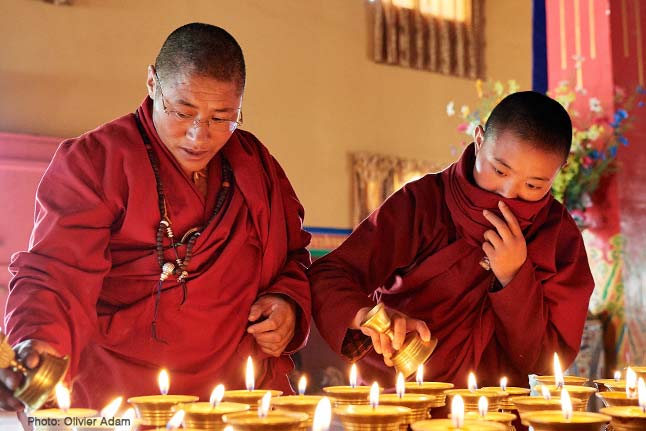
Tibetan Buddhism is not confined to monasteries or religious texts. It is woven into everyday Tibetan life through prayer, pilgrimage, meditation, festivals, sacred art, debate, and community rituals. These practices connect generations of Tibetans to a spiritual tradition that has developed and flourished for more than a thousand years.
4
Major schools of Tibetan Buddhism are Nyingma, Kagyu, Sakya and Gelug
~ 99%
The percentage of Tibet’s population that practice Tibetan Buddhism
6,000+
Monasteries, temples and other religious sites destroyed since 1950
Sharing Tibet’s ancient Buddhist wisdom with the world
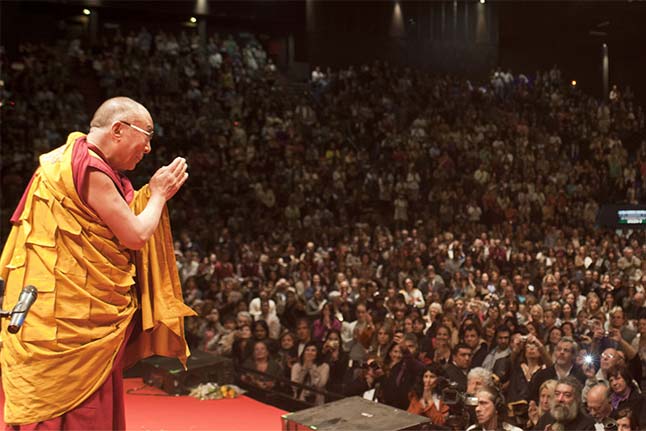
During the Dalai Lama’s seven decades in exile, His Holiness has been able to share Tibetan Buddhist culture with the world, highlighting its potential to contribute to the development of world civilization. He has said, “Tibetan Buddhist culture, this ancient knowledge, I feel this is something really worthwhile to preserve, and there is real potential to share [it] with more human beings.”
Tradition of study, practice & pilgrimage
MONASTERIES: CENTERS OF LEARNING
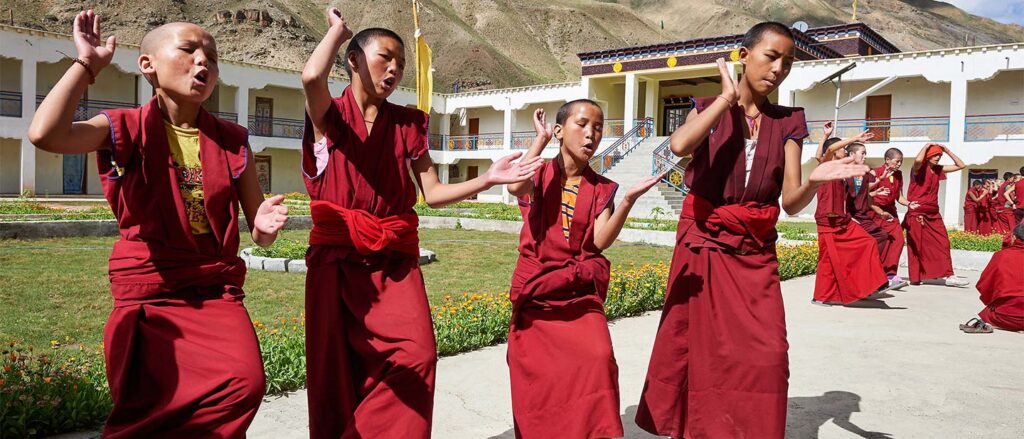
Tibetan monasteries are not simply places of worship. They have historically served as centers of Buddhist philosophy, scholarship, meditation, ritual, and education, where monks can spend years studying foundational texts and testing their understanding through rigorous philosophical debate.
NUNNERIES & WOMEN’S SCHOLARSHIP
Tibetan Buddhist nuns preserve religious teachings through study, meditation, ritual, and community practice. Educational opportunities have expanded in recent decades, with nuns now undertaking advanced philosophical study and earning the Geshema degree, the highest scholarly degree available to nuns in the Gelug sect.
BUDDHISM IN EVERYDAY LIFE
Tibetan Buddhism is practiced far beyond monastic institutions. Lay Tibetans express their faith through prayer, prostrations, offerings, pilgrimage, circumambulation, and prayer flags, while Buddhist rituals accompany important moments from births and marriages to illness, death, and remembrance.
OUR Impact
- Exposing how China is reshaping Tibetan Buddhism. ICT Research has documented new regulations governing monasteries, religious teachers, monastic education, and reincarnation, as well as the expanding role of the Buddhist Association of China in enforcing political loyalty and the state’s “Sinicization” campaign.
- Turning religious freedom into U.S. policy. ICT advocacy helped advance landmark Tibet legislation. The Tibetan Policy Act of 2002 made protection of Tibet’s distinct religious identity part of U.S. policy and specifically called for an end to Chinese government and Communist Party interference in Tibetan religious affairs.
- Building protections for Tibetan Buddhist succession. ICT spent years advocating for stronger U.S. policy on reincarnation and succession, work that culminated in the Tibetan Policy and Support Act of 2020, which established U.S. policy that decisions concerning Tibetan Buddhist reincarnations belong to Tibetan Buddhists and provided for sanctions against Chinese officials who interfere.
- Keeping Tibetan religious freedom on the international agenda. Through government advocacy, public campaigns and work with international institutions, ICT continues raising the disappearance of the Panchen Lama, restrictions on monks and nuns, interference in religious succession, and threats to Tibetan Buddhist institutions with policymakers in the United States and internationally.
Common Questions
What makes Tibetan Buddhism unique?
Tibetan Buddhism combines the philosophical and ethical teachings of Mahayana Buddhism with the meditation, ritual, and contemplative practices of Vajrayana Buddhism. It places particular emphasis on compassion, rigorous study of Buddhist philosophy, meditation, teacher-student lineages, and methods intended to transform the mind.
Another distinctive feature is the tradition of recognizing certain accomplished teachers as tulkus, or reincarnate lamas. These lineages — including the Dalai Lamas and the Panchen Lamas — can continue across generations, with successors traditionally identified through religious processes.
What are the core teachings of Tibetan Buddhism?
At its heart, Tibetan Buddhism teaches that suffering can be overcome by transforming the mind and developing wisdom and compassion. Practitioners seek to understand the nature of reality, recognize the interdependence of all beings, reduce destructive emotions, and cultivate compassion toward others.
As part of the Mahayana tradition, it emphasizes the bodhisattva ideal: striving for enlightenment not solely for oneself, but in order to help all sentient beings become free from suffering.
What are the four major schools of Tibetan Buddhism?
The four major schools are Nyingma, Kagyu, Sakya, and Gelug. Each developed distinctive lineages, teachers, texts, meditation practices, and institutions while sharing the fundamental teachings of Buddhism. The Dalai Lama lineage is associated with the Gelug school.
Tibet is also home to Bön, a distinct religious tradition with deep roots in Tibetan history. Over centuries, Bön and Tibetan Buddhism have influenced one another while maintaining separate identities and lineages.
Why do Tibetan Buddhist monks debate and clap?
The energetic debates seen in Tibetan monasteries are a centuries-old method of studying Buddhist philosophy and testing understanding through logic and reasoning. One participant challenges another with questions and arguments, often punctuating points with a distinctive clap, while the respondent must defend a position through reasoned answers.
Rather than simply memorizing religious texts, students learn to analyze their meaning, identify contradictions, and defend philosophical positions. Monastic debate reflects the importance Tibetan Buddhism places on scholarship, reasoning, and critical examination.
Do you have to be a monk or nun to practice Tibetan Buddhism?
No. Tibetan Buddhism has always included a large tradition of lay practice. Lay practitioners may pray, meditate, make offerings, recite mantras, turn prayer wheels, undertake pilgrimages and circumambulations, receive teachings, and participate in ceremonies while living ordinary family and working lives.
Monastics play an important role in preserving teachings and institutions, but Tibetan Buddhist religious life extends throughout the wider community.