Key Issue
Environmental Impact
To care about climate change means to care about Tibet – the Earth’s Third Pole and the source of rivers sustaining up to 1.8 billion people across Asia.
What you need to know
The Tibetan Plateau stores the largest ice mass outside the polar regions and forms the headwaters of many of Asia’s major rivers. Its glaciers, permafrost and grasslands regulate water and climate far beyond Tibet, while rapid warming and state-led infrastructure development are placing these interconnected systems and Tibet’s fragile ecosystem under mounting strain.

THE ROOF OF THE WORLD
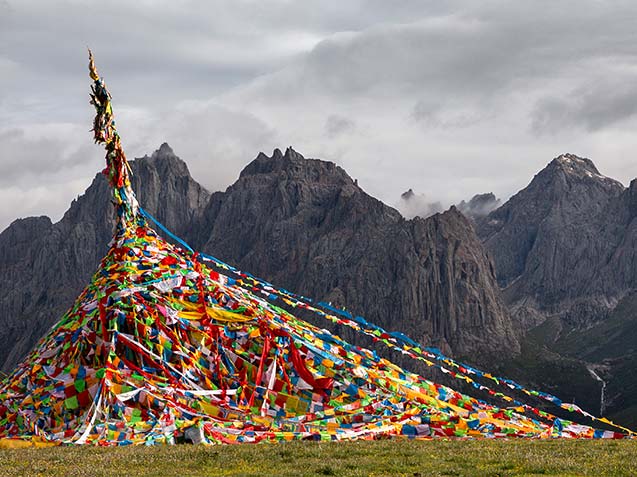
With an average elevation exceeding 4,000 meters, the Tibetan Plateau lies at the center of the Earth’s ‘Third Pole’ and holds the largest reserves of freshwater and ice mass outside of the Arctic and Antarctic.
SHRINKING GLACIERS
Tibet is home to vast glaciers and extensive permafrost, but rapid warming is accelerating glacier melt and permafrost thaw.
DOWNSTREAM IMPACT
China’s unchecked dams, mines and transport infrastructure are devastating Tibet’s environment, displacing Tibetan nomadic and other communities and threatening natural river flows.
Tibet’s environmental future is a global concern
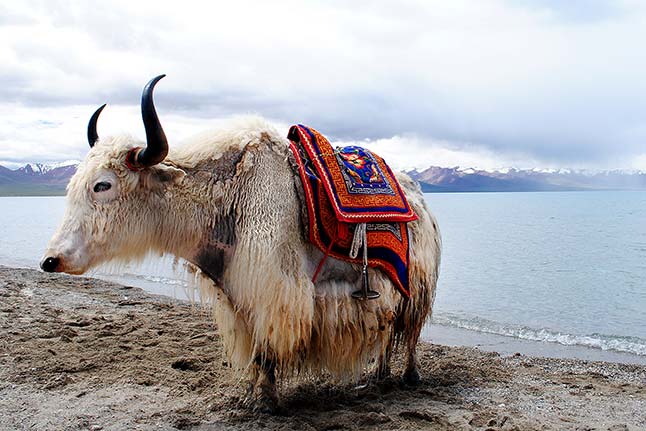
The need for sustainable development and environmental protection policies on the Tibetan plateau – known as the Water Tower of Asia — is greater now than ever before. Tibet is warming nearly three times faster than the rest of the world, accelerating glacial retreat and permafrost degradation, while dams, mining and transport infrastructure compound pressure on the plateau’s fragile ecosystems. Protecting Tibet’s environment requires transparency, cross-border cooperation and environmental decisions shaped by the Tibetan communities who have sustainably stewarded this landscape for centuries.
x3
Tibet is warming nearly three times faster than the global average
1.8 B
People whose water, livelihoods and health are connected to river systems originating in Tibet
193
Hydroelectric dams constructed or planned in Tibet since 2000 according to ICT ‘s Research
Tibetan stewardship is essential
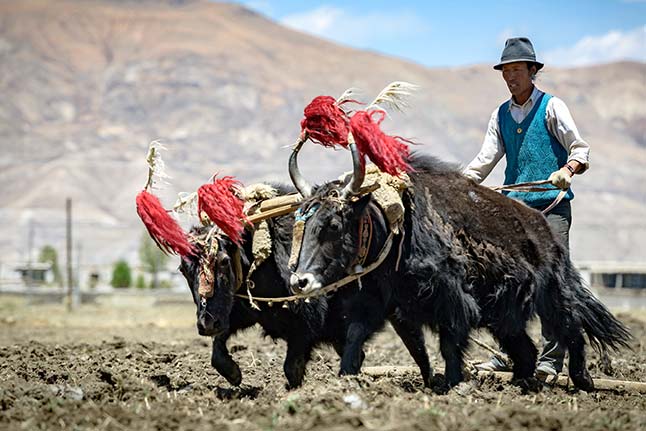
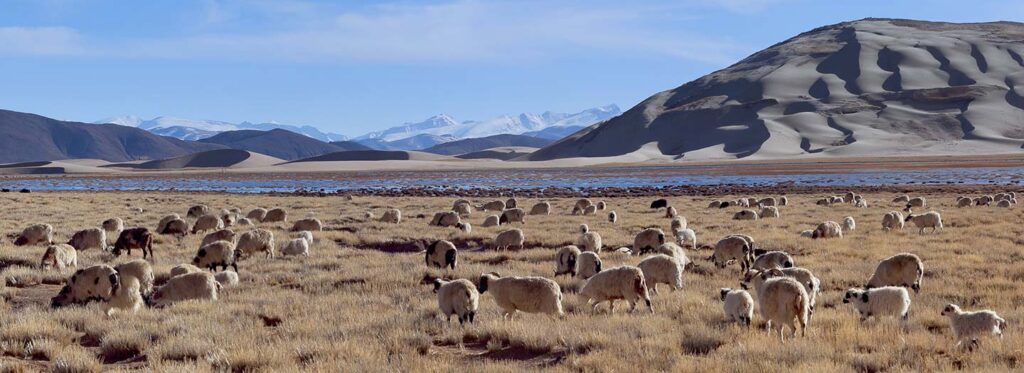
Even though there is a growing scientific consensus, including in China, that empowering Tibetan environmental stewardship is crucial for the health of the land, the Chinese Communist Party continues to force traditional Tibetan nomads to leave their pastures and live in sedentary communities. Durable conservation requires Tibetan participation and policies that treat the community’s knowledge as essential environmental expertise rather than an obstacle to modernization.
The Dalai Lama and the environment: Decades of leadership
The Dalai Lama has long connected Tibet’s future with global environmental responsibility. In his message to the 26th United Nations Climate Change Conference, he urged leaders to adopt a timetable for collective action, reminding the world: “We have no ability to change the past, but the future is still in our hands.”
1989 Nobel Peace Prize
The Dalai Lama was the first Nobel laureate to be recognized for his pioneering focus on and commitment to global environmental protection. Drawing on the Buddhist principle of interdependence, he has consistently emphasized humanity’s well-being depends on the health of our shared planet.
Call for rights-based conservation
The Dalai Lama’s call to protect Tibet’s environment urges the world to challenge unsustainable policies, demand independent scientific access, and uphold Tibetan communities’ right to participate freely in decisions about their land, water, livelihoods and natural resources.
OUR Impact
- ICT’s 2025 policy brief on hydropower development on the Tibetan plateau, developed from a panel ICT presented at World Water Week in Stockholm, contributed to Tibet’s prominence in the mainstream policy debate on global water security issues.
- In the 2024 landmark report “Chinese Hydropower: Damning Tibet’s Culture, Community, and Environment”, ICT made the case for how Beijing’s hydropower and dam projects lead to massive human rights violations and environmental damage in Tibet, using an interactive map to highlight all 193 hydroelectric dams constructed or planned in Tibet since 2000.
- ICT secured the environmental and water security provisions of the 2020 Tibetan Policy and Support Act, which direct U.S. diplomatic engagement on regional water security and recognizes the strategic importance of water resources from the Tibetan plateau.


Stand with the people of Tibet
For 40 years, ICT has uncovered the truth China tries to hide. Your gift keeps that work alive.
Thank you.
Common Questions
What does Tibet have to do with global climate change?
Tibet plays a massive, direct role in worldwide climate change because the Tibetan Plateau lies at the center of Earth’s “Third Pole,” which contains the largest reserve of freshwater and ice outside the polar regions. Its glaciers, snow, permafrost and wetlands store water, influence Asian weather systems and sustain major rivers. The plateau is warming more than three times as fast as the global average, accelerating glacial melt and permafrost thaw. These changes have global significance and direct consequences for up to 1.8 billion people across Asia.
What happens if Tibet’s glaciers continue to melt?
Accelerating glacial melt will reshape Asia’s water systems. In the near term, increased melt can expand glacial lakes and intensify hazards such as glacial lake outburst floods, ice-rock avalanches, landslides and flash floods. Over time, diminishing ice reserves could reduce and destabilize seasonal water supplies, while rising temperatures and thawing permafrost can destabilize frozen slopes and amplify existing geological risks. Independent monitoring, early-warning systems and cross-border data sharing are therefore increasingly urgent.
How does dam building effect Tibet’s environment?
China’s aggressive dam-building, mining, and infrastructure development is fundamentally destabilizing Tibet’s fragile ecosystem by exacerbating seismic and landslide risks, endangering vital biodiversity hotspots, and disrupting natural river flows.
Research by the International Campaign for Tibet found that at least 193 hydropower dams have been constructed or planned in Tibet since 2000, with a combined potential capacity exceeding 270 gigawatts. Nearly 80% of these are large or mega-dams. These projects can inundate grasslands and forests, fragment habitats, trap sediment and nutrients, diminish water quality and alter natural river flows. Construction and reservoir impoundment can also destabilize slopes in a seismically active region.
Why is relocating Tibetan nomads harmful to the environment?
Beijing frames the relocation of Tibetan nomads as “ecological migration” to prevent overgrazing. However, seasonal mobility can distribute grazing pressure, support grassland regeneration and help nomadic communities adapt to Tibet’s highly variable climate, while removing nomads could severely accelerate rangeland degradation and destroy the plateau’s ecological balance.
Tibetan nomads have sustainably managed and protected the fragile alpine grasslands for over 8,000 years. Forcing them to relocate separates Tibetans from ancestral lands, livelihoods and generations of environmental knowledge.