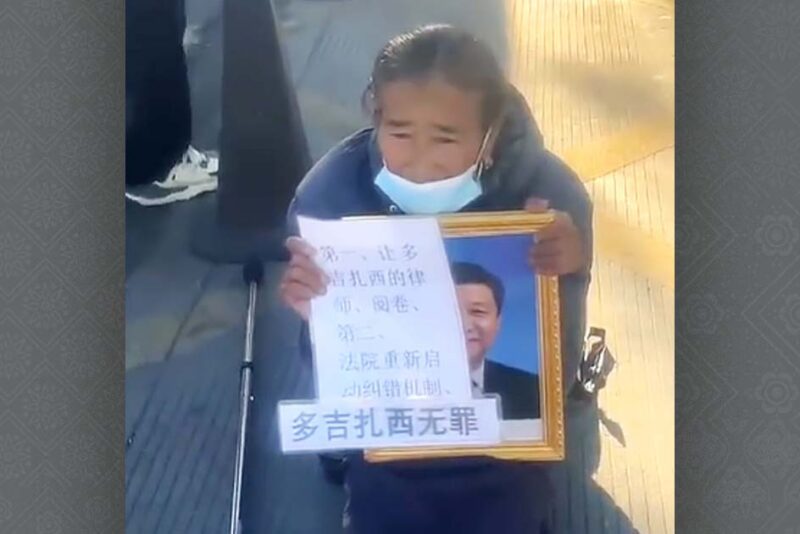
Key Issue
Reciprocity
The Tibetan people are locked inside Tibet, and the rest of the world is locked out.
What you need to know
Reciprocity is a basic principle of diplomacy. It requires country A to give the same rights to the citizens of country B that country B gives to the citizens of country A. So why does China restrict foreigners from traveling freely in Tibet, while Chinese citizens can obtain visas to the U.S. and generally travel unfettered.

THE RECIPROCAL ACCESS TO TIBET ACT
Signed into U.S. law in 2018, RATA seeks reciprocity by restricting U.S. visas for Chinese officials involved in denying Americans access to Tibetan areas.
RESTRICTED ACCESS
Journalists and diplomats from the U.S. and other countries face severe restrictions on access to Tibet, including frequent denial of entry.
VISA BARRIERS
Tibetan Americans can face extensive questioning and heightened scrutiny when seeking to visit Tibet — and may be denied entry even with valid visas.
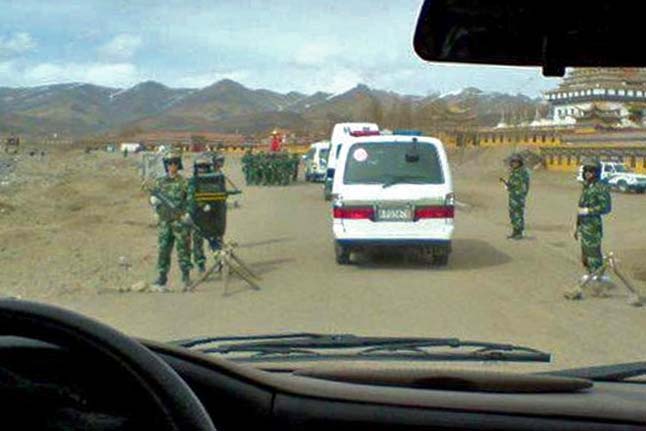
Who faces restricted access to Tibet?
Journalists, diplomats, and independent observers face severe restrictions on access to Tibet. The few who are permitted entry are often limited to tightly controlled, government-organized Potemkin tours that hide the truth of China’s human rights violations. People of Tibetan heritage can face even greater barriers — including racially discriminatory and intrusive processes at Chinese embassies and consulates, heightened scrutiny, visa and entry denials, and, in documented cases, detention or removal from Tibet or China despite holding valid travel documents.
93%
Of journalists who attempted to travel to the Tibet Autonomous Region and other Tibetan areas faced difficulty in reporting.*
2025
U.S. consular officials were permitted to visit the Tibetan Autonomous Region in September 2025, over 6 years after the last such visit in 2019.*
4,425
U.S. citizens visited the TAR in 2024, down from roughly 10,000 in 2019.*
*Source: U.S. State Department; Report to Congress on Access to Tibetan Areas, 2026

Chinese citizens and media in the United States
Chinese citizens who are lawfully admitted to the United States are allowed to travel freely throughout the country. While journalists and media organizations from the United States and other countries have faced severe restrictions on their reporting in China, Chinese state media agencies have established a robust presence in the United States and many other countries, from where they freely disseminate Beijing’s propaganda and official narratives — including false and misleading claims — to audiences worldwide.

Global advocacy for access
RECIPROCAL ACCESS TO TIBET ACT
In 2018, sustained advocacy helped secure passage of the U.S. Reciprocal Access to Tibet Act. The law makes Chinese officials substantially involved in restricting American access to Tibetan areas ineligible for U.S. visas. The State Department first imposed visa restrictions under the law in 2020.
CALLS FOR UN ACCESS TO TIBET
China’s restrictions on Tibet have also drawn sustained scrutiny through the United Nations human rights system. During China’s 2024 UN Universal Periodic Review, multiple governments called for meaningful and unhindered access to Tibet for UN human rights officials, Special Rapporteurs, independent experts, and other international observers — reflecting concerns that China’s restrictions make independent investigation and verification of conditions inside Tibet extremely difficult.
INTERNATIONAL PRESSURE FOR RECIPROCITY
The European Parliament and European officials have repeatedly pressed China for reciprocal access to Tibet for diplomats, journalists, parliamentarians, and citizens. European lawmakers have also raised concerns about additional barriers faced by Europeans of Tibetan heritage, keeping access to Tibet on the international diplomatic agenda.
OUR Impact
- ICT drove the multi-year campaign behind the Reciprocal Access to Tibet Act (RATA), signed into law in December 2018 after passing both chambers unanimously. RATA denies U.S. entry to the Chinese officials responsible for keeping American diplomats, journalists and citizens out of Tibet.
- ICT’s 2018 report “Access Denied: China’s Enforced Isolation of Tibet, and the Case for Reciprocity” made the case for reciprocity as a principle of international relations and documented China’s intensifying efforts to seal off Tibet to outside scrutiny.
- ICT continues to press for full implementation of the Reciprocal Access to Tibet Act, urging the State Department to publicly identify Chinese officials sanctioned under the Act and calling on Congressional committees, U.S. diplomats and UN organizations to seek access to Tibet.
- ICT in 2025 issued “Do-No-Harm” guidelines for diplomats and official delegations visiting Tibet, helping policymakers identify tightly orchestrated visits, avoid amplifying state propaganda, and press for genuine, independent access.
Common Questions
What is the diplomatic purpose of imposing reciprocity on countries?
The diplomatic purpose of imposing reciprocity on countries is to enforce fairness, deter hostile behavior, and establish equal treatment in international relations. Reciprocity promotes fairness and accountability between countries by ensuring that access, privileges, and treatment extended by one government are met with comparable treatment from another. It is a longstanding principle of international relations and an important means of discouraging governments from imposing one-sided restrictions without consequence.
Who is being denied access to Tibet and why is that significant?
According to the U.S. State Department’s 2026 Report to Congress on Access to Tibetan Areas, foreign diplomats, independent journalists, humanitarian organizations, and international tourists are being systematically denied unfettered access to Tibet.
Tibet remains the only region under Chinese jurisdiction where foreigners are forbidden from entering with a standard Chinese visa; instead, they must secure a highly restrictive, state-approved Tibet Travel Permit.
Who is being denied access?
Foreign Diplomats and Government Officials, Independent Journalists and Human Rights Watchdogs, Overseas Tibetans (Tibetan Americans & Tibetan Europeans), Humanitarian Aid Workers.
Why is this exclusion significant?
The enforced isolation of Tibet carries profound international and humanitarian consequences: Maintaining an Absolute Information Vacuum, Risking Lives During Natural Disasters, Violating Diplomatic Reciprocity, The Triggering of Sanctions.
What is the Reciprocal Access to Tibet Act and why is it important?
Denying access to Tibet allows the Chinese Community Party to hide its campaign of repression and forced assimilation from the world. The Reciprocal Access to Tibet Act (RATA), a bipartisan U.S. law enacted in 2018 to address China’s unequal restrictions on American access to Tibet, makes it clear that this access is a core US national security interest. It requires the State Department to assess and report on access granted to U.S. diplomats, journalists, tourists, and other citizens and establishes visa consequences for individuals responsible for policies restricting that access. Congress renewed the legislation for another five years in 2024, ensuring continued scrutiny of China’s efforts to isolate Tibet from independent international observation.
Who is targeted by the restrictions of the Reciprocal Access to Tibet Act?
The restrictions of the Reciprocal Access to Tibet Act specifically target Chinese Communist Party (CCP) and Chinese government officials who are responsible for designing, enacting, or enforcing the policies that block foreigners from entering Tibet.
Under the law, the U.S. State Department is legally required to identify these individuals and deny them entry or revoke their existing visas to travel to the United States.
Rather than blacklisting every Chinese citizen, the restrictions target the bureaucratic pipeline responsible for the information blackout.