
Foundational Information
International Support for Tibet
From the United Nations to governments worldwide, international action keeps Tibet on the global agenda.
What you need to know
For decades, governments, parliaments, United Nations experts, and human rights organizations worldwide have raised concerns about conditions in Tibet. International support includes legislation, diplomatic pressure, human rights monitoring, funding for Tibetan communities, and calls for religious freedom, cultural preservation, and renewed dialogue to resolve the Tibet-China conflict.

TIBET AT THE UNITED NATIONS
Tibet remains an international human rights concern at the United Nations. UN High Commissioner for Human Rights Volker Türk and UN experts have raised concerns over education policies and restrictions on freedom of expression, religion and belief in Tibet.
EUROPEAN SUPPORT FOR TIBET
The European Union and European Parliament have repeatedly raised Tibet with Chinese leaders. At EU-China Summits, the EU formally raised human rights concerns in Tibet. A European Parliament resolution condemning the Tibetan boarding-school system was passed 477–14.
GOVERNMENTS RAISE TIBET
International scrutiny of Tibet has broadened. During China’s 2024 UN Universal Periodic Review, 20 governments raised Tibet and made 24 Tibet-specific recommendations — more than twice the number of countries that raised Tibet during the previous review.
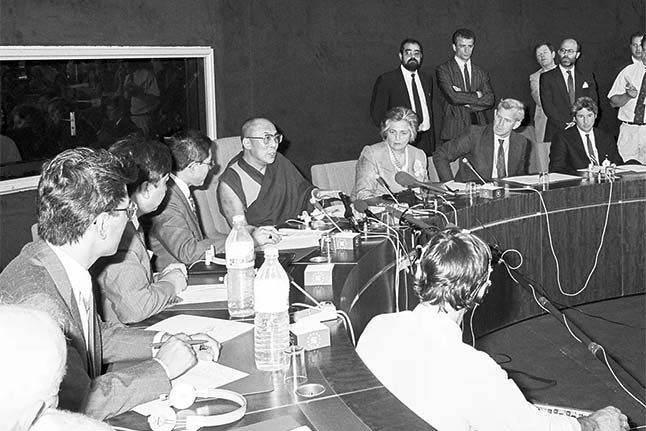
The Strasbourg Proposal
In 1988, His Holiness the Dalai Lama addressed members of the European Parliament in Strasbourg, presenting a framework for a negotiated resolution to the Tibet-China conflict. Building on his Five-Point Peace Plan, the proposal called for meaningful Tibetan self-government through negotiation rather than violence and became an important milestone in Tibet’s international diplomacy.
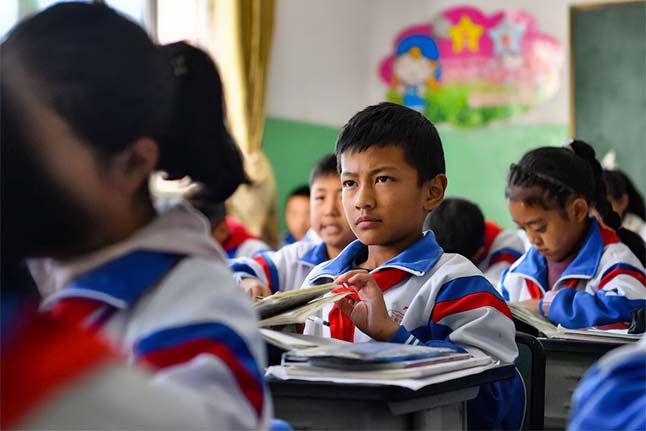
International pressure on Tibet’s boarding schools
International scrutiny has helped expose the scale of China’s residential-school system in Tibet. UN experts reported that nearly one million Tibetan children — around 78% of Tibetan children aged 6–18 — were attending residential schools, raising concerns about separation from families and the erosion of Tibetan language and identity. The European Parliament subsequently called for the boarding-school system’s abolition and urged EU governments to consider targeted sanctions against Chinese officials connected to it.
30+ yrs
Of organized parliamentary advocacy for Tibet maintained by the European Parliament, beginning with its Tibet Intergroup in 1989
9
World Parliamentarians’ Conventions since 1994, bringing together global lawmakers for coordinated support on Tibet
res1723
The Number of the UN General Assembly resolution passed in 1961 affirming Tibetans’ human rights and self-determination

International condemnation of China’s “Ethnic Unity” law
China’s new so-called “Ethnic Unity and Progress Law,” which took effect July 1, 2026, has drawn international condemnation over its impact on Tibetans and other non-Chinese peoples within governments and the United Nations. The European Union and the European Parliament raised concerns over threats to cultural, linguistic, and religious rights, while U.S. and other lawmakers warned against its potential reach beyond China’s borders. UN High Commissioner for Human Rights Volker Türk called for the law’s repeal in June 2026.
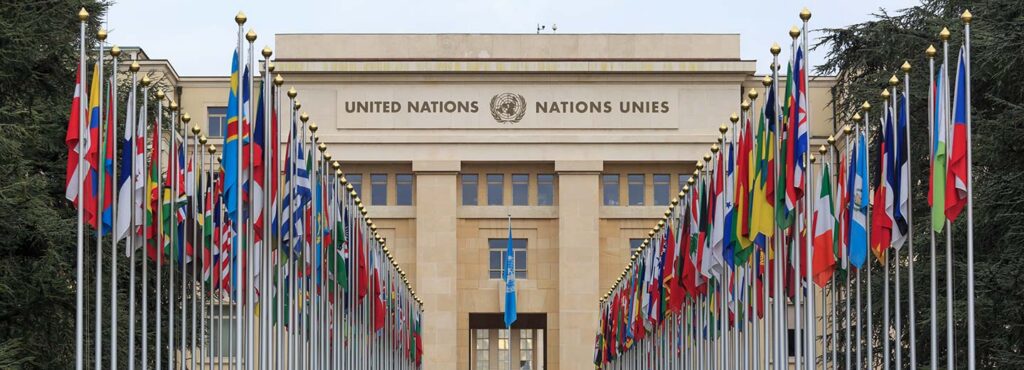
Landmark Moments of International Support
International support for Tibet has been built over decades. UN resolutions, the Nobel Peace Prize, and an international network of parliamentarians helped bring Tibet to global attention, legitimize nonviolent advocacy, and create lasting political platforms through which Tibet continues to be raised today.
Tibet at the United Nations
In 1959, 1961 and 1965, the UN General Assembly adopted resolutions concerning Tibet, addressing human rights and fundamental freedoms and, in 1961, explicitly affirming the Tibetan people’s right to self-determination. These resolutions established Tibet as an issue of international concern at the United Nations.
The 1989 Nobel Peace Prize
The Nobel Peace Prize awarded to His Holiness the Dalai Lama in 1989 gave extraordinary international recognition to Tibet’s nonviolent struggle. The Nobel Committee specifically recognized his pursuit of peaceful solutions and preservation of Tibet’s historical and cultural heritage.
A Global Parliamentary Movement
In 1994, parliamentarians from 25 countries convened the first World Parliamentarians’ Convention on Tibet in New Delhi. They adopted an international action program encouraging parliamentary resolutions, government pressure, delegations, support for Tibetans, and coordinated action through international institutions — helping build a lasting network of parliamentary support for Tibet.
Our Impact
- 1991: Helping return Tibet to the UN agenda: After 25 years without a UN resolution on Tibet, advocacy involving ICT leaders helped reintroduce the issue into the UN system, culminating in a resolution on Tibet by the UN Sub-Commission on human rights.
- 1997–2000: Building lasting international infrastructure for Tibet. ICT helped convene parliamentarians from 27 countries at the 1997 World Parliamentarians’ Convention on Tibet and opened its first European office in Amsterdam in 2000, expanding sustained advocacy with European governments and institutions.
- 2024: Broadening international scrutiny. ICT advocated with governments ahead of China’s Universal Periodic Review, where 20 countries raised Tibet and made 24 Tibet-specific recommendations, compared with nine countries and 11 recommendations in 2018.
- Keeping Tibetan voices represented at the UN. ICT has participated in UN human rights processes through testimony, briefings, engagement with governments and UN experts, and regular participation at the Human Rights Council in Geneva, helping maintain international scrutiny of conditions in Tibet.
- Sustaining a global advocacy network. From one Washington office founded in 1988, ICT has expanded to offices in Amsterdam, Berlin and Brussels, engaging governments, parliaments, the European Union and United Nations while continuing to respond to emerging threats — including China’s 2026 “Ethnic Unity and Progress Law.”
Common Questions
How have governments and parliaments supported Tibet?
Support takes many forms. Governments have raised Tibet through bilateral diplomacy, EU-China summits, UN proceedings, public statements, funding programs, targeted sanctions and visa restrictions. Legislatures have held hearings, adopted resolutions, created parliamentary Tibet groups, and enacted laws addressing Tibetan rights.
Has international pressure made a difference for Tibet?
International action and advocacy on behalf of Tibet has produced tangible results. It has helped secure the release or improved treatment of individual Tibetan political prisoners, established Tibet-specific government policies and legislation, funded Tibetan cultural and humanitarian programs, and created international mechanisms for scrutinizing Chinese government policies.
It has also kept Tibet before international institutions for more than six decades — from the UN General Assembly resolutions of 1959, 1961 and 1965 to contemporary scrutiny through the Human Rights Council, European institutions, national governments, and parliaments.
What role does the United Nations play in Tibet?
The UN has provided critical international scrutiny of Tibet through General Assembly resolutions, treaty bodies, independent experts, the Human Rights Council, and the Universal Periodic Review. In 2024, 20 governments raised Tibet during China’s UN human rights review and made 24 Tibet-specific recommendations.
At the same time, Tibetan advocates have called for international concern to be matched by stronger and more sustained action. That urgency was poignantly reflected in July 2026, when Tibetan activist Lobga Rangzen died following a self-immolation outside UN Headquarters in New York, after making a final appeal for Tibet. His choice of location reflected both profound concern over the international response and the continuing importance many Tibetans place on the UN as a forum for their rights and aspirations.
Why has China’s “ethnic unity” law drawn international concern?
China’s “Ethnic Unity and Progress Law,” which took effect in July 2026, has raised international concerns over its impact on the cultural, linguistic, and religious rights of Tibetans and non-Chinese groups. Particular concern surrounds its extraterritorial provisions, which could extend pressure on Tibetans and others living beyond China’s borders.
The law has also intensified broader concerns over transnational repression — the targeting, intimidation, or coercion of diaspora communities abroad. The European Union, European Parliament, U.S. officials, and human rights advocates have raised concerns about the law’s reach beyond China and its potential implications for fundamental freedoms overseas.