Tibetan Culture
His Holiness the Dalai Lama
Tibet’s spiritual leader and a global icon of peace, compassion, nonviolence and dialogue. His unique vision guides the International Campaign for Tibet.
What you need to know
In the face of credible threats to his life at the hands of the Chinese army invading Tibet, the Dalai Lama was forced to flee Tibet on the night of March 17, 1959. Although he has earned international acclaim throughout his long life in exile, he has never been allowed to return home. His Holiness has devoted his life to preserving Tibetan identity, advancing dialogue, and promoting universal human values of compassion, religious harmony and human dignity.

TIBET’S SPIRITUAL LEADER
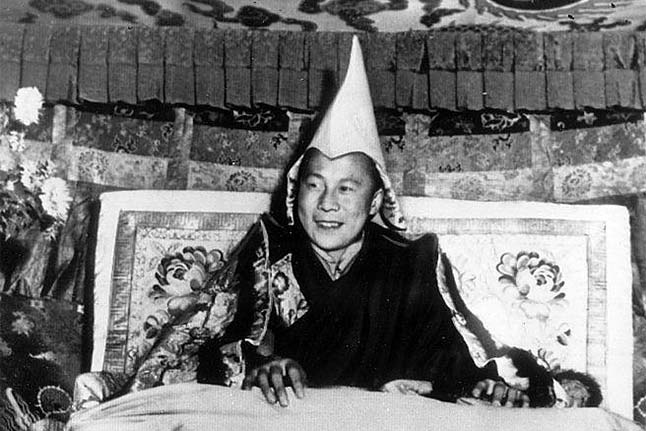
Recognized at age two as the reincarnation of the 13th Dalai Lama, Tenzin Gyatso was enthroned in Lhasa in 1940 and is deeply revered by Tibetans as their spiritual leader.
INTERNATIONAL STATESMAN
As the spiritual leader of Tibetan Buddhism and an international statesman, His Holiness has attracted followers around the world. He has received the Nobel Peace Prize, U.S. Congressional Gold Medal and was voted one of the most admired people on the planet.
THE MIDDLE WAY
He advocates the Middle Way Approach for Tibet’s future, which would bring long-term stability to the region by addressing the needs of both Tibetans and Chinese.
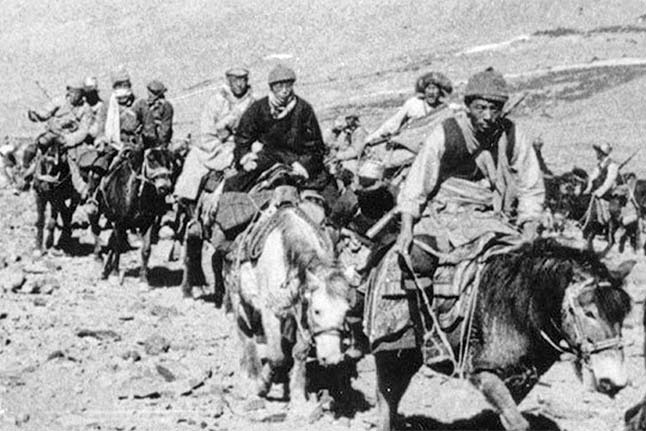
Forced into exile in 1959
On March 17, 1959, amid the Tibetan National Uprising and fears for his safety, the 23-year-old Dalai Lama left Lhasa at night disguised as an ordinary soldier. He entered India on March 31 after a 14-day escape, and the Government of India granted him asylum. He has lived in exile ever since and has not returned to Tibet.
14th
The current Dalai Lama in a lineage of Tibetan spiritual leaders dating back centuries
1989
Year the Dalai Lama received the Nobel Peace Prize for advocating peaceful solutions based on tolerance and mutual respect
2011
Year he retired from politics and formally transferred his temporal political authority to the democratically elected Tibetan leadership
The Dalai Lama institution will continue
In 2025, approaching his 90th birthday, His Holiness affirmed that the institution of the Dalai Lama will continue. He reiterated that the Gaden Phodrang Trust, his office, has sole authority to recognize his future reincarnation in consultation with Tibetan Buddhist traditions, without outside political interference.
Four Principal Commitments
Promotion of Universal Values
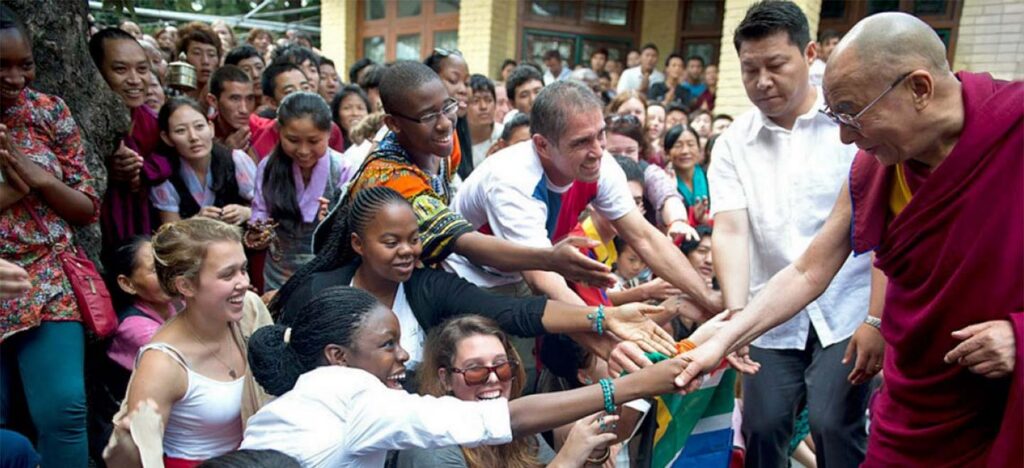
His Holiness advocates the cultivation of warm-heartedness and human values such as compassion, forgiveness, tolerance, contentment and self-discipline. He says that as human beings we are all the same. We all want happiness and do not want suffering. Even people who have no religious belief can benefit if they incorporate these human values into their lives. His Holiness refers to such human values as secular ethics or universal values.
Revival of Ancient Indian Knowledge & Wisdom
His Holiness is convinced that the rich ancient Indian understanding of the workings of the mind and emotions, as well as the techniques of mental training, such as meditation, developed by Indian traditions, are of great relevance today. Since India has a long history of logic and reasoning, he is confident that its ancient knowledge, viewed from a secular, academic perspective, can be combined with modern education so that a more integrated and ethically grounded way of being in the world can be promoted within contemporary society.
Preservation of Tibetan Spiritual & Cultural Traditions
His Holiness is a Tibetan and as the ‘Dalai Lama’ is the focus of the Tibetan people’s hope and trust. Therefore, he is committed to preserving Tibetan language and culture, the heritage Tibetans received from the masters of India’s Nalanda University, while also speaking up for the protection of Tibet’s natural environment.
Promotion of Religious Harmony
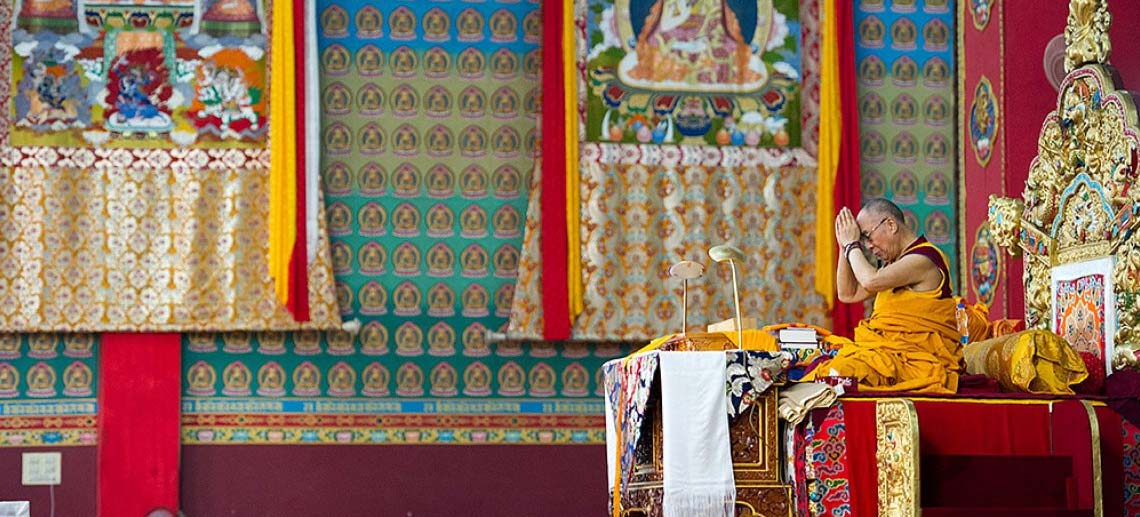
As a Buddhist monk, His Holiness is committed to encouraging harmony among the world’s religious traditions. Despite philosophical differences between them, all major world religions have the same potential to create good human beings. It is therefore important for all religious traditions to respect one another and recognize the value of their respective traditions.
A life of compassion, leadership & service
From Taktser to the Potala
Born on July 6, 1935, to a farming family in Taktser, Amdo, the child then known as Lhamo Dhondup was recognized at age two as the reincarnation of the 13th Dalai Lama. He arrived in Lhasa in 1939 and was formally enthroned on February 22, 1940. At age 23, he passed his final examinations with honors and was awarded the Geshe Lharampa degree, equivalent to the highest doctorate in Buddhist philosophy.
Leadership through crisis & exile
At age 15, as the People’s Liberation Army advanced into Tibet, the Dalai Lama assumed full temporal authority in November 1950. He spent the following years seeking a peaceful accommodation with Beijing while tensions intensified inside Tibet. After escaping to India in March 1959, he rebuilt Tibetan institutions in exile, established schools for refugee children and ensured the preservation of Tibetan religious and cultural traditions displaced by the Chinese occupation of Tibet.
A global icon of peace
The Dalai Lama’s public work has extended far beyond Tibet. He has promoted compassion and universal human values, encouraged dialogue among religious traditions and engaged scientists in sustained exchanges on the mind, ethics and human well-being. In 1989, the Nobel Committee awarded him the Nobel Peace Prize for advocating peaceful solutions based on tolerance and mutual respect. In 2007, he received the Congressional Gold Medal at the U.S. Capitol.
From political leadership to an elected system
From the early years of exile, the Dalai Lama encouraged the development of representative institutions within the Tibetan community. Political reforms expanded over several decades, including the first direct election of the Tibetan exile administration’s political leader in 2001. On May 29, 2011, he formally transferred his temporal authority to the democratically elected Tibetan leadership, ending the 369-year tradition of the Dalai Lama institution holding both spiritual and temporal authority. Since then, he has held no formal governmental role.
A negotiated solution for Tibet
The Dalai Lama has pursued a negotiated resolution of the Tibet-China conflict through the Middle Way Approach. The policy does not seek Tibetan independence; instead, it calls for genuine autonomy for Tibetans within the framework of the People’s Republic of China, including meaningful authority over areas such as religion, culture, education, environment and other internal affairs. The approach is grounded in nonviolence, dialogue and the belief that a durable solution should protect Tibetan identity while addressing the interests of both Tibetans and Chinese.
A decision rooted in Tibetan Buddhist tradition
On July 2, 2025, His Holiness publicly affirmed that the institution of the Dalai Lama will continue. He reiterated that responsibility for recognizing a future Dalai Lama rests solely with the Gaden Phodrang Trust, which is to consult the heads of Tibetan Buddhist traditions and follow established religious procedures. His statement explicitly rejects interference by governments or other outside political authorities in the recognition process.
OUR Impact
- 1988 — Supporting the Dalai Lama’s vision: The International Campaign for Tibet was established in Washington, D.C., to support the Tibetan people and the vision of His Holiness the Dalai Lama.
- 1991–1993 — Expanding high-level U.S. engagement: ICT assisted in organizing a meeting between His Holiness and President George H.W. Bush in 1991 and the first meeting between His Holiness and President Bill Clinton in 1993.
- 2007 — Supporting the Congressional Gold Medal initiative: ICT members successfully petitioned members of Congress to award His Holiness the Congressional Gold Medal. ICT also sponsored a public event on the U.S. Capitol Grounds in connection with the October 17 presentation ceremony.
- 2020 — Protecting Tibetan religious freedom and succession: By January 2020, ICT members had sent more than 12,000 messages to Congress supporting the Tibetan Policy and Support Act. Enacted in December 2020, the law established that decisions concerning Tibetan Buddhist religious leaders are spiritual matters for the appropriate Tibetan Buddhist authorities and practitioners, free from government interference.
- 2024 — Advancing peaceful dialogue through the Resolve Tibet Act: ICT mobilized congressional and grassroots support for the law, including through Tibet Lobby Day. The Act reinforces U.S. policy supporting a peaceful resolution through dialogue with the Dalai Lama, his representatives or democratically elected Tibetan leaders.
Common Questions
Who is the Dalai Lama?
The Dalai Lama is a title associated with a lineage of Tibetan Buddhist spiritual leaders. His Holiness Tenzin Gyatso is the 14th Dalai Lama. Tibetan Buddhists traditionally regard the Dalai Lamas as manifestations of Avalokiteshvara, or Chenrezig, the Bodhisattva of Compassion. The current Dalai Lama was born in Taktser, Amdo, in 1935 and recognized as the reincarnation of the 13th Dalai Lama when he was a young child.
His Holiness describes himself as a simple Buddhist monk. For Tibetans, however, he is also an enduring symbol of Tibetan religious and cultural identity and, for decades, has served as a principal advocate for a peaceful resolution of the Tibet-China conflict.
Why did the Dalai Lama leave Tibet?
The Dalai Lama left Lhasa on the night of March 17, 1959, during the Tibetan National Uprising. Tens of thousands of Tibetans had gathered around the Norbulingka Palace amid fears for his safety as political and military tensions escalated. Disguised as an ordinary soldier, he slipped out of the palace with a small escort and began the journey toward India.
He entered India on March 31, 1959, after a 14-day escape. The Government of India granted him asylum, and he later established his residence in Dharamsala, where Tibetan political, religious, educational and cultural institutions were rebuilt in exile. He has not returned to Tibet.
What is the Dalai Lama’s Middle Way Approach?
The Middle Way Approach is the Dalai Lama’s proposed framework for peacefully resolving the Tibet-China conflict through negotiation rather than separation or violence. It does not seek independence for Tibet. Instead, it seeks genuine autonomy for Tibetans within the People’s Republic of China so they can protect their religion, language, culture, education, environment and distinct identity.
The approach is intended as a compromise between the present system of Chinese rule and full Tibetan independence. It has been adopted by the Central Tibetan Administration and has shaped decades of Tibetan efforts to pursue dialogue with the Chinese government.
Does the Dalai Lama still lead the Tibetan government?
No. The Dalai Lama formally transferred his remaining temporal political authority to the democratically elected Tibetan leadership in 2011. That decision ended the centuries-old system in which Dalai Lamas could hold both spiritual and political authority.
The Central Tibetan Administration is led by elected officials. His Holiness remains the spiritual leader of Tibet and continues to speak on Tibetan culture, religion, identity and a peaceful resolution of the Tibet-China conflict, but he no longer holds formal governmental authority.
Who will choose the next Dalai Lama?
In 2025, the Dalai Lama confirmed that the institution will continue. He stated that the Gaden Phodrang Trust—the Office of His Holiness the Dalai Lama—has sole authority to recognize his future reincarnation. The Trust is to consult leaders of the Tibetan Buddhist traditions and carry out the search and recognition according to established religious tradition.
The Chinese government claims authority over the recognition of Tibetan Buddhist reincarnations, including the future Dalai Lama. His Holiness has rejected political interference in the process, and U.S. law likewise treats the selection of Tibetan Buddhist leaders as a matter of religious freedom to be determined by the appropriate Tibetan Buddhist authorities and practitioners.