Foundational Information
Regional & Global Security
Under Chinese rule, Tibet has become an epicenter of growing threats to regional and global security.
What you need to know
For centuries, independent Tibet served as a strategic buffer between China and India. Today, the occupied Tibetan plateau lies at the center of security competition involving three nuclear-armed states — China, India, and Pakistan — while Beijing’s militarization, excessive hydropower and other infrastructure projects, and extraction of critical mineral deposits in Tibet hold profound strategic implications for the region and globally.

LINE OF ACTUAL CONTROL
The world’s longest disputed border between India and Chinese-occupied Tibet, stretching over 2,100 miles, is one of Asia’s most volatile frontiers.
MILITARIZATION OF THE PLATEAU
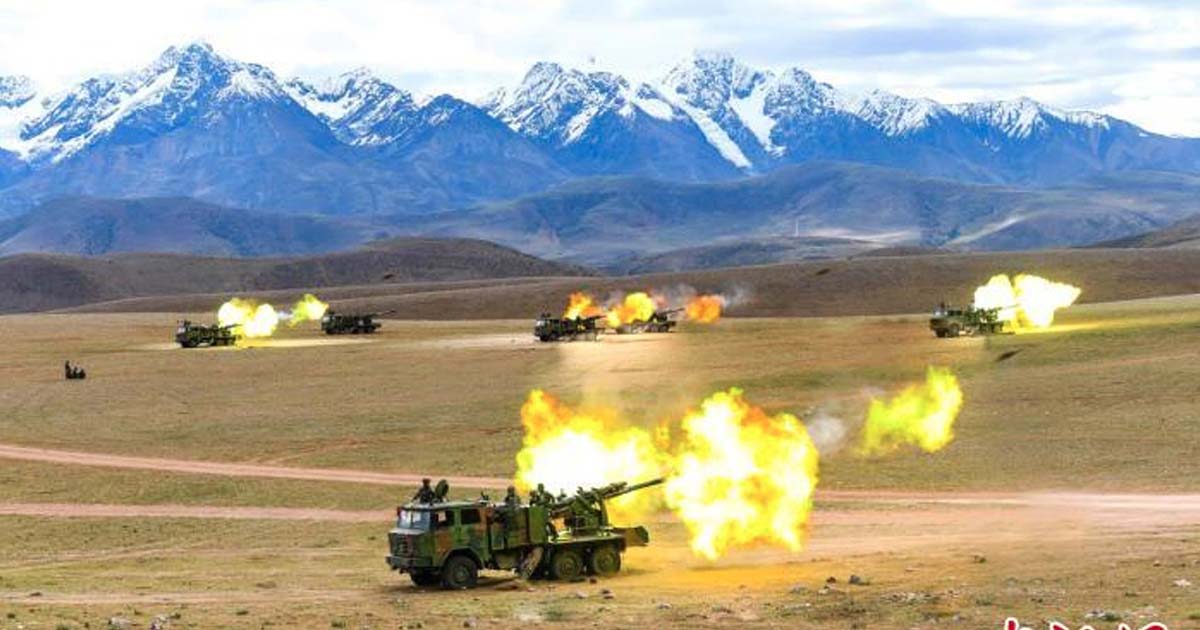
Much of China’s militarization and infrastructure buildout is dual-use: to strengthen both civilian connectivity and the PLA’s capacity to deploy forces rapidly along the Tibet-India border.
STRATEGIC RESOURCE EXPLOITATION
Tibet contains rich deposits of strategically important minerals like lithium, gold and copper, as well as discoveries of significant rare earth deposits. Large-scale extraction of these minerals help fuel China’s economy.
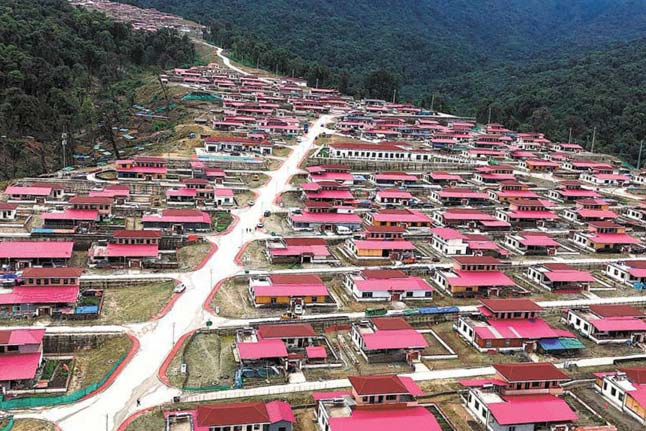
A geopolitical frontier for Indo-Pacific stability
Tibet sits at a strategic crossroads between China and South Asia, making it central to stability across the Indo-Pacific. China’s expanding military and dual-use infrastructure, including border villages, is intensifying regional tensions, altering the security landscape and threatening neighboring states. For Tibetans, Beijing’s militarization and expansion of border control means coerced relocation, loss of ancestral lands and livelihoods, pervasive surveillance, restricted movement and pressure to serve as “guardians” of contested strategic frontiers.
2,100 mi
The length of the disputed border between India and Chinese-occupied Tibet
1.8 B
The approximate number of people in Tibet and downstream nations who rely on the rivers originating in Tibet for their survival and livelihoods
120+
Number of mineral types, including bauxite, chromite, copper, gold, iron, and silver, identified in Tibet
Tibet’s Water: Asia’s shared security
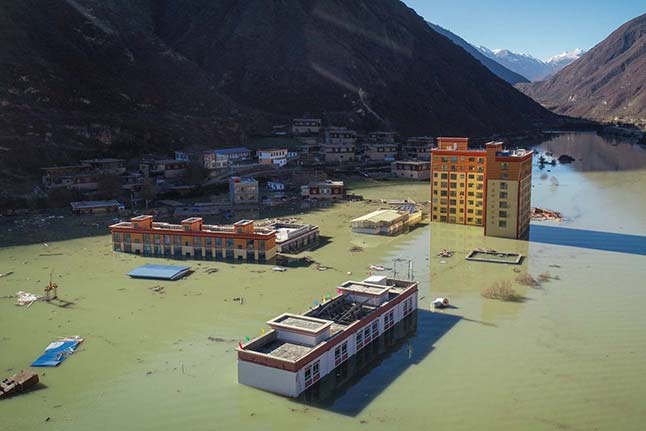
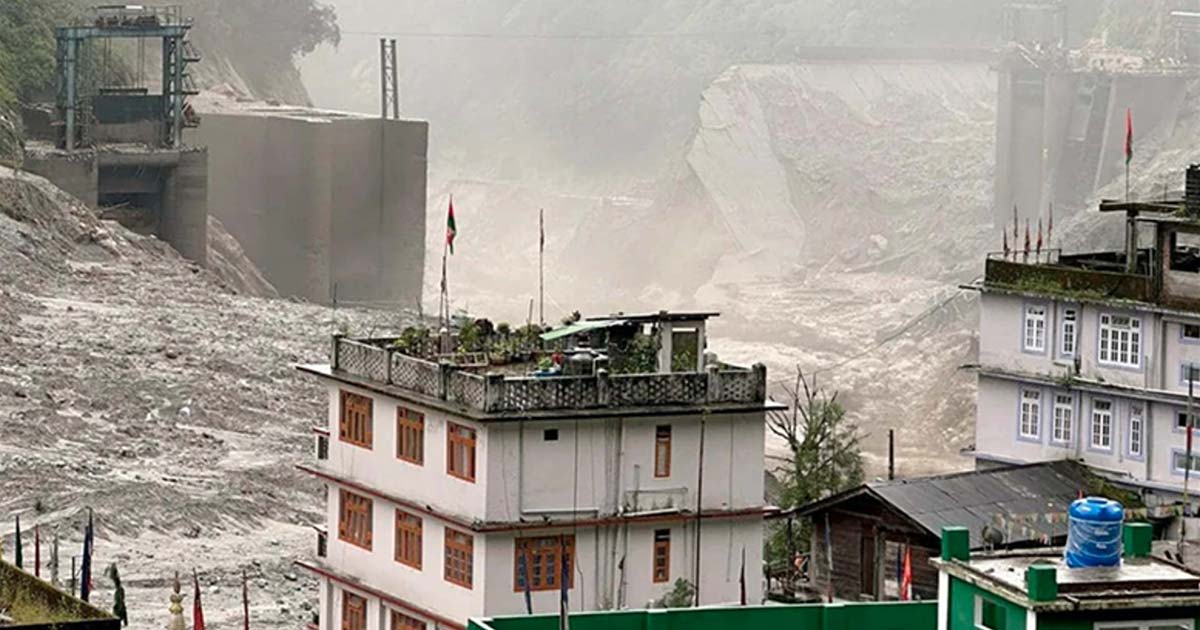
Known as Asia’s Water Tower, Tibet is the source of many of Asia’s great rivers that sustain over 1.8 billion people. China’s upstream dams on rivers originating in Tibet affect water flows, threaten fragile ecosystems, and pose disaster risks far beyond Tibet. Limited transparency and cooperation over hydrological data, dam operations, and emergency response increase uncertainty for downstream countries already confronting climate change, glacier loss, flooding, and water scarcity.
Security is inextricably tied to individual freedom
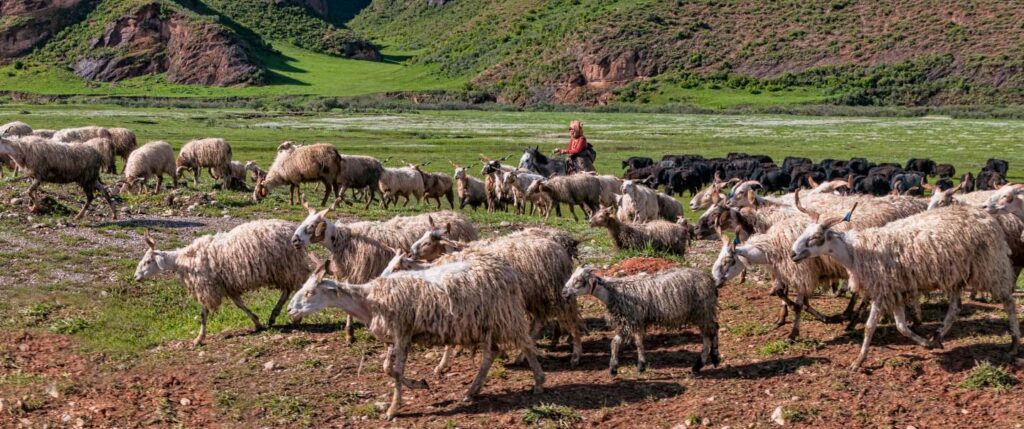
Research has shown that countries which protect and promote human rights are fundamentally more secure, stable, and prosperous over the long-term. In Tibet, the pursuit of long-term stability and security is inextricably tied to China resolving the grievances of the Tibetan population, engaging with His Holiness the Dalai Lama or his representatives to achieve a negotiated solution which guarantees meaningful autonomy for Tibet, and allowing the Tibetan people to preserve their unique religious, linguistic, and cultural identity.
Human Dignity
Regional security begins with the protection of individuals and communities. Safeguarding Tibetan language, religion, culture, livelihoods, and freedom from arbitrary detention is essential to building a stable and peaceful future.
Nonviolence
The Dalai Lama and the Tibetan movement have consistently advanced dialogue and nonviolence as the basis for resolving the Tibet-China conflict. Sustaining this approach offers a credible alternative to confrontation, radicalization, and prolonged regional instability.
Stewardship
Tibetans have a centuries-old tradition of harnessing the benefits and resources of the Tibetan plateau in a resilient and sustainable way. Beijing’s exploitation of Tibet’s resources in furtherance of its development, security and economic goals risks destabilizing Tibet’s environment and endangering other nations in the region.
OUR Impact
- ICT’s seminal 2025 report entitled “Why Tibet: Strategic Imperatives for International Peace and Security” eloquently made the case for framing Tibet as a human rights AND national security imperative for the United States and countries in the region.
- ICT worked with Congress to pass in the Senate version of the Fiscal Year 2026 Appropriations bill an amendment recognizing the geostrategic importance of Tibet and requiring the Department of Defense to analyze the risks related to China’s control of natural resources on the Tibetan plateau.
- ICT consistently advocates for governments to view the succession of the 14th Dalai Lama through the lens of regional stability as an issue that will impact Tibetan Buddhist populations in Tibet, India, Nepal, Bhutan, Mongolia, and Russia.
Essential Reading

Common Questions
Why is the military build-up on the Tibetan border significant?
China’s military buildup in Tibet has transformed what was historically a geographic buffer into a heavily fortified strategic frontier. New roads, railways, airfields, troop facilities, communications networks, and surveillance systems allow the People’s Liberation Army to move personnel and equipment more rapidly toward the disputed border with India.
This expansion increases the speed at which a local confrontation could escalate and reduces the time available for diplomatic intervention. The 2020 Galwan Valley clash demonstrated that an unresolved border dispute can result in fatalities even without conventional gunfire.
How does China’s damming of rivers in Tibet affect regional security?
China’s damming of Tibet’s rivers severely threatens regional security by weaponizing water access, creating catastrophic flood risks, and expanding military control over downstream nations.
Because Tibet, known as the “Water Tower of Asia,” is the source of major rivers flowing into downstream nations like India, Bangladesh, Nepal, and others, and sustaining over 1.8 billion people across 10 nations. By building a massive network of mega-dams—including the unprecedented Medog super-dam on the Yarlung Tsangpo (Brahmaputra) River—Beijing has achieved absolute “hydrological hegemony” over South and Southeast Asia.
What minerals are being mined in Tibet and what are they used for?
Tibet possesses more than 120 different types of minerals, including deposits of copper, lithium, chromium, gold, silver, lead, zinc, and other minerals used in construction, electronics, energy systems, batteries, and defense manufacturing. Mining carries significant security and human-rights implications when projects damage watersheds, displace communities, or proceed without meaningful Tibetan participation. Because the plateau supplies rivers extending across Asia, environmental damage at extraction sites can also have consequences beyond Tibet.
How could interference in the Dalai Lama’s succession affect regional security?
The Dalai Lama has stated that responsibility for identifying his successor belongs to Tibetan Buddhist tradition—not the Chinese government. Beijing nevertheless claims legal authority over the reincarnation process and may attempt to install its own candidate.
Competing successors could deepen religious repression and provoke unrest inside Tibet while creating diplomatic pressure on India and other countries with Tibetan Buddhist communities. A succession dispute would therefore carry consequences extending beyond religion to human rights, regional diplomacy, and the broader stability of the Himalayan region.