


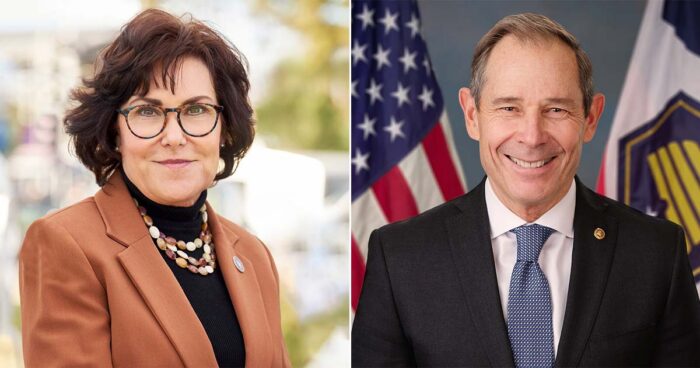
Senators Jacky Rosen (D-NV) and John Curtis (R-UT)
Senators Jacky Rosen (D-NV) and John Curtis (R-UT) have called on Assistant Secretary of State Riley M. Barnes, the newly appointed Special Coordinator for Tibetan Issues, to advance US policy on Tibet in a joint letter sent on Monday March 23. The bipartisan letter closely follows a letter from a dozen US House Members in both timing and substance, highlighting Congress’s bipartisan and bicameral commitment to the people of Tibet.
“I would like to thank the Members of Congress for their proactive support for the Tibetan people,” said International Campaign for Tibet President Tencho Gyatso. “The United States and the international community must continue to answer China’s repression in Tibet with a clear commitment to securing the human rights and democratic freedoms of the Tibetan people.”
Persistent engagement on Tibet
Senators Rosen and Curtis sent a letter to Secretary of State Marco Rubio last year in which they urged him to swiftly appoint a Special Coordinator for Tibetan Issues. At the time they called for the appointment of a Special Coordinator as “a strong message that we will continue standing up for the rights of the Tibetan people,” and in the new letter the pair state that they look forward to working with Barnes in order to “to implement [Tibet] laws and appropriations provided by Congress, to advance a renewed and reinvigorated push to peacefully resolve the dispute over Tibet’s future, and to continue the US government’s unwavering support for our Tibetan allies.”
Rosen also recently provided a statement of support for the Tibetan people during the March 10 rally in Washington, DC commemorating the 1959 Tibetan National Uprising.
As with the House letter, Rosen and Curtis cover the resumption of Sino-Tibetan dialogue, preventing Chinese interference in the Dalai Lama’s succession, increasing support for the Central Tibetan Administration and the implementation of Tibet laws passed by Congress in recent years, including the Reciprocal Access to Tibet Act, the Tibetan Policy and Support Act, and the Resolve Tibet Act.
The letter can be read in full here.