

Fourteen Tibetan American students put their newly acquired advocacy and leadership skills into practice as they met with congressional offices on Capitol Hill to advocate for the Assuring the Future of Tibet Act (H.R. 8982) during the International Campaign for Tibet’s (ICT) 2026 Tibetan Youth Leadership Program, held July 11–18 in Washington, DC.
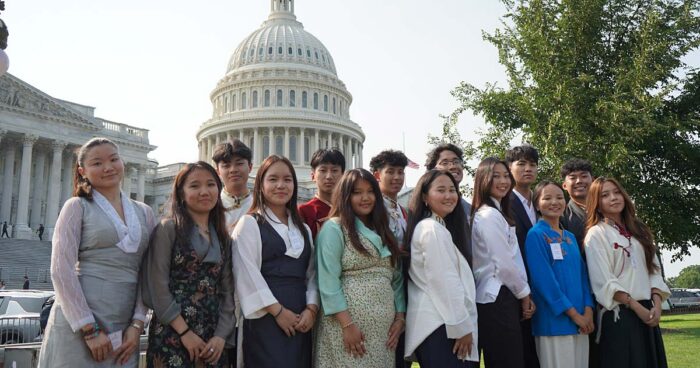
The 2026 cohort of ICT’s Tibetan Youth Leadership Program.
Following advocacy training, lobbying simulations, and communications workshops as part of ICT’s program, the 14 Tibetan American undergraduate and graduate students advocated at the offices of their elected representatives for the bipartisan legislation, introduced in the House of Representatives by Representatives Jim McGovern (D-MA) and Michael McCaul (R-TX), which would elevate the US government’s engagement with the Central Tibetan Administration and strengthen long-term US support for Tibet.
By the end of the week, participants left Washington with a deeper understanding of the American political process, stronger advocacy and communication skills, and firsthand experience engaging with policymakers and advocates who help shape US policy on Tibet.
“ICT’s Tibetan Youth Leadership Program gave me the confidence to step into leadership in ways I hadn’t before,” said Tenzin Rigden, a member of the 2026 Tibetan Youth Leadership Program cohort and a student at Penn State University. “Working alongside other Tibetan students challenged me to take initiative, whether it was helping organize our group or speaking up during discussions. I hope to use what I’ve learned to mentor younger Tibetans, encourage civic engagement, and help others better understand the policies and issues that affect our community.”
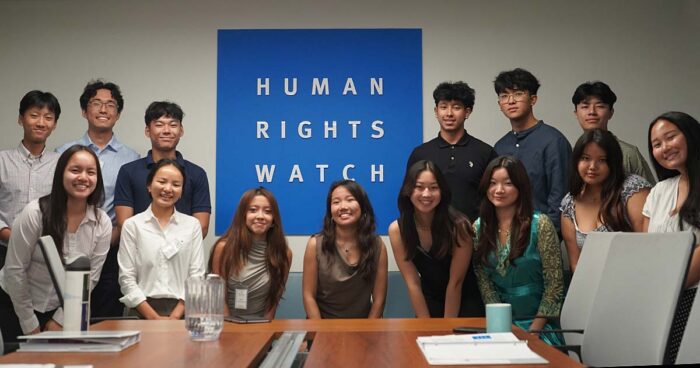
ICT’s 2026 TYLP cohort at the Human Rights Watch office in Washington, DC.
Established in 2001, ICT’s Tibetan Youth Leadership Program brings emerging leaders into direct conversation with policymakers, advocates, scholars, journalists and Tibetan community leaders while building practical skills in communications, civic engagement and public service.
“One of the most powerful aspects of the Tibetan Youth Leadership Program is witnessing young Tibetan American students discover how their identities and lived experiences can become a powerful source of leadership and advocacy,” said ICT Executive Director Ryan Fioresi. “Leadership takes many forms, and each of these students have a meaningful role to play in contributing to and advancing the Tibetan cause.”
Understanding the Tibetan movement, US policy
The week began with foundational conversations on the history of the Tibetan movement, particularly in the United States, and the challenges facing Tibet today. At the Office of Tibet, students met with Representative of His Holiness the Dalai Lama to North America Dr. Namgyal Choedup and staff to learn about the work of the Central Tibetan Administration and its engagement with Tibetan communities across North America.
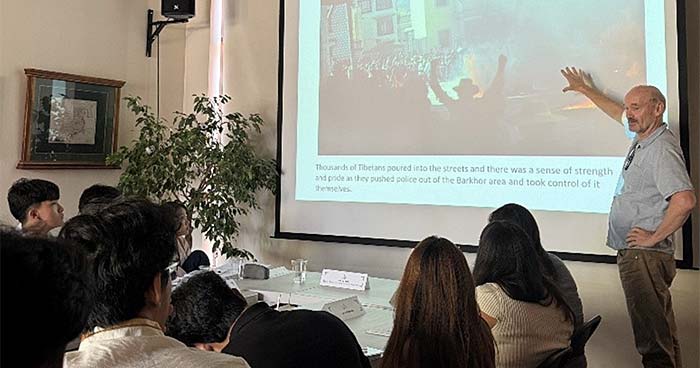
Former ICT President John Ackerly shares his photos from the 1987 protests in Tibet.
Sessions with ICT founding President Tenzin Namgyal Tethong, ICT’s Head of Research and Monitoring Unit Bhuchung K. Tsering, and educational sociologist and Tibet expert Dr. Gyal Lo deepened participants’ understanding of the evolution of the Tibetan movement, encouraged them to explore the power of their own identities as Tibetan Americans, and examined the impact of China’s policies on Tibetan language, education, and the larger Tibetan society.
Learning from advocates and activists
Throughout the week, participants met with individuals whose careers have advanced the cause of Tibet through human rights advocacy, grassroots activism, journalism, and diplomacy.
Former ICT President John Ackerly reflected on his introduction to Tibet during the 1987 protests in Lhasa and his decades-long of advocacy for Tibet, while American student activist Thomas King Jackson, who is completing a ‘1,000 Miles for Tibet’ walking initiative to create awareness about Tibet, shared how his grassroots activism has introduced new audiences to the Tibetan cause, even as he strives to find the right balance between being an activist and a student.
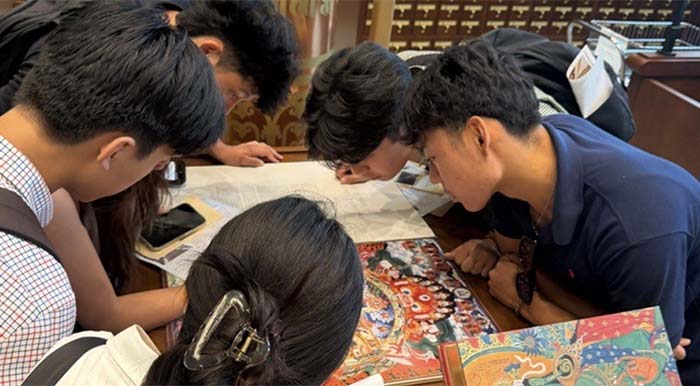
Students exploring the Tibetan collection at the US Library of Congress.
Students also explored broader human rights challenges through discussions with rights advocates and experts such as Chinese Human Rights Defenders Co-Executive Director Sophie Richardson, Hong Kong activist Joey Siu, and Chinese activist Sophie Luo. At Human Rights Watch, participants explored the organization’s work documenting and responding to human rights violations across Asia.
A visit to the Library of Congress introduced students to one of the world’s largest collections of Tibetan materials, where Tibetan and Mongolian specialist Susan Meinheit highlighted the Library’s efforts to help preserve Tibetan language and history.
The program also featured engagements with Tibetan media professionals, journalists, and Tibetans working in public service, offering participants insight into the many ways they can contribute to their communities and the larger Tibetan movement.
From training to action
One of the defining features of TYLP is the opportunity for participants to gain practical real-world advocacy experience.
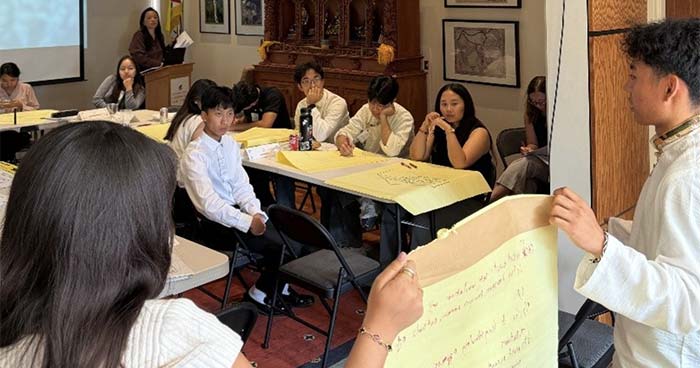
Groups present findings during a workshop.
Following a workshop on communications and media led by ICT Director of Strategic Communications Tenzin Pema, students also completed advocacy training and lobbying simulations before taking those skills to Capitol Hill for constituent meetings with congressional offices.
For many participants, these meetings marked their first experience in engaging directly with the offices of their elected representatives. In these meetings, they discussed the importance of continued bipartisan support for Tibet and urged members of Congress to support the Assuring the Future of Tibet Act of 2026, and call for the repeal of China’s recently implemented Ethnic Unity and Progress Law.
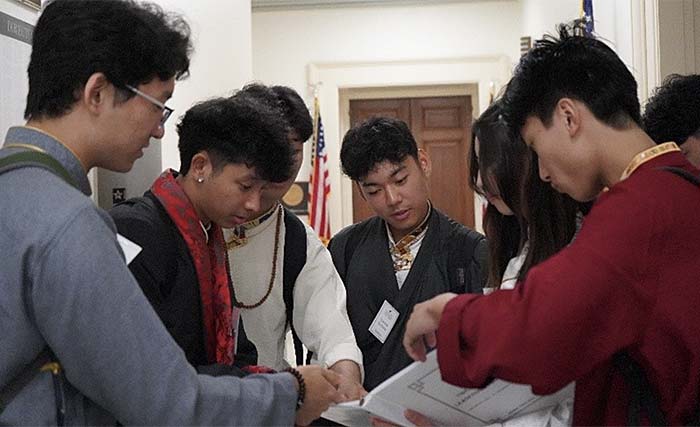
TYLP participants prepare for their next meeting.
The week concluded with a visit to the US Department of State, where participants met with officials covering Tibet, Nepal, and Bhutan to discuss US policy on Tibet, and share their own perspectives as Tibetan Americans. A diplomacy simulation facilitated by the National Museum of American Diplomacy challenged the young Tibetan leaders to negotiate, build consensus, and navigate competing priorities in a realistic diplomatic environment.
From congressional offices and the US State Department to discussions with advocates and trainings and workshops, ICT’s TYLP program offered the participants a firsthand experience of how civic engagement, public service, and advocacy intersect in shaping US policy on Tibet.
About the Tibetan Youth Leadership Program
The Tibetan Youth Leadership Program is part of ICT’s Lodi Gyari Tibetan Empowerment Program, which includes a suite of initiatives designed to strengthen Tibetan leadership and empower Tibetans to protect Tibetan culture and identity and advocate for their rights and future.
As China continues to intensify its repression in Tibet, Tibetan American advocacy has become crucial to advancing US support for the Tibetan movement. Thanks in part to the sustained advocacy by Tibetan Americans, the US government has responded to China’s rights violations in Tibet by signing into law the Resolve Tibet Act in 2024, which reinforces US policy on Tibet and directs the State Department to counter the Chinese government’s disinformation campaign on Tibet.
The US also passed the Reciprocal Access to Tibet Act in 2018, which authorized the State Department to deny entry to Chinese officials responsible for restricting access to Tibet for American diplomats, journalists, and ordinary citizens.
About ICT
The International Campaign for Tibet (ICT) is a nonprofit organization that promotes human rights and democratic freedoms for the people of Tibet. Through advocacy, education, and outreach, ICT works to safeguard the unique culture and identity of the Tibetan people.
For more information, visit www.savetibet.org or contact [email protected].