Foundational Information
Tibetan Policy and Support Act
Landmark U.S. law strengthening support for Tibetan rights and religious freedom, including protections for the Dalai Lama’s succession.
What you need to know
Signed into law in 2020, the Tibetan Policy and Support Act significantly strengthened U.S. policy on Tibet. It protects Tibetans’ religious freedom, supports dialogue and cultural preservation, and establishes that decisions over Tibetan Buddhist reincarnations — including the future Dalai Lama — belong to Tibetan Buddhist religious authorities, not the Chinese government.

PROTECTS THE DALAI LAMA’S SUCCESSION
Establishes U.S. policy that Tibetan Buddhist reincarnations are exclusively religious matters for Tibetan Buddhists and provides for sanctions against Chinese officials who interfere in identifying or installing a future Dalai Lama.
PUSHes FOR SINO-TIBET DIALOGUE
Strengthens the mandate of the U.S. Special Coordinator for Tibetan Issues, including promoting substantive dialogue without preconditions between China and the Dalai Lama, his representatives, or democratically elected Tibetan leaders.
INVESTs IN TIBET’S FUTURE
Expands U.S. support for Tibetan communities in Tibet and in exile, including programs advancing cultural and linguistic preservation, education, sustainable development, environmental protection, and humanitarian assistance.
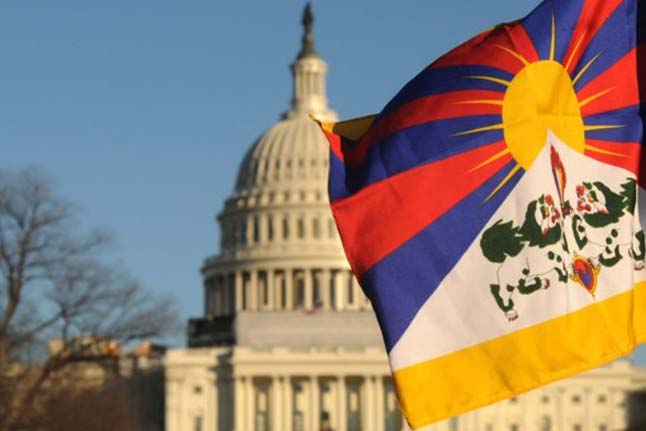
A major upgrade to U.S. policy on Tibet
The legislation also strengthens the landmark Tibetan Policy Act of 2002, addresses the issue of water security and environmental destruction in Tibet, provides humanitarian assistance for Tibetans in Tibet and in exile and pushes China to resume dialogue with the Dalai Lama and Tibetan leaders, without preconditions.
2011
ICT begins advocacy to push for an update to the Tibetan Policy Act of 2002
2019
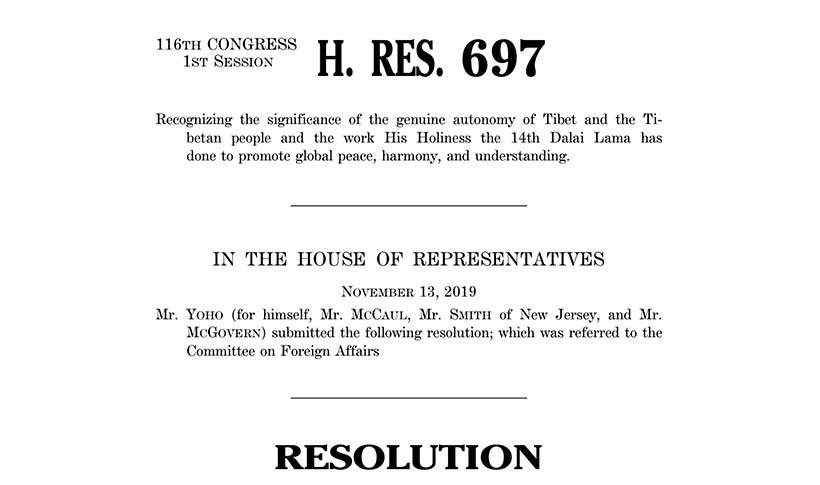
The bipartisan Tibetan Policy and Support Act (TPSA) is introduced in Congress
2020
TPSA officially becomes law
Bipartisan support for Tibet
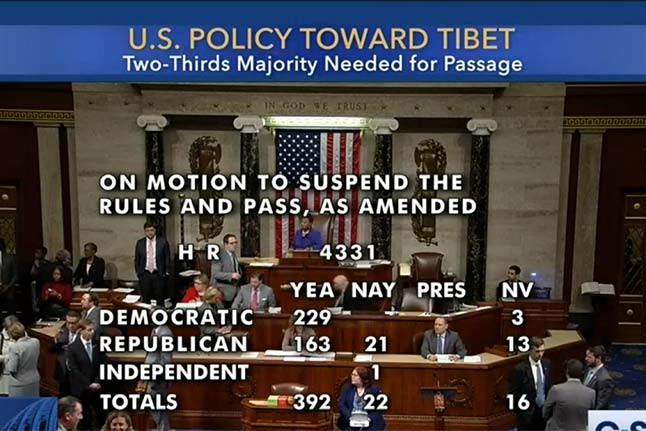
The TPSA brought together Democrats and Republicans in both chambers of Congress around stronger U.S. policy on Tibet. Its passage continued a decades-long tradition of bipartisan congressional support for Tibetan human rights, religious freedom, cultural preservation, and a negotiated resolution to the Tibet-China conflict.
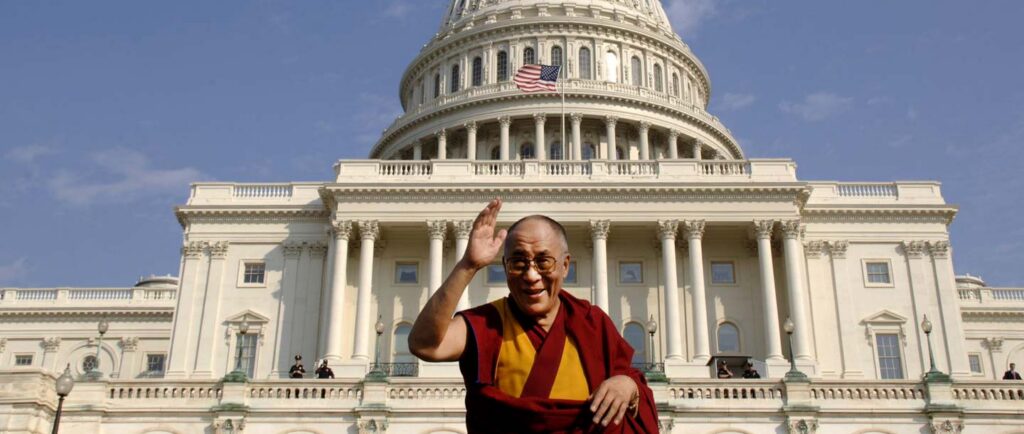
Building the push to update U.S. Tibet policy
For years, ICT leaders brought the case for updating and strengthening the Tibetan Policy Act of 2002 directly to U.S. policymakers through congressional testimony, policy briefings, and sustained advocacy — helping build momentum for the legislation that ultimately became the Tibetan Policy and Support Act, which was signed into law in 2020.
2011: ICT calls for stronger Tibet policy
ICT Vice President Bhuchung K. Tsering testified before Congress, urging lawmakers to update and strengthen the Tibetan Policy Act of 2002 to reflect major developments in Tibetan governance, the Dalai Lama’s succession, assistance for Tibetan communities, and the need for renewed dialogue.
2017: ICT Chairman testifies on U.S. Tibet policy
ICT Chairman Richard Gere testified before the House Foreign Affairs Committee at a hearing devoted to U.S. policy toward Tibet. His testimony addressed access to Tibet, religious freedom, human rights, reciprocity, and the need to strengthen U.S. policy in response to changing conditions in Tibet.
2020: ICT President makes the case before Congress
With the TPSA awaiting final action, ICT President Matteo Mecacci testified before the Congressional-Executive Commission on China, arguing that U.S. policy on Tibet needed to be updated and strengthened and urging the Senate to pass the TPSA before the end of the year.
Our Impact
- ICT led a multi-year advocacy campaign, including mobilizing more than 26,000 constituent petitions to Congress, to pass the landmark Tibetan Policy and Support Act (TPSA), which was signed into law in December 2020 and further built on U.S. support for the Tibetan people outlined in the Tibetan Policy Act of 2002.
- ICT secured the TPSA’s provisions on His Holiness the Dalai Lama’s succession, which makes it official U.S. policy that identifying a future Dalai lama rests solely with the Tibetan Buddhist community and which authorizes Global Magnitsky sanctions and visa bans for Chinese officials who interfere in the succession process.
- ICT’s Chairman Richard Gere testified before a Senate subcommittee in June 2020 urging passage of the bill, and ICT hand-delivered the text of the enacted law to His Holiness in India.
Essential Reading
Common Questions
What is the “Tibetan Policy and Support Act” and why is it significant?
The Tibetan Policy and Support Act (TPSA) of 2020 is a major piece of bipartisan United States legislation signed into law to drastically upgrade and reinforce American diplomatic and political support for Tibet. It serves as an amendment and expansion of the landmark Tibetan Policy Act of 2002.
What is the official U.S. stance on the succession of the Dalai Lama?
The official U.S. stance is that the succession or reincarnation of the Dalai Lama is a strictly religious matter that falls entirely under the authority of the current Dalai Lama, Tibetan Buddhist leaders, and the Tibetan people. The U.S. government firmly maintains that the Chinese Communist Party (CCP) has no role, legitimacy, or authority in this process.
What happens if Chinese officials interfere in the reincarnation process of the Dalai Lama?
If Chinese officials interfere in the reincarnation process of the Dalai Lama, they face severe international, economic, and geopolitical consequences. The Tibetan Policy and Support Act (TPSA) lays out clear, legally mandated accountability actions from the United States, including Global Magnitsky sanctions for Chinese officials who interfere in the succession process.
Does TPSA address environmental issues?
Yes, the Tibetan Policy and Support Act (TPSA) addresses environmental issues. In Section 4 of the law, the U.S. government formally recognizes the global ecological and strategic importance of the Tibetan Plateau, which functions as the “Third Pole” and the water tower for approximately 1.8 billion people in downstream countries across South and Southeast Asia.