Analysis | November 24, 2026
Sikyong urges support for Tibet in meetings with U.S. congressional and administration officials in Washington, D.C. and global parliamentarians at IPAC Summit


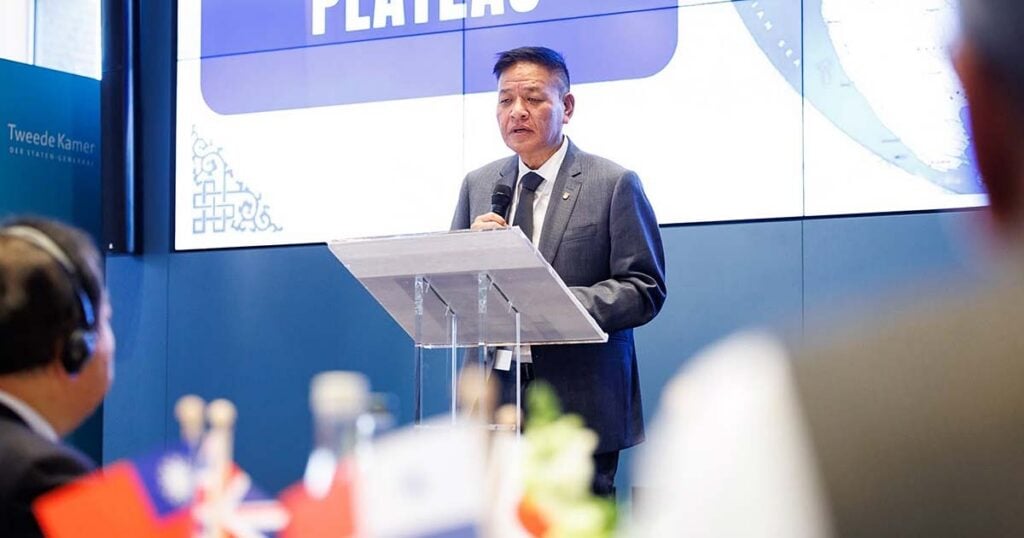
In a series of high-level international engagements this month, Sikyong Penpa Tsering, the democratically elected head of the Central Tibetan Administration (CTA), sought to bolster international support for Tibet and advance the priorities of the Tibetan leadership at the outset of his second term. His engagements focused on mobilizing support for Tibet-related legislation, including the Assuring the Future of Tibet Act (AFTA) in the U.S., safeguarding the Dalai Lama’s succession process from Chinese government interference, and broadening international parliamentary and diplomatic support for Tibet.
The International Campaign for Tibet (ICT) joined Sikyong in his meetings with members of the U.S. Congress and the executive branch in Washington, DC, on Nov. 9-13, 2026, and in his engagements with parliamentarians from around the world at the sixth annual Inter-Parliamentary Alliance on China (IPAC) Summit in The Hague, Netherlands on Nov. 5-6, 2026.
ICT also continued its international advocacy through engagements at the Halifax International Security Forum in Canada, where ICT President Tencho Gyatso brought Tibetan perspectives to discussions on global security and democratic cooperation; the China Forum in Washington, DC, where ICT Executive Director Ryan Fioresi participated in a panel examining the Dalai Lama’s succession and coordinated democratic responses to safeguard Tibetan religious freedom and identity; and the Snowland Forum in Taipei, Taiwan, where ICT Research and Monitoring Head Bhuchung K. Tsering participated in a panel on the implications of China’s new so-called “Ethnic Unity and Progress Law.”
IPAC Summit
At the IPAC Summit, which brought together 52 parliamentarians from 30 countries, Sikyong urged lawmakers to encourage their respective governments to undertake an objective study of Tibet’s history and adopt legislation or resolutions along the lines of the Resolve Tibet Act passed by the U.S. in 2024, which aims to counter the Chinese government’s historical disinformation on Tibet and advance a negotiated solution to the Tibet-China conflict through the Middle Way Policy of His Holiness the Dalai Lama.
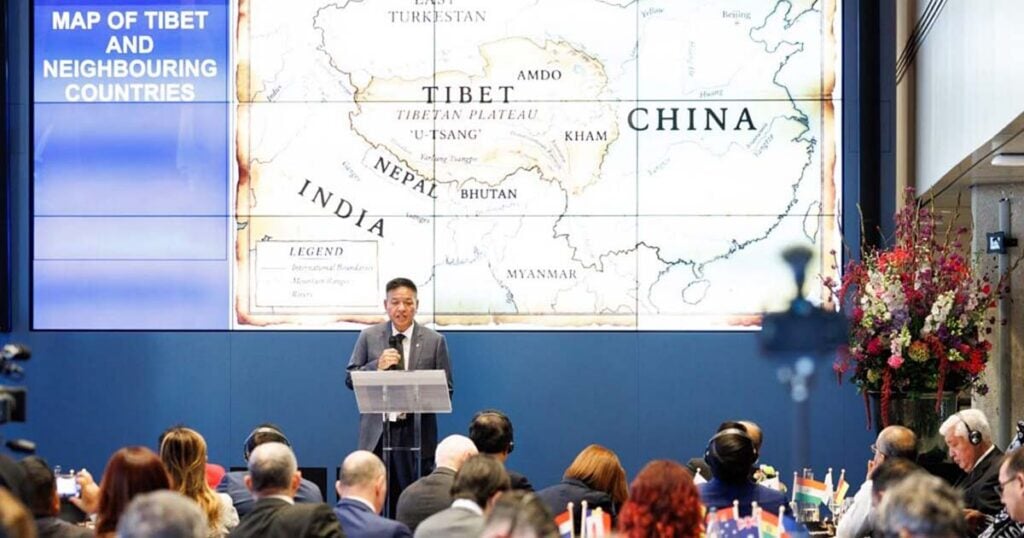
Sikyong also highlighted the implications of China’s recently enacted “Ethnic Unity and Progress Law” for the survival of Tibetan language, religion and cultural identity and urged lawmakers to press their respective governments to call for its repeal, echoing calls by the UN High Commissioner for Human Rights Volker Türk and many others.
“Tibet’s unique language, religion, culture and peaceful way of life, totally different from China, is under serious threat, amounting to cultural genocide,” Sikyong Penpa Tsering said in his address at the IPAC Summit. “This (ethnic unity) law is an attempt to legitimize their genocidal policies against the Tibetans, Uyghurs, and Mongolian populations through forced assimilation under the mask of a law,” he added.
He also called on parliamentarians to adopt positions upholding Tibetan religious freedom, particularly the right of Tibetans to determine the reincarnation of His Holiness the Dalai Lama without interference from the Chinese government. He underscored the July 2, 2025, statement of His Holiness entrusting responsibility for the recognition of his reincarnation to the Gaden Phodrang Trust of His Holiness the Dalai Lama, a registered trust based in India. He highlighted that the U.S. has already enacted legislation providing for sanctions against Chinese officials who interfere in the Dalai Lama’s succession and that seven European nations – Germany, France, the Netherlands, Iceland, the UK, Lithuania and Estonia – have issued a joint statement on the issue.
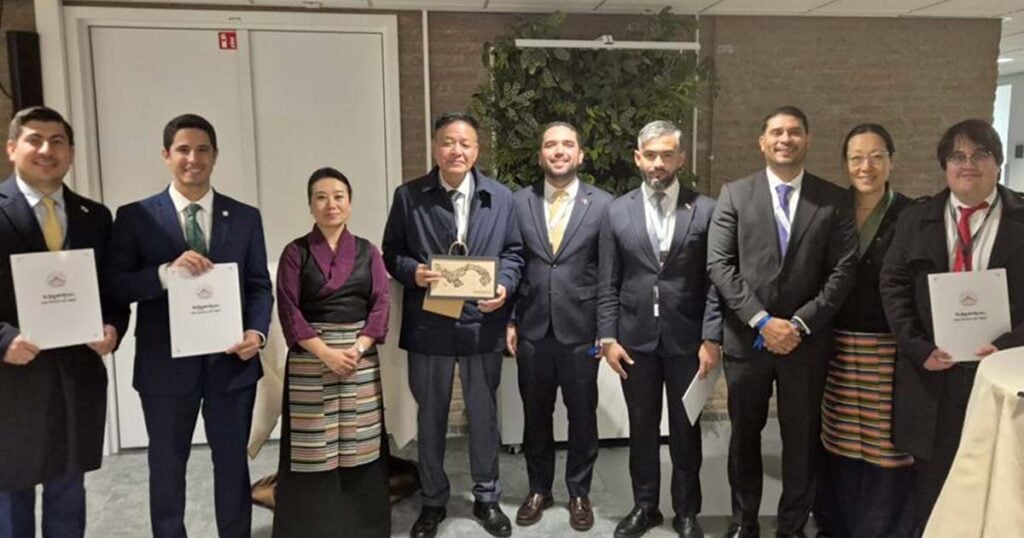
On the sidelines of the IPAC Summit, Sikyong, accompanied by members of the Tibetan delegation –including Brussels-based Office of Tibet Representative Rigzin Genkhang and ICT President Tencho Gyatso – engaged with parliamentarians from around the world, including IPAC Co-Chair Jan Paternotte and Member of the European Parliament Miriam Lexmann as well as lawmakers from Japan, Panama, Taiwan, the United Kingdom, Romania and the Balkans.
Meetings with U.S. Congressional and administration officials
During his visit to Washington, DC earlier this month, Sikyong held a series of meetings with key members of the U.S. Congress and the executive branch, accompanied by ICT staff members and Dr. Namgyal Choedup, the Dalai Lama’s Representative to North America.
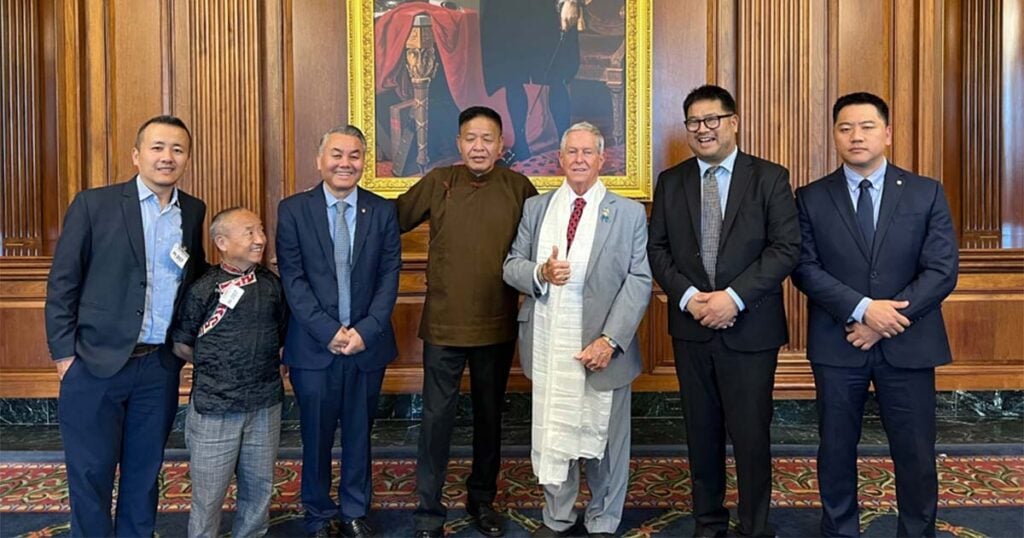
Coming at the beginning of Sikyong’s second term and towards the end of the 119th Congress, his visit provided an opportunity to discuss with members of Congress, State Department officials, and journalists the priorities outlined in the CTA’s latest vision paper and strategize on ways to make progress on Tibet-related initiatives when the new Congress convenes in January 2027.
A key legislative priority was the passage of the Assuring the Future of Tibet Act, which seeks to strengthen U.S. engagement with the CTA and advance its international standing as the democratically elected representative of the Tibetan people.
Sikyong met with key members of Congress, including longtime Tibet champion Rep. Jim McGovern (D-MA), House Select Committee on the CCP Chairman John Moolenaar (R-MI), and Ranking Member Lois Frankel (D-FL) of the House Appropriations Subcommittee on National Security, the Department of State, and Related Programs, among others.
At a briefing convened by the Congressional-Executive Commission on China, Sikyong stressed the importance of passing AFTA and the swift restoration of Voice of America and Radio Free Asia Tibetan broadcasting services.
At the State Department, Sikyong met with U.S. Special Coordinator for Tibetan Issues Riley Barnes, followed by a meeting with officials from several other offices within the Department.
In meetings with Speaker Emerita Nancy Pelosi (D-CA) and Congressman Michael McCaul (R-TX), both of whom are retiring from Congress at the end of this term, Sikyong Penpa Tsering and the ICT advocacy team expressed gratitude for their leadership on Tibet and their dedication to the human rights and democratic freedoms of the Tibetan people.
Later in the month, on Nov. 18, 2026, ICT also joined representatives of the Office of Tibet and the Capital Area Tibetan Association (CATA) at the official portrait unveiling of former House Foreign Affairs Committee Chairman Michael McCaul honoring his distinguished public service and longstanding support for Tibet.
During the ceremony, ICT Board Chair Richard Gere virtually delivered a personal message from His Holiness the Dalai Lama, who expressed gratitude for McCaul’s bipartisan leadership and steadfast support for the Tibetan people, noting that his initiatives on Tibet had given Tibetans hope and encouragement in their peaceful pursuit of a political resolution to the Tibet issue.
His Holiness also fondly recalled McCaul’s visit to Dharamshala with a bipartisan congressional delegation in June 2024. McCaul’s legislative legacy on Tibet includes his leadership, alongside Congressman Jim McGovern (D-MA), in advancing the landmark Resolve Tibet Act (2024) and the Assuring the Future of Tibet Act (2026).
Tibet at Halifax International Security Forum
Continuing many of the themes raised by Sikyong, ICT President Tencho Gyatso brought Tibetan perspectives to discussions on global security at the 18th Halifax International Security Forum, held in Halifax, Canada on Nov 20–22, 2026, where she drew upon the Tibetan experience to highlight the need to recognize the interconnectedness of environmental security, democratic freedoms, cultural diversity and respect for international norms.
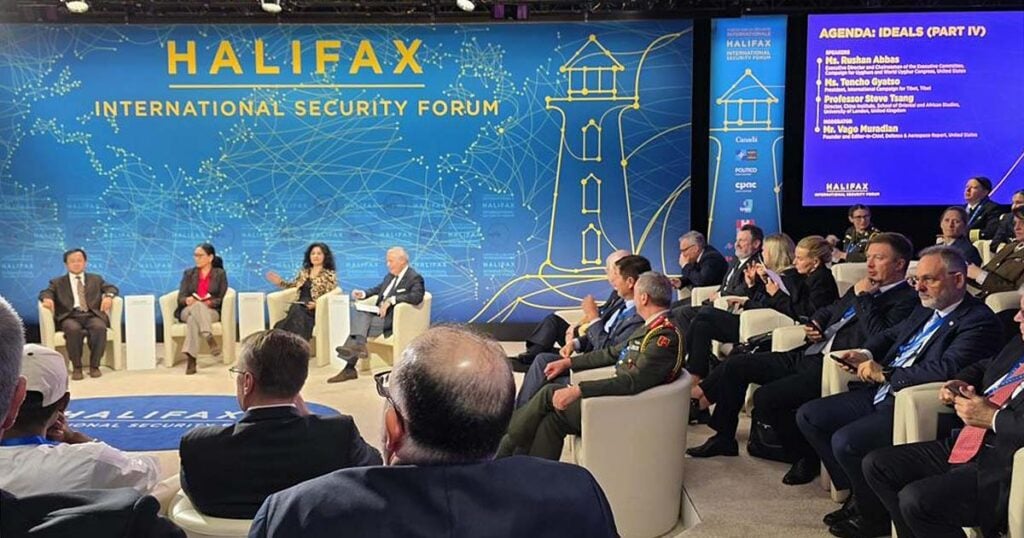
Joining her on the panel examining how democracies can work together to advance shared security goals were Rushan Abbas, Executive Director of Campaign for Uyghurs, and Steve Tsang, Director of the SOAS China Institute, with Vago Muradian of Defense & Aerospace Report moderating the discussion.
Gyatso highlighted the significance of the Tibetan Plateau to Asia’s water security, the implications of China’s growing militarization along Tibet’s Himalayan frontiers, and the need for coordinated international responses to China’s transnational repression and use of technology and artificial intelligence to facilitate surveillance and repression.
Gyatso also spoke about China’s residential boarding school system in Tibet, the extraterritorial implications of the ethnic unity law, and the need for independent journalistic access to Tibet. She called on democratic governments to engage with the elected Tibetan leadership, defend the right of Tibetans to determine their religious future, including the reincarnation of the Dalai Lama, and hold Chinese officials accountable for human rights violations.
“While democracies have to defend pluralism at home, they cannot overlook its erosion elsewhere…so what really is required is a coordinated security framework and collective responsibility,” Gyatso said.
Other international developments on Tibet
ICT also contributed to broader discussions on religious freedom in China through its participation in the launch of the International Republican Institute’s (IRI) report, “Faith Is Not a Crime,” on Nov. 20, 2026. ICT Senior Researcher Tenzin Norgay joined Uyghur and Chinese Christian advocates in discussions highlighting the Chinese government’s persecution of religious communities and the challenges facing religious freedom in Tibet and across China.
Meanwhile, the German federal government’s recently released fourth report on the global situation of freedom of religion or belief highlighted restrictions on Tibetan Buddhism, Chinese government interference in the recognition of Tibetan religious leaders, and transnational repression targeting Tibetans abroad, including in Germany.