Foundational Information
A Solution: The Middle Way Approach
Umay Lam in Tibetan, this nonviolent proposal for genuine autonomy within the People’s Republic of China is the Dalai Lama’s and the Tibetan people’s vision for Tibet’s future.
What you need to know
Proposed by the Dalai Lama and democratically adopted by the Tibetan exile government after years of deliberation, the Middle Way is the official policy of the Tibetan Government in Exile, known as the Central Tibetan Administration, and the Tibetan people and seeks to resolve the Tibet-China conflict through nonviolence and dialogue. Under the Middle Way Approach, Tibetans would govern their internal affairs, including language, education, religion, culture, economic development, and environmental protection, while Beijing retains responsibility for defense and foreign affairs.

FORMULATED BY THE DALAI LAMA
The Dalai Lama began developing the Middle Way in 1974, grounding it in the Tibetan Buddhist principles of nonviolence, interdependence, and negotiated conflict resolution.
TIBET WOULD REMAIN PART OF CHINA
But Tibetans would have meaningful autonomy within the People’s Republic of China, drawing on rights already established in China’s Constitution and laws on regional ethnic autonomy.
TIBETANS WOULD GOVERN INTERNAL AFFAIRS
China would oversee defense and foreign affairs, but the Tibetan people would exercise complete authority over their education, language, religion, culture, economy, and other internal issues.
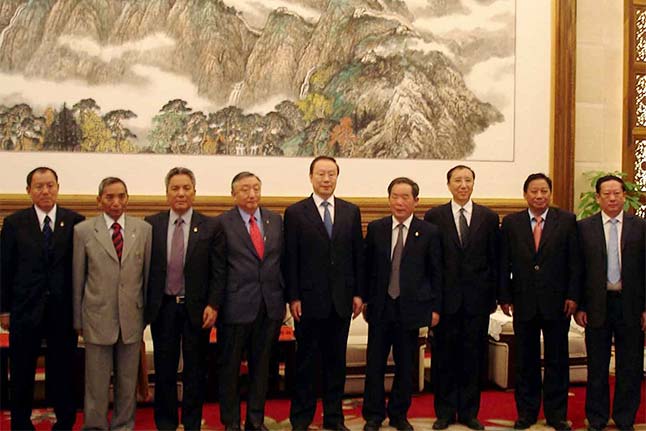
The only way to solve the Tibetan issue is through direct dialogue
The last round of dialogue between Chinese officials and the envoys of the Dalai Lama took place in China in January 2010. Although the Chinese side continued to make baseless allegations against the Dalai Lama, Lodi Gyari, the lead Tibetan negotiator, later said, “We do not see any reason why we cannot find a common ground … if the Chinese leadership has the sincerity and the political will to move forward.”
1949
China’s People’s Liberation Army invades Tibet
1974
The Dalai Lama conceives the Middle Way framework to engage the Chinese government in meaningful dialogue
2010
Formal dialogue between representatives of the Dalai Lama and Beijing ends without a negotiated resolution
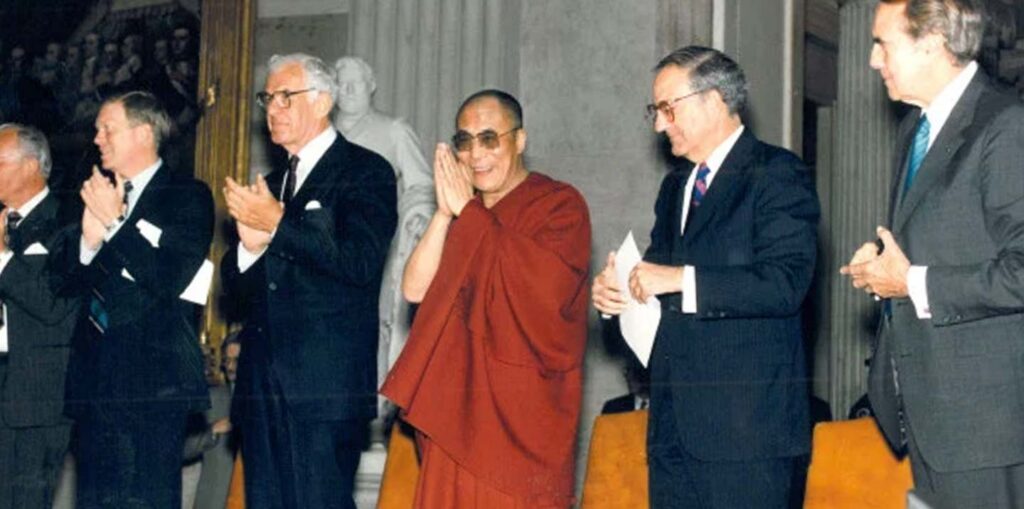
(Photo: U.S. House of Representatives)
Tibetan Commitment to Peaceful Engagement
The Middle-Way Approach seeks to peacefully resolve the issue of Tibet through a mutually beneficial negotiated solution between the Tibetan and Chinese leadership. The Tibetan people do not accept the present status of Tibet under the People’s Republic of China. Although the historical independence of Tibet is a fact, this approach prioritizes the future and looks for a solution within the framework of the People’s Republic of China.
It is a policy adopted democratically by the Central Tibetan Administration after a series of discussions beginning in the 1970s.
It is inspired by the Dalai Lama who believes that it is “the most realistic and pragmatic course” as it takes into consideration the concerns and interests of not just the Tibetan people but also of the Chinese nation. Many Chinese scholars and writers have publicly supported the Middle Way approach as a resolution of the Tibet issue within the Middle Way framework will ultimately contribute to China’s and the region’s peace and stability.
Strasbourg Proposal
Presented by the Dalai Lama before the European Parliament in Strasbourg on June 15, 1988, the Proposal called for earnest negotiations so that Tibet can become a self-governing democratic political entity within the People’s Republic of China. While China would be responsible for foreign affairs and defense, the Proposal outlined that Tibet would have the rights to decide on all affairs relating to Tibet and the Tibetan people.
Five-Point Peace Plan
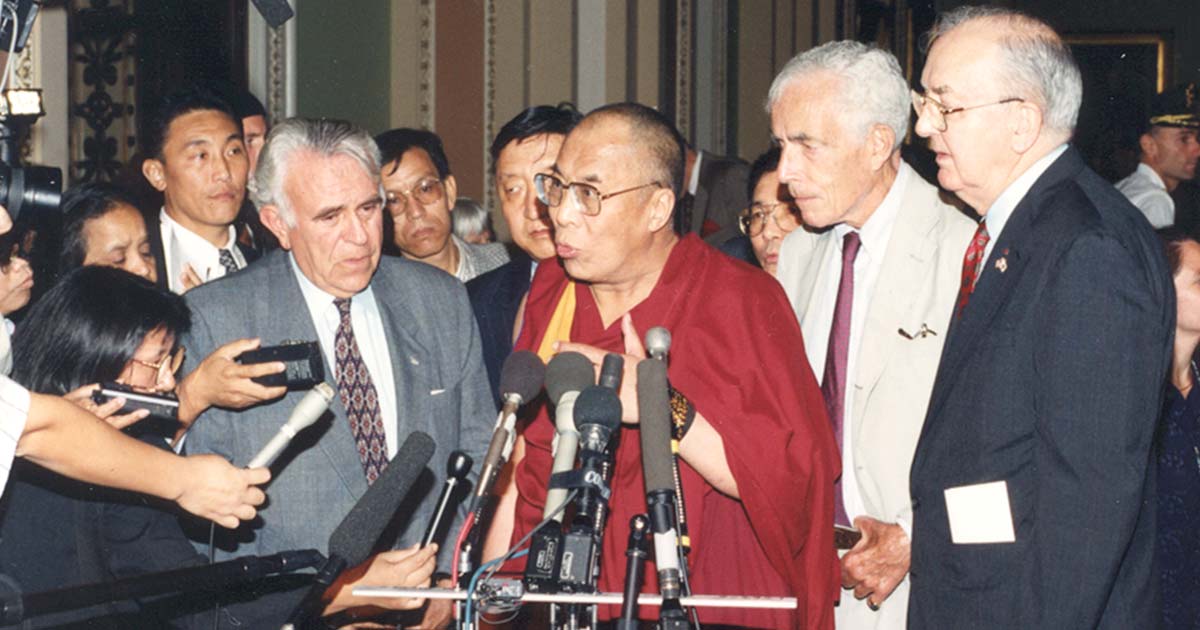
Announced by the Dalai Lama on September 21, 1987, at the Congressional Human Rights Caucus in Washington, D.C., the Five Point Peace Plan for Tibet called for the transformation of Tibet into a zone of peace; a halt to China’s population transfer policy in Tibet; respect for Tibetan people’s human rights, democratic ideals, and Tibet’s environment; and earnest negotiations between Tibetans and the Chinese government on the future status of Tibet.
Guidance for Future Tibet Policy
The Dalai Lama affirmed the central role of the Tibetan people in determining Tibet’s future when he devolved his political authority to a democratically-elected Tibetan leadership in exile in 2011. He has categorically said that the Tibetan struggle is not for the restoration of the Dalai Lama’s traditional political position or the former government of independent Tibet. He has said that the Tibetan struggle is for the cause of the seven million Tibetans inside Tibet and therefore the Tibetan people should bear the main responsibility in deciding their own future. Through his encouragement, an institutionalized democratic governance structure is in place in exile that will be responsible for establishing and implementing policy for the future.
Our Impact
- ICT’s May 2026 research report on the future of Tibetan democracy calls on governments to urge China to resume Sino-Tibetan dialogue without preconditions in line with the “Middle Way” approach.
- ICT contributed to the development and passage of the first landmark U.S. Tibet legislation, the Tibetan Policy Act of 2002, which requires the U.S. President and Secretary of State to encourage China to take part in direct negotiations with the Dalai Lama or his representatives.
- ICT has consistently advocated for the Middle Way Approach and the resumption of Sino-Tibetan dialogue in Congressional testimony and hearings, including a June 2022 Congressional Executive Commission on China hearing and an April 2015 Tom Lantos Human Rights Commission “Tibet 101” hearing.
- ICT’s consistent engagement within the European Parliament and with European governments led to repeated endorsement of the Middle Way approach among European policymakers and consistent calls for China to urgently engage in dialogue with the Dalai Lama or his representatives.
Essential Reading

Common Questions
What is the Middle Way Approach?
The Middle Way, (or Umay Lam), is a proposal for genuine Tibetan autonomy within the People’s Republic of China, not independence. Proposed by the Dalai Lama and adopted by the Central Tibetan Administration after a series of discussions for several years, The Middle Way offers a negotiated alternative to China’s current repressive occupation of Tibet. Under the Middle Way, Tibetans would exercise genuine autonomy over their religion, culture, education, economy, and environment while Beijing would retain responsibility for defense and foreign affairs.
Would Tibet be free if the Middle Way was implemented?
The Middle Way would not establish Tibet as an independent country. It would instead provide Tibetans with genuine self-government and enforceable authority over the institutions essential to preserving their language, religion, culture, identity, and way of life.
Tibet would remain within the People’s Republic of China. The proposal’s effectiveness would therefore depend on binding legal protections, clearly defined governing powers, and full implementation by Chinese authorities.
Who supports the Middle Way?
The Middle Way Approach (Umay Lam) is backed by a broad and powerful coalition of international governments and lawmakers, the official Tibetan leadership, and the Tibetan exile movement’s democratic institutions. International support generally centers on the proposal’s nonviolent and pragmatic character: it seeks a negotiated resolution without challenging the current territorial integrity of the People’s Republic of China.
What must happen for the Middle Way to be implemented?
China must resume formal dialogue with the Dalai Lama’s representatives without preconditions and negotiate an enforceable framework for genuine Tibetan autonomy. Nine rounds of formal dialogue and an additional informal round took place between 2002 and January 2010, but no formal negotiations have occurred since.
International governments can support this process by pressing for renewed negotiations, without preconditions, coordinating diplomatic engagement, defending Tibetan cultural and religious rights, and holding China accountable for its human right violations in Tibet.