Updated: November 6, 2026
The Tibetan-language services of Voice of America (VOA) and Radio Free Asia (RFA) serve as vital instruments of U.S. foreign policy in Tibet, one of the most strategically important yet heavily restricted and information-restricted regions under Chinese control.
Operating under long-standing congressional appropriations and bipartisan support, these services have delivered accurate, uncensored news and information in the Tibetan language to Tibetans inside occupied Tibet and to Tibetan diaspora communities since the early 1990s.
Beginning in March 2025, Tibetan-language broadcasting services underwent a major disruption: VOA’s Tibetan service went offline in mid-March, while RFA’s Tibetan-language shortwave transmissions, critical for reaching audiences in remote and heavily censored areas, continued briefly before it was taken offline in early April 2025. The resulting loss of both services’ flagship shortwave radio transmissions created an information vacuum that Chinese state media promptly sought to fill through expanded Tibetan-language programming. Tibetans inside the region have described the loss poignantly as “missing their morning tea,” a metaphor that conveys the sudden absence of daily access to information in their native language from trusted sources amid an environment of heavy surveillance and censorship.[1] This disruption risks transforming Tibet into an even deeper information “black box,” further limiting external visibility into human rights conditions, the security landscape, cultural policies, environmental changes and governance realities across the Tibetan Plateau.
Although much of the funding was reinstated through FY2026 appropriations, Tibetan-language services remain on uncertain ground.[2] As an unintended consequence of broader structural reforms, these services have seen a steep drop in original reporting and locally sourced information, contributing to a widening information gap. Tibetan exile leaders and former broadcasters have conveyed urgent accounts from inside Tibet, describing the deepening sense of isolation among Tibetans, with Sikyong Penpa Tsering warning of an emerging “information void.” Meanwhile, Chinese state media has rapidly capitalized on this gap, increasing its broadcasting presence across the region.
Critics argue that shortwave radio is unnecessary in the digital age due to the widespread availability of smartphones, internet access, and real-time information platforms.[3] While this argument may apply in free and open societies with reliable internet access and safeguards for free expression, it overlooks the stark realities of information control in Tibet under Chinese Communist Party (CCP) rule. In this environment, digital media functions less as a gateway to independent information than as an instrument of surveillance, censorship, and state propaganda. American technology platforms like Google, Facebook (Meta), X (formerly Twitter), YouTube, Instagram, and most western news organizations, regardless of political leaning, have virtually no practical accessibility or utility within Tibet.[4] Rather than rendering shortwave obsolete, these conditions reinforce its continued importance as a vital channel for delivering uncensored information beyond the reach of China’s tightly controlled digital ecosystem.[5]
China’s propaganda apparatus directed at Tibet has evolved into a highly sophisticated, well-resourced, and multi-layered system, that continues to expand in scale, technological capability, and intensity. Chinese foundational large language models, shaped by government-mandated content controls, systematically reproduce official narratives on Tibet while refusing or deflecting politically sensitive questions. Specialized tools such as Deepzang further illustrate this approach by positioning state-aligned AI as an authoritative source on Tibetan culture, history, and politics.[6] As a result, these Chinese models contribute to efforts to shape international public opinion by embedding government-enabled political censorship into widely accessible AI systems.[7] This effect is especially pronounced in countries of the global south where Beijing’s influence and control through its development aid and technological infrastructure seeks to foster international acceptance of its authority over Tibetan Buddhism and shape how Tibet is understood abroad. These efforts include Buddhist diplomacy in Asia, influence over Tibetan studies, and engagement with governments and religious institutions across the Global South.
China’s contemporary efforts to project external communications and enforce censorship in and on Tibet through artificial intelligence build upon a propaganda apparatus established over several decades. In recent years, Xi Jinping’s 2013 directive to “tell a good Chinese story” and modernize Beijing’s external propaganda capabilities marked a turning point in China’s messaging strategy.[8] It signaled a shift from largely defensive, data-driven narratives to more confident and emotionally resonant storytelling that fuses traditional CCP ideology with contemporary media techniques. The result is a more assertive system that draws on China’s economic leverage, technological capacity, and expanding global media presence. The rebranding of Tibet as “Xizang” illustrates this approach. Quietly introduced in fall 2021 during the COVID-19 pandemic, the term seeks to displace the internationally recognized name “Tibet” with the Sinicized PRC-preferred label, diminishing Tibet’s distinct identity and reinforcing Beijing’s reframing of it as an ordinary part of China.[9] This effort has been accompanied by an expansion of institutional propaganda infrastructure. The September 2024 launch of the Tibet International Communication Center in Lhasa[10] represented a major expansion of China’s on-the-ground propaganda infrastructure, followed by the second annual Tibet International Communication Conference in mid-June 2026.[11] Together, these initiatives demonstrate a sustained effort to institutionalize, professionalize, and expand the reach of Beijing’s Tibet-related narratives domestically and internationally. Alongside its propaganda strategies, Beijing also engages in transnational repression to pressure countries within its sphere of influence to curtail open discourse on Tibet. Notably, the 17th Seminar of the International Association for Tibetan Studies, scheduled for August 2026 at Kathmandu University and marking the first such gathering in Nepal, was forced to move online after the Chinese ambassador formally raised objections with Nepali authorities.[12]
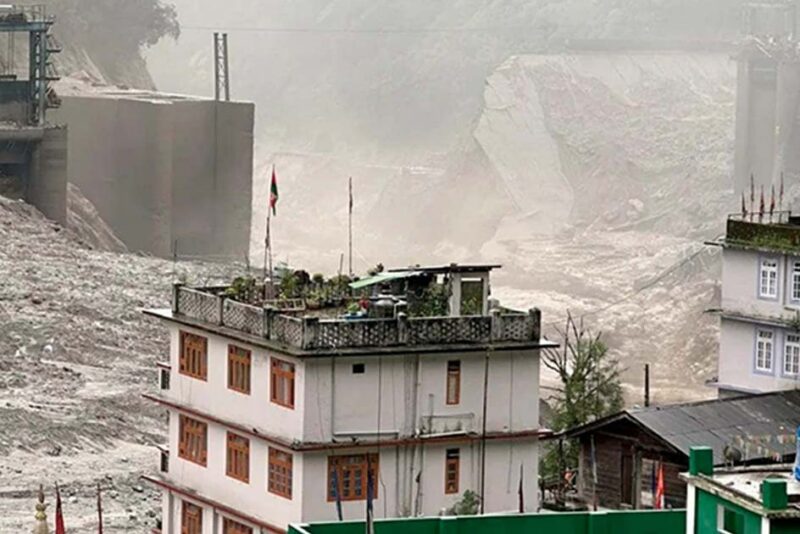
The floods that struck the Nepal–Tibet border region on August 26 underscore the serious risks posed by China’s restrictive media controls and tightly managed official narratives in Tibet. While Nepali authorities facilitated open cooperation and transparent information-sharing throughout the disaster response, Chinese officials limited international access to a superficial level. Selected foreign journalists were granted permission to visit the obliterated Kyirong port area only two weeks after the disaster; access to local Tibetan residents and their firsthand accounts of environmental changes in the region remained prohibited. This episode reinforces longstanding concerns raised by the Dalai Lama over more than four decades regarding Tibet’s ecological vulnerability. In his 1987 Five-Point Peace Plan presented to the U.S. Congressional Human Rights Caucus, he specifically called for the “restoration and protection of Tibet’s natural environment,” highlighting that environmental conditions on the Tibetan plateau have direct consequences for downstream communities across South and Southeast Asia. Timely access to accurate upstream environmental data is a fundamental right to information essential for public safety. Restricting such information through state censorship endangers lives and undermines the ability of neighboring countries to prepare for and respond to shared environmental risks.
The People’s Republic of China’s Law on the Promotion of Ethnic Unity and Progress (EUPL), which took effect on July 1, 2026, formalizes an expansive system of internal and external propaganda aimed at subsuming distinct identities into a singular “community of the Chinese people.”[13] Its domestic provisions are particularly far-reaching. Article 56 establishes an annual Ethnic Unity and Progress Publicity Week each September to coordinate nationwide campaigns, while Articles 12, 16, and 18 mandate the systematic dissemination of state-sanctioned historical narratives and “correct” viewpoints across schools, cadre training, and broader social programming. Article 19 requires media outlets, publishers, and online platforms to actively promote these narratives, and Article 20 extends these obligations into family education, embedding ideological messaging at the household level.[14]
Beyond the domestic sphere, the law also strengthens China’s international communication capacity, directing state resources toward cultural diplomacy and global messaging aligned with official ethnic policies. These provisions, operating alongside extraterritorial elements such as Article 63, contribute to a comprehensive architecture of narrative control that spans both domestic and international domains.
For Tibetan communities, the EUPL accelerates assimilationist policies that threaten to erode Tibetan language, culture, and religious identity under the banner of “unity.” It intensifies the saturation of state propaganda within Tibetan areas while simultaneously seeking to marginalize diaspora voices and restrict independent reporting. In this context, U.S.-supported Tibetan-language media services, including RFA and VOA, remain essential. They provide access to uncensored information, sustain Tibetan linguistic and cultural expression, and enable informed public discourse among Tibetans both inside Tibet and in exile. Sustained funding and expansion of these services are critical to countering Beijing’s narrative dominance, supporting access to independent information, and reinforcing broader U.S. efforts to address authoritarian influence.
U.S. international broadcasting through the U.S. Agency for Global Media (USAGM) exemplifies a high-impact, low-cost instrument of public diplomacy, particularly in heavily censored regions like Tibet. While overall federal spending faces scrutiny, USAGM’s budget remains modest relative to defense or broader foreign operations. Tibetan-language services represent only a fraction of this allocation yet deliver outsized strategic returns. USAGM’s annual appropriations were about $867 million in FY 2024 and FY 2025, even as subsequent proposals reduced funding to about $650 million in FY 2026.[15] By comparison, U.S. defense spending exceeds $800 billion annually. Within USAGM, RFA, which has historically carried the primary Tibetan service, has operated on an annual budget of approximately $62–68 million between FY 2022 and FY 2024.[16] The Tibetan Service itself accounted for approximately 7% of RFA’s budget during this period. Similarly, VOA’s Tibetan service operation accounted for approximately 1.7% of VOA’s $287 million budget in FY 2024.[17] These expenditures are particularly modest when compared with the resources Beijing devotes to shaping the global information environment. According to independent estimates, China’s external propaganda efforts, including paid media inserts, international broadcasting, digital influence operations, and content distribution, is estimated to be in the range of $7-10 billion per year.[18] Although exact figures are not specified, the U.S. Department of State in 2023 estimated that “Beijing has invested billions of dollars to construct an information ecosystem in which PRC propaganda and disinformation gain traction and become dominant”.[19]
Against this disparity in resources, Tibetan-language broadcasting represents a comparatively cost-effective means of sustaining access to independent information, countering authoritarian information control, and advancing broader U.S. efforts to address authoritarian influence. This modest U.S. investment yields high strategic returns. In Tibet, where Chinese authorities enforce near-total information control, even limited independent programming provides highly motivated listeners with rare access to uncensored news, external perspectives, and Tibetan-language content that supports cultural and linguistic preservation. Each dollar spent helps counter Beijing’s multi-billion-dollar propaganda and surveillance efforts, fostering long-term information-system resilience in a strategically vital region that borders India, encompasses the headwaters of several of Asia’s major river systems, and a potential route for transporting materials to Lop Nur (Xinjiang) for China’s nuclear testing, which is suspected of having conducted a test on June 22, 2020.[20] The returns compound through soft power as independent reporting informs diaspora communities, shapes global opinion, and provides U.S. policymakers with ground-truth insights otherwise inaccessible due to Beijing’s information blackout.
Recommendations to the U.S. government
- Restore Tibetan-language services to full operational capacity, including adequate staffing and broadcasting hours to ensure consistent, high-quality programming reaches audiences inside Tibet and the diaspora.
- Maintain and prioritize flagship shortwave broadcasting as a resilient, hard-to-block means of reaching audiences in heavily censored and remote areas, while modernizing complementary digital and multimedia distribution to maximize reach and accessibility.
- Invest in advanced circumvention tools and technologies to help Tibetan audiences bypass China’s Great Firewall and other forms of censorship, enabling secure access to uncensored news and information.
- Actively resist and counteract political censorship embedded in Chinese-originating large language models by promoting transparency, independent evaluation, and the widespread adoption of uncensored alternatives, thereby safeguarding free access to accurate information and preventing the global spread of AI-driven Chinese propaganda narratives.
- Prioritize traditional and social media communications which promote freedom of expression and human rights in Tibet under Chinese Communist Party rule, with focused reporting on cultural preservation, religious freedom, environmental issues, security conditions, and political and governance developments.
- Prioritize Tibetan services within U.S. public diplomacy efforts and any structural reforms of federally funded international media organizations.
The United States has long employed information and broadcasting as instruments of foreign policy. Voice of America originated during World War II as a counter to Axis propaganda. Following the end of the Cold War, Congress passed the 1994 International Broadcasting Act, which led to the creation of Radio Free Asia.[21] RFA, which subsequently began broadcasting in 1996, provides local-language news and information to countries in Asia where independent media are restricted or absent.
For Tibetan audiences specifically, VOA Tibetan launched regular broadcasts in March 1991, pursuant to the Foreign Relations Authorization Act for Fiscal Years 1990 and 1991 (P.L. 101-246). Radio Free Asia’s mandate explicitly included Tibet as part of its broader mission to provide independent news and information to audiences in China and other closed societies. Subsequent legislation, such as the 1998 Strom Thurmond National Defense Authorization Act, encouraged increased resources for broadcasting to China and Tibet in relevant languages. The Tibetan Policy Act of 2002 (P.L. 107-228) further strengthened this framework by reinforcing overall U.S. support for information access and assistance to Tibetans.[22] Collectively, these measures reflect longstanding bipartisan consensus that providing access to independent information constitutes an important component of U.S. foreign policy toward Tibet and the People’s Republic of China.
Both services operate through a combination of radio, digital platforms, and social media. Their content includes international and U.S. news as well as region-specific coverage of religion, culture, health, education, and developments inside Tibetan areas. Prior to the disruptions of 2025, the services maintained important reach among audiences in Tibet despite persistent Chinese jamming and censorship efforts. Shortwave radio remained particularly vital for reaching audiences in areas in Tibet with limited internet access and intense digital censorship, while digital tools such as apps, websites, and circumvention technologies expanded their audience. Although a majority of the funding was restored through FY2026 appropriations, the operational future and capacity of Tibetan language services continue to remain uncertain.
As a collateral effect of the broader structural reforms, Tibetan-language services experienced a sharp decline in original reporting and local sourcing, creating a significant information vacuum. Tibetan exile leaders and former broadcasters relayed urgent messages from inside Tibet describing growing isolation and the need for immediate restoration of the services.[23] Chinese state media moved quickly to fill the resulting gap by expanding its own programming hours in the region.
Critics of shortwave radio broadcasting often argue that in the digital age, traditional shortwave transmissions have become less central. They argue that with the proliferation of smartphones, satellite internet, social media platforms, and streaming services, information can flow instantaneously across borders, rendering high-frequency radio broadcasts unnecessary.[24] Proponents of this viewpoint to the success of digital platforms in disseminating news and cultural content across much of the world, where audiences can access real-time updates via apps and websites with minimal barriers.
While this perspective may hold in open societies with robust internet infrastructure and protections for free expression, it fundamentally fails to account for the unique and severe realities of information access in Tibet under Chinese Communist Party (CCP) control. In Tibet, digital media functions not as a liberating force but as a tightly controlled tool of state surveillance, censorship, and propaganda.[25] Far from making shortwave unnecessary, these conditions underscore its irreplaceable role as a lifeline for uncensored information.
At the heart of the issue is China’s Great Firewall, one of the most sophisticated internet censorship systems in the world. This apparatus systematically blocks access to major foreign websites and services, including Google, Facebook (Meta), X (formerly Twitter), YouTube, Instagram, and the vast majority of Western news organizations regardless of political leaning. A 2021 academic study found that the Firewall blocked approximately 311,000 domains, with ongoing expansions targeting sensitive content.[26] For Tibetan audiences, this means that platforms that serve as primary sources of global news, diaspora voices, and independent reporting on human rights are effectively inaccessible without significant effort.
Even domestic Chinese platforms like WeChat and Weibo are heavily moderated, with algorithms and human censors suppressing discussions of Tibetan autonomy, self-immolations, cultural preservation, or any narrative challenging official CCP accounts.[27]
Platforms by American tech giants, often cited by critics as evidence of digital dominance, have near-zero practical utility inside Tibet and elsewhere in China. Google services are blocked or heavily restricted, forcing reliance on domestic alternatives such as the state-approved Baidu search engine, which filters results to align with party ideology and state censorship requirements. Facebook, X, and YouTube, hubs for user-generated content, live updates, and alternative viewpoints, are outright inaccessible.[28] This creates an information vacuum dominated exclusively by state media, which portrays Tibet as a harmonious, developing region while omitting reports of repression, surveillance, or cultural erosion. In regions where even basic internet access is limited by geography, poverty and infrastructure, or where mobile data is monitored, the promise of “digital media” rings hollow. Rural Tibetan communities, in particular, face unreliable connectivity, high costs, and scrutiny, making smartphone-based access unreliable at best and dangerous at worst.
Compounding these restrictions is pervasive surveillance. Chinese authorities employ advanced digital monitoring tools, including real-name registration requirements for internet and mobile services, AI-driven content analysis, and widespread deployment of cameras and facial recognition technologies. Using unapproved Virtual Private Networks (VPNs) to bypass the Firewall is illegal and increasingly risky. Unauthorized VPN providers face shutdowns, and users, especially in Tibet, risk fines, detention, or harsher penalties.[29] Reports document crackdowns on the use of VPNs, causing usage among the general population to remain in the low single digits due to sustained enforcement. In Tibet, where authorities view any contact with the outside world as evidence of “separatism,” digital footprints left by those attempting to access blocked sites can lead to interrogation or imprisonment. This environment discourages risk-taking; many Tibetans avoid digital platforms altogether, knowing that metadata, search histories, and app data are harvested by state security organs.
Signal jamming further illustrates the CCP’s determination to control the information environment. Chinese authorities have a long history of deliberately interfering with foreign radio broadcasts, including those targeting Tibetan audiences. Shortwave transmissions from services like RFA and VOA have been subjected to persistent jamming, particularly during periods of unrest such as the 2008 Tibetan protests. This tactic extends beyond radio; digital signals and satellite communications have also been disrupted or throttled.[30] Yet shortwave’s resilience, particularly its ability to propagate over long distances, and reach remote areas without relying on local infrastructure, makes it harder to fully suppress compared to internet-dependent technologies. Jamming requires significant resources and is not uniformly effective across Tibet’s vast, mountainous terrain. Listeners have developed strategies, such as tuning in at optimal times or using portable receivers, to capture fragments of broadcasts that provide critical news on events otherwise blacked out.
The contrast with the rest of the world is stark. In countries with open internet access, digital media democratizes information. Citizens in democratic nations can freely share videos, organize via social media, and consume diverse perspectives. Critics rightly note that shortwave listenership has declined globally as smartphones and personal computers have proliferated. However, Tibet represents a clear exception. Foreign journalists are barred from independent reporting, information sharing is criminalized, and even possessing certain materials can result in severe punishment.[31] In this context, shortwave radio offers anonymity and accessibility that digital alternatives cannot match. A simple, battery-powered radio does not require registration, leaves no digital trail, and functions in areas with poor or no cellular coverage. It bypasses the Great Firewall entirely, delivering programming in Tibetan dialects (such as Amdo, Kham, and U-Tsang) directly from exile broadcasters who amplify suppressed voices inside Tibet.
Advocates for Tibetan services emphasize cultural and linguistic preservation alongside news delivery. Shortwave broadcasts sustain Tibetan language use, religious discourse, and historical narratives that state education and media seek to Sinicize or erase. When digital platforms fail due to blocks, surveillance, or outages, often timed to coincide with sensitive anniversaries or events, shortwave ensures continuity. China’s own response underscores shortwave’s continued relevance. Following reductions in U.S.-backed shortwave services, Beijing rapidly expanded its state-run Tibetan-language programming, increasing from one to seventeen shows in a short period.[32] This move demonstrates Chinese authorities’ recognition of radio’s enduring power in contested information spaces, using it to flood the airwaves with propaganda precisely because independent voices pose a threat.
Skeptics might counter that circumvention tools or satellite options could suffice, but evidence shows otherwise. VPN enforcement has tightened, with new cybercrime measures and surveillance technologies closing loopholes. Satellite internet, where available, faces similar monitoring and high costs. For the average Tibetan herder, monk, or urban resident under constant surveillance, these are not secure, viable daily solutions. Shortwave’s low barrier to entry ensures broader reach, particularly among older generations, rural populations, and those prioritizing safety.
While digital media has revolutionized global communication, its efficacy in Tibet is severely undermined by systemic censorship, pervasive surveillance, widespread blocking of American and international websites and platforms, and aggressive suppression of online expression. The near-total exclusion of platforms like Google, Facebook, and X from the Chinese digital ecosystem renders critics’ assumptions about shortwave transmissions inapplicable in Tibet. Shortwave radio is, therefore, not a relic but a vital, resilient medium capable of penetrating the information blackout, enabling access to independent information, and supporting Tibetan linguistic and cultural survival. Continuing and strengthening Tibetan shortwave services is a strategic imperative for countering authoritarian control and ensuring that truth reaches those most isolated from it. Dismantling or deprioritizing these broadcasts would abandon millions to a state-orchestrated silence, at a time when their voices are needed most.
China’s propaganda apparatus targeting Tibet has evolved into a highly sophisticated, well-resourced, and multi-dimensional system that operates with increasing advancement, scale, and intensity. What began as reactive damage control in the decades following the 1950s occupation has transformed under Xi Jinping into a proactive, technology-driven machine designed to dominate both domestic and international narratives. This system integrates linguistic rebranding, institutional infrastructure, media modernization, and digital storytelling to legitimize CCP rule, erase distinct Tibetan identity, and marginalize alternative voices.
Historical Advancement and Strategic Foundations
China’s external propaganda on Tibet gained formal structure in response to international criticism of China’s brutal and cruel treatment of Tibetans. A 1993 secret conference in Beijing acknowledged the “Dalai Clique” and foreign forces were winning the global narrative battle. Recommendations emphasized multi-level external outreach to promote sovereignty claims and counter “distortions.” These efforts fed into the 1994 Third Forum on Work in Tibet, which hardened repressive policies while emphasizing narrative control.[33] Post-Tiananmen investments in “big propaganda” and dialogues with the Dalai Lama’s envoys (2002–2010) bought time and image rehabilitation, particularly around the 2008 summer Olympics.
Xi Jinping’s 2013 directive to innovate external propaganda and “tell a good Chinese story” marked a pivotal advancement in Beijing’s strategy to shape global opinion. This cemented the shift from defensive data-driven messaging to confident, emotionally resonant storytelling that blends traditional CCP ideology with modern media techniques. The result is a more assertive system leveraging China’s economic power, technological capabilities, and global media footprint. Rebranding Tibet as “Xizang” exemplifies this. Quietly launched in fall 2021 during the COVID-19 pandemic, it seeks to replace the internationally recognized name “Tibet” with a Sinicized term. The terminology seeks to normalize Beijing’s preferred political framing of Tibet, diminish its distinct historical and cultural identity in international discourse, and present the region as an integral and historical part of China. State media and official institutions have progressively adopted “Xizang” or “China’s Xizang,” within forums and diplomatic statements.[34]
Institutional Scale: The Tibet International Communication Center
The September 2024 launch of the Tibet International Communication Center in Lhasa represents a major scaling of on-the-ground propaganda infrastructure. Established during a “Roundtable Meeting on Building an Effective International Communication System for Tibet,” organized by the TAR Party Committee Propaganda Department and China Foreign Language Bureau, the center operationalizes Xi’s vision locally. Then TAR Party Secretary Wang Junzheng directed the integration of resources to build a “foreign discourse system and narrative system related to Tibet,” emphasizing Xi Jinping Thought as ideological guidance.
This center builds on earlier initiatives, such as the February 2024 agreement between China Daily and the China Tibetology Research Center to establish a Tibetology International Communication Center. It coordinates production of propaganda materials, platform development, and talent training. State outlets like China Global Television Network (CGTN), under direct Central Propaganda Department control, are positioned to amplify content globally. The approach favors storytelling in the form of vlogs, short-form videos, and influencer-led content over “monotonous data,” as advised by expert foreign propaganda hires and Chinese academics. Tactics include leveraging overseas new media platforms to present a “Tibetan chapter of the Chinese story” focused on showcasing state-defined narratives of prosperity, cultural preservation (under CCP terms), and development.
The scale is evident in China’s “multi-channel, three-dimensional external communication” strategy, which combines state media, academic symposiums (e.g., Beijing International Tibetology events), international forums (rebranded as Xizang development forums), cultural/educational programs, diplomatic engagements, and pressure on global institutions. Rather than relying on a single propaganda channel, the strategy creates a multilayered information ecosystem in which official narratives are reinforced across media, academic, cultural, and diplomatic platforms.
Intensifying Propaganda in Tibet through Satellite TV and an Information Monopoly
The intensity of propaganda inside Tibet has reached new heights through infrastructure modernization. The ongoing satellite TV upgrade project, part of the 14th Five-Year Plan, aims for near-universal high-definition (HD) coverage by mid-2026. Over 620,000 users in the TAR are transitioning to advanced terminals under slogans like “Household Reception” and “Livelihood Improvement.” Rollouts included 80,000 terminals in Chamdo 155,000 households in Shigatse, and other prefectures, while channel capacity has been expanded dramatically as illustrated by Nagchu (Naqu) city, which increased TV programs from 55 to 95 and radio from 27 to 46.[35] While officially framed as an effort in narrowing the digital divide and delivering education and health content, the project in effect cements a closed information ecosystem. New equipment prioritizes state-sanctioned channels, aligning with directives to erect an “ideological steel wall” (per former TAR Secretary Chen Quanguo) so that only the Party’s voice is heard. This is particularly consequential in remote nomadic areas, where satellite television or radio serve as the primary information source. The timing of this expansion further amplifies its impact. As U.S.-backed shortwave services like RFA and VOA face challenges, China National Radio has expanded Tibetan-language programming, flooding the airwaves with propaganda on ethnic unity and Xi’s governance.
This technological intensity serves multiple goals in the form of domestic indoctrination through Sinicized content and suppression of alternative narratives. Combined with the Great Firewall, VPN restrictions, and surveillance, it creates a near-total monopoly, which is especially alarming given the ongoing uncertainties in independent broadcasting.
Overall Scale and Sophistication of Content
The scale of China’s propaganda system is immense, involving coordination across Party organs (Propaganda Department, United Front Work Department (UFWD), State Council Information Office (SCIO), state media conglomerates, academic institutions, and local government bureaus. Billions of dollars invested in China’s broader external communication capabilities since 2009 have expanded its global reach, while domestic information infrastructure projects like satellite upgrades demonstrate a sustained commitment to ensuring total information control. The Lhasa center localizes international efforts, creating a feedback loop where on-the-ground “success stories” feed global messaging.
The intensity of this system is reflected in the institutional coordination, incremental rebranding, rapid institutional launches, and parallel internal/external messaging tracks. Storytelling innovations in the form of short videos, influencer-style content and audience-tailored narratives make propaganda more engaging and harder to dismiss than older, rigid formats. Pressure on international bodies, co-optation of Tibetology, and cultural initiatives extend influence into academia, tourism, and diplomacy. Taken together, these efforts constitute an increasingly integrated information architecture designed both to consolidate narrative control inside Tibet and shape international perceptions of Tibet beyond China’s borders.
Implications for Advocacy and Information Freedom
This increasingly sophisticated, scaled, and intensive information-control system poses severe challenges. It marginalizes Tibetan voices, obscures human rights realities – including restrictions on religion, language, movement, opinion and expression -, and normalizes assimilation under the guise of development. Externally, it seeks to dilute international criticism, weaken global advocacy and reshape policy discourse on Tibet. Internally, it deepens cultural isolation and ideological control.
For effective advocacy and international responses, it is vital to have sustained support for independent information flows, systematic monitoring of CCP-linked events, continued promotion and amplification of authentic Tibetan voices, and greater exposure of China’s propaganda techniques used to shape narratives about Tibet. Without robust countermeasures, Beijing’s propaganda machinery risks dominating the information landscape, further entrenching CCP control over Tibet.
In an era of intensifying great-power competition, major powers are engaged in multifaceted strategic rivalry across multiple domains, including military maneuvers in maritime spaces in Asia, economic derisking initiatives, technological competition for supremacy in semiconductors and artificial intelligence, and a high-stakes contest to shape global narratives. At the center of these dynamics lies Tibet, which occupies a critical geostrategic position at the intersection of three nuclear-armed states: China, India, and Pakistan. This unique location renders Tibet a pivotal focal point for regional and international security. Consequently, developments in Tibet, whether concerning military infrastructure, resource extraction, border management, or political stability, carry significant implications for neighboring countries and the broader global order.[36]
Tibet’s strategic importance is amplified by its environmental and hydrological role. Often called the “Water Tower of Asia,” the Tibetan plateau supplies freshwater to over 1.8 billion people across multiple countries through major river systems like the Brahmaputra, Mekong, Yangtze, and Yellow Rivers. Control over Tibet enables Beijing to manage vast water resources critical for agriculture, hydropower, and urban needs downstream. Extensive dam-building projects, often pursued with limited transparency, affect downstream nations including India, Bangladesh, Nepal, Vietnam, Laos, and Cambodia. Chinese projects on transboundary rivers risk altered seasonal flows, increased flood and drought volatility, sedimentation issues, and ecosystem damage, potentially contributing to regional instability.[37] Independent reporting on environmental protests, displacement linked to infrastructure, and water management enables better-informed diplomacy, multilateral engagement, and resilience strategies for affected populations.
Demographically and politically, Beijing faces persistent challenges in “ethnic” governance, where policies of assimilation, surveillance, and cultural integration clash with Tibetan identity rooted in language, religion, and nomadic traditions. In this context, U.S.-funded broadcasters like VOA and RFA Tibetan services serve as vital non-kinetic instruments of American foreign policy. They pierce the dense information blockades imposed by Chinese censorship, document policies with significant regional and global spillovers, amplify silenced voices, and provide independent verification where diplomatic access is severely restricted. Far from being outdated relics of the Cold War, these services deliver asymmetric advantages in an information-dominated competition.
Countering Disinformation and Narrative Control
The Chinese Communist Party (CCP) invests heavily in external propaganda while enforcing strict internal censorship. Official narratives frame Tibetan policies as benevolent “poverty alleviation,” “religious harmony,” and essential “border security” measures. Independent Tibetan-language reporting directly challenges these distortions. For instance, official claims of voluntary development contrast with credible accounts of forced relocations,[38] surveillance grids,[39] DNA collection programs,[40] and cultural erasure through Mandarin-dominant boarding schools.[41]
Chinese reactions reveal the perceived effectiveness of these services. Beijing routinely labels VOA and RFA as “hostile foreign forces,” jams broadcasts, disrupts digital access, and celebrates any funding reductions as victories. When services have faced cuts in the past, Chinese state media has moved to expand its own Tibetan-language programming to fill the resulting void, demonstrating the competitive value of credible, independent voices. Effective counter-disinformation in Tibet requires linguistically attuned, culturally sensitive content rather than generic English-language coverage.
Intelligence, Oversight, and Policy Contributions
U.S. government reports and congressional oversight rely heavily on RFA and VOA reporting. The Congressional-Executive Commission on China (CECC) Annual Reports frequently cite these services for documentation of detentions, surveillance, religious controls, and cultural restrictions. The State Department’s Country Reports on Human Rights Practices draw upon them for verification in areas off-limits to diplomats. The U.S.-China Economic and Security Review Commission (USCC) incorporates their coverage into strategic analyses, including analyses of the security implications of plateau militarization, resource extraction, and water infrastructure.
Without these dedicated Tibetan services, policymakers would face significant blind spots. Reliance on potentially manipulated open-source data, second-hand accounts, or satellite imagery alone reduces the timeliness, granularity, and human context essential for effective oversight, targeted sanctions, diplomatic initiatives, or legislative action.
Regional Stability, Transboundary Impacts, and Support for Allies
Tibet’s strategic importance is amplified by its environmental and hydrological role. As the “Third Pole,” the CCP’s decisions on dams, mining, and land use directly affect downstream nations including India, Bangladesh, Nepal, Vietnam, Laos, and Cambodia. Chinese projects on transboundary rivers risk altered seasonal flows, increased flood and drought volatility, sedimentation issues, and ecosystem damage. Independent reporting on environmental protests, displacement linked to infrastructure, and water management enables better-informed diplomacy and resilience strategies for affected populations.
Soft Power and Long-Term Competition
Amid China’s global influence operations, including media co-optation, United Front Work, and narrative shaping, U.S. international broadcasting upholds America’s image as a defender of open information and human dignity. These services explain U.S. policies (such as the Tibetan Policy and Support Act or the Resolve Tibet Act), connect with the Tibetan diaspora, and demonstrate U.S. commitment to universal values. Funding reductions are routinely celebrated by Chinese state media as signs of American retreat, damaging U.S. credibility among regional partners and global audiences wary of authoritarian influence.
Funding and strengthening these services represent a cost-effective investment in strategic competition. They provide asymmetric advantages without direct military escalation, complementing diplomatic, economic, and security tools.
Risks of Inaction
Deeper opacity allows unmonitored policy shifts, including potentially escalating militarization, aggressive damming, or intensified assimilation, that could trigger humanitarian crises or interstate tensions over resources. Historical parallels abound: information blackouts in Cambodia under the Khmer Rouge, North Korea’s famines, and internment camps in East Turkestan (Xinjiang) enabled mass atrocities to occur with limited international awareness.
In great-power competition, information is power. VOA and RFA Tibetan services are cost-effective, high-impact tools that advance U.S. interests by countering propaganda, informing policy, supporting regional stability, and preserving America’s soft power. Their diminishment hands narrative dominance to Beijing, blinds decision-makers, and abandons vulnerable voices. Strategic prudence demands their restoration and robust modernization, integrating digital tools while strengthening radio reach, to navigate the challenges of the Tibetan Plateau and broader U.S.-China competition. America’s competitive edge depends on seeing clearly where others seek darkness.
Freedom of speech and expression in Tibet is not merely restricted; it is structurally curtailed through an integrated system of legal, political, and technological controls designed to preempt, detect, and punish dissent.[42] Since the People’s Republic of China consolidated control over Tibet in the 1950s, expression, whether political, cultural, linguistic, or religious, has been consistently subordinated to the priorities of Chinese state security and ideological conformity.
At the core of this system lies a fundamental contradiction between formal guarantees and actual practice. Article 35 of the Chinese Constitution nominally protects freedoms of speech, press, assembly, and association. In Tibetan areas, however, these protections are overridden by a dense network of national security laws, counterterrorism provisions, cybersecurity regulations, and localized anti-separatism measures. These laws rely on vague and elastic concepts such as “undermining national unity” and “inciting separatism,” which allow authorities to criminalize a wide spectrum of expression without clear legal thresholds.
This ambiguity produces a pervasive climate of uncertainty. Tibetans cannot reliably distinguish between permissible and prohibited speech, leading to widespread self-censorship. Even expressions that would typically fall within the realm of cultural preservation, such as advocating for Tibetan-language education, sharing religious teachings, or expressing reverence for the Dalai Lama, are frequently treated as indicators of political disloyalty. The result is a system in which silence is incentivized and expression carries risk.
The securitization of expression intensified significantly after the 2008 protests across Tibetan areas. This period marked a transition from reactive repression to proactive control. Rather than responding only to overt dissent, authorities expanded mechanisms to prevent dissent from emerging in the first place. Information flows became tightly restricted, communication channels were monitored, and new technologies were deployed to track and analyze behavior. Tibet was effectively transformed into a high-surveillance environment where expression is continuously scrutinized.
Mechanisms of Control: Censorship, Surveillance, and Legal Framework
Censorship operates across all domains of public and private communication. Traditional media, including newspapers, television, and publishing houses, are fully state-controlled. Tibetan-language publications are subject to strict approval processes, and content that diverges from official narratives is routinely rejected. Educational institutions reinforce these constraints by limiting the scope of permissible discourse. Curricula prioritize state-sanctioned interpretations of history and culture, often portraying Tibet’s past in ways that legitimize current governance. Discussions that challenge these narratives are excluded, narrowing the intellectual space available to students and scholars.
Digital communication, which might otherwise provide alternative avenues for expression, is equally constrained. Internet access in Tibetan areas is heavily filtered, with international platforms blocked and domestic platforms subjected to constant monitoring. Chinese social media platforms such as WeChat function as instruments of surveillance as much as tools of communication. Content is filtered through keyword detection systems, and accounts can be suspended or reported for sharing politically sensitive material. Tibetan-language content is particularly scrutinized, as are references to the Dalai Lama, religious teachings, or symbols associated with Tibetan identity.
The consequences of digital expression can be severe. Individuals have been detained or imprisoned for online posts, private messages, or participation in discussion groups. Even passive forms of expression such as maintaining a profile picture of the Dalai Lama can trigger administrative or legal repercussions. Real-name registration requirements further eliminate anonymity, ensuring that all online activity is traceable. This integration of identity and surveillance amplifies the risks associated with even minor acts of expression.
Beyond digital spaces, surveillance permeates everyday life. Local governance structures, referred to as grid management systems, divide communities into small units monitored by designated officials or informants. Monasteries, villages, and urban neighborhoods are all incorporated into this network. Security personnel conduct periodic inspections of mobile phones and personal belongings, searching for prohibited content such as images, recordings, or texts deemed politically sensitive. Advanced technologies like facial recognition systems, biometric data collection, and communications monitoring extend the reach of the state into both public and private spheres.
This pervasive surveillance environment forces individuals to regulate their own behavior because they assume they are being watched. The boundary between public and private expression effectively disappears, as even informal discussions among friends or family carry potential risks.
Legal enforcement reinforces these constraints through harsh penalties. Charges such as “inciting separatism,” “picking quarrels and provoking trouble,” and “leaking state secrets” are applied broadly and often disproportionately. Sentences can range from several years to over a decade in prison, depending on the perceived severity of the offense. Importantly, enforcement is not limited to individuals. Family members of those accused may face indirect consequences, including loss of employment opportunities, or restrictions on mobility. This practice of collective pressure extends the deterrent effect of repression beyond the immediate target.
Targeting Writers, Artists, Intellectuals, and Monks
Writers, artists, and intellectuals are particularly vulnerable within this system. Cultural production is closely monitored because it has the potential to articulate and preserve identity. Tibetan authors who explore themes of language, history, or social conditions risk having their work labeled as politically subversive. Musicians and performers face restrictions on content that references the Dalai Lama or Tibetan national identity. Scholars and educators are required to adhere strictly to official guidelines, with deviations resulting in professional or legal consequences.[43]
The case of Tibetan language advocacy illustrates the narrowing space for expression. Efforts to promote or preserve Tibetan as a medium of education have been framed as challenges to China’s national unity, despite their cultural and linguistic basis. Individuals who publicly highlight the marginalization of the Tibetan language have faced detention and imprisonment. This demonstrates how even non-political advocacy can be reinterpreted as a form of dissent.
Religious expression is similarly constrained. Tibetan Buddhism, a central component of Tibetan identity, is subject to extensive regulation. Monastic institutions are required to participate in “re-education” programs that emphasize loyalty to the state and rejection of external religious authority. Expressions of devotion to the Dalai Lama are prohibited and punishable by imprisonment. The Chinese state’s assertion of authority over religious practices, including the recognition of reincarnated leaders, further limits the scope of belief and expression.
Self-Immolations and the Cycle of Protest and Repression
In extreme cases, the absence of channels for peaceful expression has contributed to acts of self-immolation. Over the past two decades, more than 170 Tibetans, including 159 in Tibet and China since 2009, have set themselves on fire, often leaving messages that reference restrictions on religion, culture, and language.[44] These acts represent a form of protest in an environment where other avenues of expression are effectively closed. The state’s response has been to intensify security measures, restrict information about such expression, and penalize those associated with the individuals involved. Even the dissemination of information about these events is treated as a punishable offense.
The cumulative impact of these policies is a Tibetan society characterized by enforced silence. Self-censorship becomes a necessary strategy for navigating daily life. Cultural practices, linguistic expression, and religious observance are all shaped by an awareness of political boundaries.
This environment also extends beyond Tibet’s geographic boundaries. Tibetans in diaspora communities face forms of transnational repression, including surveillance, digital harassment, and pressure exerted through family members residing in Tibet. Communication across borders is monitored and contact with individuals or organizations abroad can attract scrutiny. These dynamics further constrain expression by limiting the ability of Tibetans to engage freely with global audiences.
On July 2, 2026, Tibetan activist Lobsang Palden, widely known as Lobga Rangzen, died by self-immolation outside the United Nations Headquarters in New York.[45] While previous self-immolations by Tibetans, both within Tibet and in exile, had occasionally generated limited discussion inside Tibet and on Chinese social media, Lobga Rangzen’s act elicited almost no visible public response within Tibet or China. This near-total silence underscores the effectiveness of the information controls imposed by China’s Great Firewall and the stringent criminalization of free speech.
International assessments consistently rank Tibet among the least free regions in the world regarding civil liberties and political rights. Tibet has received a global freedom score of zero for the third consecutive year, according to Freedom House’s Freedom in the World 2026 report, released on March 19.[46]
Independent verification of on-the-ground conditions remains severely constrained by restricted access for journalists, researchers, and international observers. This lack of transparency limits external scrutiny and accountability, perpetuating an environment of opacity.
The suppression of freedom of speech and expression in Tibet is systemic. It forms a core element of a governance approach that prioritizes stability through control rather than through participation and dialogue. By framing independent expression as a threat to social and political order, the Chinese state legitimizes extensive intervention in the political and cultural life of the Tibetan people. The Tibetan experience illustrates how China’s legal frameworks, advanced technological systems, and carefully crafted political narratives can be seamlessly integrated to regulate information and discourse at scale. This sophisticated apparatus enables the modern Chinese state to shape public narratives effectively, often rendering dissenting voices invisible both domestically and internationally.
In this context, the restoration and continued operation of independent Tibetan-language broadcast services serve as a vital counterbalance. By preserving cultural memory, amplifying suppressed voices, fostering informed dialogue, and ensuring that the realities of life in Tibet reach domestic and international audiences, these services help pierce the veil of information control. For the United States, support for these efforts aligns with core American moral principles, particularly the universal rights to freedom of expression, self-determination, human dignity and freedom, while advancing U.S. strategic interests in countering authoritarian censorship, promoting global transparency, and advancing freedom.
Footnotes
[1] Reuters, “Defunding US Radio Stations Creating Tibet ‘Void,’ Exile Leader Says,” Reuters, October 29, 2025, https://www.reuters.com/world/china/defunding-us-radio-stations-creating-tibet-void-exile-leader-says-2025-10-29/.
[2] U.S. Congress, House, Financial Services and General Government, National Security, and Related Programs Minibus – Bill Text, 119th Cong., 2nd sess. (Washington, DC: House Committee on Appropriations, January 11, 2026), https://docs.house.gov/billsthisweek/20260112/FSGG%20NSRP%20Minibus%20-%20Bill%20Text%20-%201-11-2026.PDF.
[3] James Careless, “Whatever Happened to Shortwave Radio?,” Radio World, [Published: March 8, 2010 ⋅ Updated: March 7, 2022], https://www.radioworld.com/news-and-business/whatever-happened-to-shortwave-radio.
[4] Jenny Wang, “What Apps Are Blocked in China? The Complete 2026 List,” MyChina.Guide, last updated July 11, 2026, https://mychina.guide/blog/apps-blocked-in-china-2026.
[5] Mora Namdar, “U.S. Agency for Global Media,” in Mandate for Leadership: The Conservative Promise, ed. Paul Dans and Steven Groves (Washington, DC: The Heritage Foundation, 2023), 242. https://static.heritage.org/project2025/2025_MandateForLeadership_FULL.pdf
[6] International Campaign for Tibet. “Deepzang: The Digital Propaganda Front in China’s Tibet Narrative.” March 19, 2026. https://savetibet.org/deepzang-the-digital-propaganda-front-in-chinas-tibet-narrative/.
[7] Pan, Jennifer, and Xu Xu. “Political Censorship in Large Language Models Originating from China.” PNAS Nexus 5, no. 2 (2026): pgag013. https://doi.org/10.1093/pnasnexus/pgag013.
[8] International Campaign for Tibet, “China’s External Propaganda on Tibet: Erasing Tibet to ‘Tell a Good Chinese Story’,” January 11, 2024, https://savetibet.org/chinas-external-propaganda-on-tibet/.
[9] Bill Bishop’s Sinocism may have been the first to report on China’s strategy to replace Tibet with “Xizang”. “Tibet becoming Xizang in external propaganda?” Oct. 20, 2021, https://sinocism.com/p/positive-energy-for-the-economy-xizang?utm_source=%2Fsearch%2Fxizang%2520ministry%2520of%2520propaganda&utm_medium=reader2
[10] International Campaign for Tibet, “China Launches New Propaganda Center in Lhasa,” September 11, 2024, https://savetibet.org/china-launches-new-propaganda-center-in-lhasa/
[11] Second Xizang International Communication Conference Convenes in Lhasa,” China.org.cn, June 17, 2026, http://www.china.org.cn/2026-06/17/content_118553957.shtml
[12] International Campaign for Tibet. “China pressures Nepal over Tibetan studies conference as it expands control over Tibetology under new ethnic unity law.” July 31, 2026. https://savetibet.org/china-pressures-nepal-over-tibetan-studies-conference-as-it-expands-control-over-tibetology-under-new-ethnic-unity-law/.
[13] International Campaign for Tibet, New PRC Ethnic Unity and Progress Law Enforces Assimilation of Tibetans, Contradicts National and International Law (Washington, DC: International Campaign for Tibet, March 13, 2026), https://savetibet.org/wp-content/uploads/2026/03/20260313-Ethnic-Unity-Progress-Law-ICT-report.pdf.
[14] P.R.C. Law on the Promotion of Ethnic Unity and Progress (adopted March 12, 2026), translated by China Law Translate, https://www.chinalawtranslate.com/en/ethnic-unity-and-progress-law/.
[15] United States Agency for Global Media, FY 2026 Congressional Budget Justification (Washington, DC: U.S. Agency for Global Media, 2025), https://www.usagm.gov/wp-content/uploads/2025/07/USAGM-FY-2026-CBJ-Master.pdf.
[16] United States Agency for Global Media, RadioFreeAsia.English (Washington, DC: USAGM, February 3, 2023), https://www.usagm.gov/wp-content/uploads/2023/02/USAGM-RFA-OneSheet-02-03-23.pdf.
[17] U.S. Agency for Global Media, FY 2024 Congressional Budget Justification, Appendix C: Broadcast Metrics, Case No. 1:25-cv-01015-RCL (D.D.C. June 19, 2025), Document 120-5, 183 & 191 https://storage.courtlistener.com/recap/gov.uscourts.dcd.279211/gov.uscourts.dcd.279211.120.5.pdf.
[18] “中國每年砸多少錢搞大外宣?網曝這個數字……,” 自由時報 (Liberty Times), March 30, 2026, https://news.ltn.com.tw/news/world/breakingnews/5387859.
[19] U.S. Department of State, Global Engagement Center, How the People’s Republic of China Seeks to Reshape the Global Information Environment (Washington, DC: U.S. Department of State, 2023), https://2021-2025.state.gov/wp-content/uploads/2023/10/HOW-THE-PEOPLES-REPUBLIC-OF-CHINA-SEEKS-TO-RESHAPE-THE-GLOBAL-INFORMATION-ENVIRONMENT_508.pdf
[20] Xiaodon Liang, “U.S. Accuses China of Nuclear Test, Preparations,” Arms Control Today, March 2026, https://www.armscontrol.org/act/2026-03/news/us-accuses-china-nuclear-test-preparations.
[21] H.R. 2333, Foreign Relations Authorization Act, Fiscal Years 1994 and 1995, 103rd Cong. (1993–1994), Pub. L. No. 103-236, 108 Stat. 382 (1994), https://www.congress.gov/bill/103rd-congress/house-bill/2333.
[22] The Tibetan Policy Act of 2002: Background and Implementation, Congressional Research Service, July 9, 2015, https://www.congress.gov/crs_external_products/R/PDF/R43781/R43781.10.pdf.
[23] International Tibetan Media Organization, “International Tibetan Media Organization Officially Launches,” March 21, 2026, https://www.tibetanmedia.org/news-and-updates/10-reasons-why-school-uniform-matter.
[24] James Careless, “The Internet’s Impact on International Radio,” Radio Heritage Foundation, August 4, 2019, https://www.radioheritage.com/the-internets-impact-on-international-radio/.
[25] “Weaponising Big Data: Decoding China’s digital surveillance in Tibet,” Tibet Watch, February 7, 2024, https://tibetwatch.org/weaponising-big-data-decoding-chinas-digital-surveillance-in-tibet/. Also see Human Rights Watch, “China: Police Arrest Tibetans for Internet, Phone Use: Mass Cellphone Searches, ‘Anti-Fraud’ App, Tightened Regulatory Regime,” April 13, 2025, https://www.hrw.org/news/2025/04/13/china-police-arrest-tibetans-for-internet-phone-use.
[26] Nguyen Phong Hoang et al., “How Great is the Great Firewall? Measuring China’s DNS Censorship,” in Proceedings of the 30th USENIX Security Symposium (USENIX Security ’21), August 2021, https://www.usenix.org/conference/usenixsecurity21/presentation/hoang.
[27] International Campaign for Tibet, “China launches three-month crackdown on the internet,” July 2, 2026, https://savetibet.org/china-launches-three-month-crackdown-on-the-internet/. See also Tenzin Dalha, “How WeChat Conquered Tibet,” The Diplomat, July 16, 2019, https://thediplomat.com/2019/07/how-wechat-conquered-tibet/.
[28] “Which Websites Are Blocked in China in 2026? Full List & Tips,” findcheapvpns.com, 2026, https://findcheapvpns.com/guides/which-websites-are-blocked-in-china/.
[29] Dominykas Zukas, “The Great Firewall Is Winning, and Chinese VPN Users Are Running Out of Options,” MysteriumVPN.com, June 8, 2026, https://www.mysteriumvpn.com/blog/news/chinese-vpn-users-running-out-of-options.
[30] Radio Free Asia, “Tibetan TV Dishes Pulled,” Radio Free Asia, June 21, 2009, https://www.rfa.org/english/news/tibet/Tibetandishes-06202009092817.html.
[31] International Campaign for Tibet, “Survey: No foreign journalists allowed in Tibet Autonomous Region in 2022,” March 2, 2023, https://savetibet.org/survey-no-foreign-journalists-allowed-in-tibet-autonomous-region-in-2022/
[32] China is expanding its state-run propaganda with 16 new Tibetan-language radio programmes, Reporters Without Borders, February 13, 2026, https://rsf.org/en/china-expanding-its-state-run-propaganda-16-new-tibetan-language-radio-programmes
[33] Department of Information and International Relations, Central Tibetan Administration, Beijing’s How to Win Friends and Influence People (Dharamsala: Central Tibetan Administration, April 2010), https://tibet.net/wp-content/uploads/2010/04/BEIJINGS-HOW-TO-WIN-FRIENDS-AND-INFLUENCE-PEOPLE.pdf.
[34] International Campaign for Tibet, “China’s External Propaganda on Tibet,” 2024.
[35] International Campaign for Tibet, “Beijing tightens information monopoly in Tibet with massive satellite TV upgrade,” February 5, 2026, https://savetibet.org/beijing-tightens-information-monopoly-in-tibet-with-massive-satellite-tv-upgrade/
[36] International Campaign for Tibet, Why Tibet? Strategic Imperatives for International Peace and Security (November 2025), https://savetibet.org/wp-content/uploads/2025/11/20251117-Why-Tibet.pdf.
[37] International Campaign for Tibet, Chinese Hydropower: Damning Tibet’s Culture, Community, and Environment (December 2024), https://savetibet.org/chinese-hydropower/.
[38] Human Rights Watch, “Educate the Masses to Change Their Minds”: China’s Forced Relocation of Rural Tibetans (May 22, 2024), https://www.hrw.org/report/2024/05/22/educate-masses-change-their-minds/chinas-forced-relocation-rural-tibetans
[39] The Economist, “Grid locked,” The Economist, June 21, 2013, https://www.economist.com/china/2013/06/22/grid-locked.
[40] Emile Dirks, Mass DNA Collection in the Tibet Autonomous Region from 2016–2022 (The Citizen Lab), https://citizenlab.ca/research/mass-dna-collection-in-the-tibet-autonomous-region/.
[41] Tibet Action Institute, Separated From Their Families, Hidden From the World: China’s Vast System of Colonial Boarding Schools Inside Tibet (2022), https://tibetaction.net/colonial-boarding-school-report/.
[42] Tibetan Centre for Human Rights and Democracy (TCHRD), Dissenting Voices: The State of Expression in Tibet (Dharamsala: TCHRD, February 2025), https://tchrd.org/wp-content/uploads/2025/02/FOE-Report-.pdf.
[43] International Campaign for Tibet, “Tibetan Intellectuals and Writers Detained in Recent Spate,” June 30, 2022, https://savetibet.org/tibetan-intellectuals-and-writers-detained-in-recent-spate/.
[44] International Campaign for Tibet, Self-Immolation Fact sheet, https://savetibet.org/tibetan-self-immolations/.
[45] James T. Areddy, “Tibet-Born Man Dies Outside U.N. After Appearing to Set Himself on Fire,” The Wall Street Journal, July 3, 2026, https://www.wsj.com/world/china/tibet-born-man-dies-outside-u-n-after-appearing-to-set-himself-alight-9b41a1e6
[46] Freedom House, “Tibet: Country Profile,” March 19, 2026, https://freedomhouse.org/country/tibet.