Article | December 21, 2020
Congress passes key legislation supporting Tibetans’ aspirations, rights


UPDATE: The Tibetan Policy and Support Act was signed by the president on Dec. 27, 2020. It is now US law.
Congress today passed a bill that will dramatically upgrade U.S. support for Tibetans in key areas, including by sanctioning Chinese officials if they try to appoint the next Dalai Lama.
The Tibetan Policy and Support Act is now expected to be signed into law by President Trump.
The House previously passed the TPSA by an overwhelming margin in January. The bill also had strong bipartisan support in the Senate. However, due in part to the unprecedented challenges this year, senators were not able to bring the legislation to the floor in time for a vote, so they included the TPSA in the spending bill that Congress passed today, Dec. 21, 2020.
The bipartisan TPSA will launch a new era in US policy on Tibet, a historically independent country in Central Asia that has become one of the least free places on Earth under the repressive rule of the Chinese government.
What the bill does
Building on the landmark Tibetan Policy Act of 2002, the TPSA will:
- Make it official U.S. policy that the selection of Tibetan Buddhist leaders, including a future Dalai Lama, should follow the instructions of the current Dalai Lama—who is now 85— and the desires of the Tibetan Buddhist community with no interference from the Chinese government.
- Sanction Chinese officials if they carry out their plans to appoint their own Dalai Lama in the future. These sanctions could include having their assets frozen and their entry to the US denied. The State Department will also have to work at the international level to build support for Tibetan Buddhists’ freedom to choose their own leaders without government interference.
- Address water security and climate change in Tibet, which is warming nearly three times faster than the global average and provides water to more than 1 billion people across Asia. Under the TPSA, the US recognizes the strategic importance of the Tibetan plateau and the threat that climate change poses to it. The secretary of state will have to pursue collaboration with China and international institutions to monitor Tibet’s environment and support the Tibetan people’s efforts to preserve it. The secretary will also have to encourage a regional framework on water security.
- Strengthen diplomatic efforts through the office of the special coordinator for Tibetan issues in the State Department to push for a negotiated solution between the Chinese government and the representatives of the Dalai Lama.
- Forbid China from opening a new consulate in the US until China allows a US consulate in Lhasa, Tibet’s capital city. In July, China forced the US to close its consulate in Chengdu, which serves as a major gateway to Tibet, after the US forced the closure of the Chinese consulate in Houston.
- Formalize funding for humanitarian projects for Tibetans inside and outside Tibet until at least 2025.
- Require the secretary of state and secretary of commerce to work with US businesses and individuals to make sure their business activities in Tibet follow the UN Guiding Principles on Business and Human Rights.
- Commend the Dalai Lama and the Tibetan people for adopting a democratic system of government in exile.
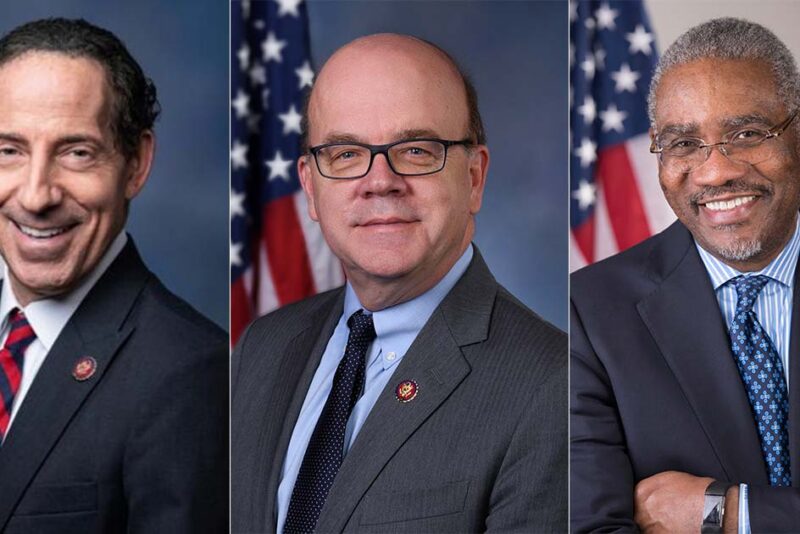
Reps. James McGovern, D-Mass., and Chris Smith, R-N.J., introduced the TPSA in the House in September 2019.
Sens. Marco Rubio, R-Fla., and Ben Cardin, D-Md., introduced the TPSA in the Senate.
What it means
The TPSA represents a major upgrade to U.S. policy on Tibet, as well as a direct challenge to China’s continuing repression of the Tibetan people.
Succession of the Dalai Lama
Tibetan Buddhists believe that when the Dalai Lama passes away, he can choose to reincarnate in order to benefit humankind. In 2011, the Dalai Lama—who is the 14th in his line—delivered a statement laying out his views on reincarnation, saying he believed that Tibetans and Tibetan Buddhists should decide whether it’s necessary to continue the institution of the Dalai Lama after he dies. The statement also says, “It is particularly inappropriate for Chinese communists, who explicitly reject even the idea of past and future lives … to meddle in the system of reincarnation.”
Despite this, the Chinese Communist Party absurdly continues to insist that it must approve the Dalai Lama’s reincarnation. In 2007, China introduced new rules for the selection and appointment of reincarnate lamas, giving the government authority over the entire process. Chinese officials have said they will use this authority to appoint a future Dalai Lama.
In 1995, after the Dalai Lama recognized a six-year-old boy in Tibet as the reincarnated Panchen Lama—one of the most important figures in Tibetan Buddhism—the Chinese government kidnapped the child and his family. In his place, China appointed a “fake” Panchen Lama who now serves as a mouthpiece for the Communist Party, including on official trips overseas. Fears are high that China will follow a similar process for the appointment of the next Dalai Lama.
The Dalai Lama has said that if he does reincarnate, he will do so in a free country like India, where he has lived in exile since China’s conquest of Tibet in the 1950s. He has also said that nobody will respect a future Dalai Lama appointed by the Chinese government.
Water security and climate change in Tibet
As the source of several of the largest river systems in the world, Tibet provides water to more than 1 billion people downstream. The TPSA identifies many of the environmental crises taking place in Tibet under China’s rule, including melting glaciers and a rate of warming that’s nearly three times the global average.
According to a study released this year, China used its dams on the Mekong, which originates in Tibet, to prevent the flow of water downstream in 2019, contributing to a devastating drought in Southeast Asia. Chinese dam construction is also forcing thousands of Tibetans to relocate against their will.
The TPSA requires the secretary of state to encourage a regional framework on water security and to pursue collaboration with China and international institutions to monitor the environment on the Tibetan plateau. The secretary will also have to engage China and NGOs to promote the participation of Tibetan nomads and other Tibetans in the development and implementation of grassland management policies in Tibet in order to utilize their indigenous experience.
The bill says that development projects supported by US and international financial institutions and organizations should not incentivize or facilitate the forced relocation of Tibetan nomads.
Diplomatic support
Highlighting the need for a U.S. diplomatic presence in Tibet, the bill mandates that the secretary of state “not authorize the establishment in the United States of any additional consulate of the People’s Republic of China until such time as a United States consulate in Lhasa, Tibet, is established.”
In addition, the TPSA expands the role of the special coordinator for Tibetan issues in the State Department.
Support for Tibetans
The TPSA allows for the allocation of development assistance funds for the skilled development, entrepreneurship and cultural preservation of Tibetan exiles in South Asia. It requires the secretary of state to urge the government of Nepal to honor its “Gentleman’s Agreement” with the UN high commissioner for refugees regarding the rights of Tibetans in Nepal.
The TPSA also describes the democratic transformation of the Tibetan system of governance in exile. It commends the Dalai Lama “for his decision to devolve political authority to elected leaders in accordance with democratic principles.”
The bill says the Central Tibetan Administration represents and reflects the aspirations of Tibetan people around the world.
Momentum in Tibet support
The passage of the TPSA caps a historic period of US government action in support of Tibetans.
- In 2018, Congress passed the Reciprocal Access to Tibet Act, which takes direct aim at China’s policy of preventing American journalists, diplomats and ordinary citizens from entering Tibet, even though Chinese citizens can travel freely throughout the United States. RATA was the most important Tibet-related legislation in over a decade. In July 2020, the State Department implemented RATA by denying entry to the US for the Chinese officials responsible for keeping Americans out of Tibet. This marked the first time in history the U.S. had banned Chinese officials over their actions in Tibet.
- In September 2020, then-Democratic presidential nominee Joe Biden released a statement saying “a Biden-Harris administration will stand up for the people of Tibet.” In the statement, the now-president-elect promised to meet with the Dalai Lama; insist China allow access to Tibet for US citizens; and work with US allies to pressure China to restart direct dialogue with Tibetan representatives toward achieving genuine autonomy for Tibet. Biden also pledged to sanction Chinese officials responsible for human rights abuses in Tibet and expand Tibetan language services at Radio Free Asia and Voice of America.
- Last month, the House passed a bipartisan resolution promoting autonomy for Tibetans and offering them support on a number of issues they face under Chinese rule. The resolution also urges the “swift enactment” of the TPSA, stresses the urgency of addressing the climate crisis on the Tibetan plateau and determines that it “would be beneficial to continue years of bipartisan and bicameral engagement with the leaders of the Tibetan people,” including between members of Congress and the Dalai Lama.
- Outside the U.S., five UN human rights experts and expert bodies wrote to the Chinese government in August, urging China “to ensure that Tibetan Buddhists are able to freely practice their religion.” The experts noted that Tibetans’ religious freedom included the right “to determine their clergy and religious leaders in accordance with their own religious traditions and practices.”
Over the past year, the European Union’s foreign policy chief, Josep Borrell, has said the EU opposes any interference in the Dalai Lama’s succession by the Chinese government. Officials in Belgium, Germany and the Netherlands have expressed similar positions.
The TPSA’s journey
The success of the TPSA is due in part to Tibetan Americans and other Tibet supporters, who sent more than 26,000 petitions to members of Congress through the International Campaign for Tibet.
Tibet supporters also visited and called their legislators’ offices to urge their support for the bill as part of ICT’s virtual Tibet Lobby Day in March 2020 and its mini-Lobby Day last autumn.
In June 2020, ICT Chairman Richard Gere, the world-famous actor, social activist and philanthropist, testified at a Senate subcommittee hearing and urged senators to support the TPSA. Gere said the Dalai Lama’s succession “can’t be allowed to be controlled by the Communist Party, but only by Tibetan Buddhists.”
Now that Congress has passed the TPSA, ICT will seek to advance similar legislation in other countries.
Quote from the International Campaign for Tibet:
“By passing the TPSA, Congress has not only upgraded its overall support for Tibet, but specifically laid a marker down on the global stage declaring that the international community will not accept China’s interference in the Dalai Lama’s succession and will oppose China’s human rights abuses in Tibet for as long as they continue. China’s plan to appoint the next Dalai Lama is the culmination of its decades-long effort to destroy the Tibetan people’s unique religion, culture and identity, as well as their sacred and globally important environment. We thank the United States for its bold leadership and look forward to other countries adopting their own versions of this legislation.”